You don’t automatically need an additional freezer: an existing four-star compartment may be suitable, provided it is designed for freezing and has enough free space for your labelled portions to stay there. If you regularly freeze several portions or share the space with others, you could consider a compact freezer with separate compartments. In that case, take into account the floor space it needs, door clearance, ongoing electricity consumption and who will be responsible for maintenance.
Who might benefit from having their own freezer?
Regular batch cooks
If you regularly freeze several portions of cooled curry, you’ll need suitable freezer space that remains available when food is stored communally. The Verbraucherzentrale and the Federal Centre for Nutrition explain what to consider when freezing food and choosing a freezer.
Housemates sharing freezer space
When several people use the same freezer, clearly assigned compartments and labelled containers make it easier to find portions and take them out individually. The Federal Centre for Nutrition recommends labelling frozen food.
Buyers short on kitchen space
An additional appliance needs to do more than simply fit in your kitchen: door clearance, noise and ongoing electricity consumption are all worth considering. The Verbraucherzentrale advises taking energy consumption into account, even for smaller appliances.
What should you look for when choosing one?
Existing four-star compartment
Suitable if: You’re freezing only a few portions and have enough space in your existing compartment.
Consider: You won’t need another appliance, but you’ll have to agree how to share the space with other users. The Federal Centre for Nutrition identifies a four-star compartment as suitable for freezing food.
Compact freestanding freezer
Suitable if: You regularly freeze portions and separate compartments would make sharing easier.
Consider: The appliance takes up floor space and runs continuously; features and maintenance requirements vary by model.
Larger shared appliance
Suitable if: Several people regularly store larger quantities or freeze a lot of food at once.
Consider: More capacity requires more space. The Verbraucherzentrale recommends choosing an appliance size that meets your actual needs and taking electricity consumption into account.
The percentages refer to consumers who want to freeze cooled curry portions in a shared kitchen in Germany. Each row shows the main purchasing priority.
| Priority |
What to check when buying |
Who will particularly value this? |
| Suitable for freezing |
Check that the compartment has a four-star rating and that there’s enough free freezer space. If you’re freezing several portions at once, the specific model’s freezing capacity in kg/24 h is also relevant. |
If I regularly freeze several cooled portions, I want to be sure the compartment is suitable and has enough space. Around 36% of consumers put suitability for freezing first. |
| Organisation and storage space |
Compare the usable capacity and compartment layout. The Federal Centre for Nutrition recommends labelling containers; for liquid foods, the Verbraucherzentrale advises leaving room for expansion when filling them. |
If I’m storing portions alongside other people’s food, I want to label them clearly and be able to find them again. Around 29% of consumers prioritise dedicated storage space. |
| Space and noise |
Measure the width, height and depth, as well as the space needed to open the door. Also compare the noise level in dB(A) and the specific model’s installation instructions. |
If the kitchen is small or the appliance is near a shared area, it needs to fit the space and the open door mustn’t block the way. Around 21% of consumers prioritise space and noise. |
| Electricity consumption and maintenance |
Compare annual consumption in kWh and capacity on the EU energy label. Check the defrosting system too: MinFrost is not the same as NoFrost. |
If I’m weighing up running costs and shared maintenance, I want to know the annual consumption and who will be responsible for defrosting. Around 14% of consumers prioritise running costs and maintenance. |
For covered freezers, the European Commission’s energy label shows information including annual energy consumption, freezing capacity and noise emissions. Compare suitable models using these details, and factor in your own electricity tariff when weighing up the costs.
Avoid common buying mistakes
-
Planning to use a three-star compartment to freeze fresh portions
A label indicating that a compartment can store frozen food doesn’t automatically mean it’s suitable for freezing freshly prepared meals.
Check the star rating and the available space separately. The Federal Centre for Nutrition identifies a four-star compartment as suitable for the actual freezing process.
-
Choosing a mini freezer based only on its external dimensions or purchase price
Even a small appliance can use electricity continuously. You’ll also need enough room to open the door and take out portions.
Compare kWh/year and usable capacity together, and measure the door clearance where you plan to put the appliance. Depending on the deal, delivery or connection costs may also apply.
An additional freezer will use electricity continuously. In a shared kitchen, agree who will take care of maintenance and defrosting too.
-
Assuming MinFrost is the same as NoFrost
The terms don’t describe the same feature: Beko says that MinFrost on the FSE1074N reduces ice build-up, while Liebherr lists the FNe 1404 as having NoFrost.
Check the defrosting system on the specific model and agree who will be responsible for maintenance in your shared kitchen.
Brands and specific model features
Bosch
The GTV15NWEB under-counter freezer is an example to consider if freezing capacity and an alarm function are important to you.
- Bosch lists a freezing capacity of 83 l, a freezing rate of 4,0 kg/24 h and a temperature-rise warning for the GTV15NWEB.
- Bosch says this model doesn’t have NoFrost. These details don’t necessarily apply to other Bosch appliances; the similarly named GTV15NWEA is a different model.
Liebherr
The FNe 1404 is a compact NoFrost under-counter freezer that may suit you if you want to reduce the need for defrosting when sharing the appliance.
- Liebherr lists a capacity of 92 l, dimensions of 85 × 55 × 60,7 cm and a noise level of 37 dB for the FNe 1404.
- These are the manufacturer’s specifications for this model, not independent measurements or claims about all Liebherr appliances.
Exquisit
The freestanding GS80-040E may be worth considering if several drawers would make it easier to organise portions.
- Exquisit lists a usable capacity of 91 l and four drawers for this model.
- The manufacturer lists annual consumption of 166,28 kWh and a depth of 108 cm with the door open. Take both into account when considering running costs and available space.
Beko
The FSE1074N is a compact freestanding model with MinFrost and a reversible door.
- Beko describes MinFrost as a system that reduces ice build-up and lists a reversible door.
- Beko lists 90 l in the product heading but 95 l of internal capacity in the technical specifications. Before making a decision based on capacity, check the product data sheet for this exact version. MinFrost is not the same as NoFrost.
Freezers at Joybuy
This selection includes compact freezers and larger freestanding models for freezing and storing curry portions separately in a shared kitchen.
 No image available
Heinrich’s freezer, 161 l
An option to consider if you’re looking for a larger freestanding appliance with separate storage areas.
161 l; No-Frost protection; three freezer drawers and two shelves; LED display; reversible door; alarm function; temperature range −14 °C to −22 °C; energy class C.
Joybuy
 No image available
Upstreman UF35 mini freezer, 35 l
A compact option if floor space is limited and you need a compartment that’s suitable for freezing.
35 l; four-star rating; reversible door; 41 dB.
Joybuy
 No image available
homeX FSN2041E-S freezer, 204 l
An option to consider if you’re looking for a larger freestanding appliance with NoFrost for shared food storage.
204 l; NoFrost; Super-Freeze function; 39 dB; silver; energy class E.
Joybuy
 No image available
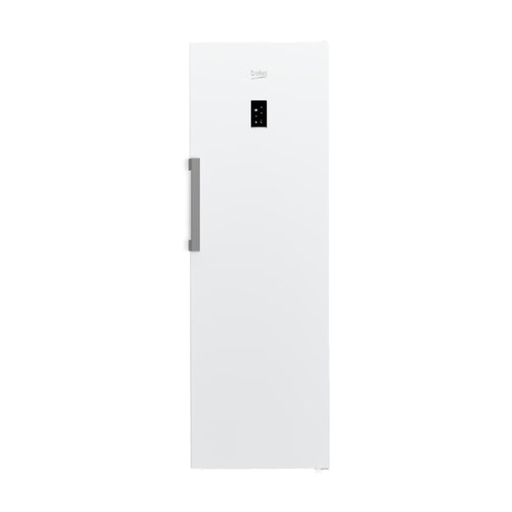
Beko B7RFNE316W freezer, 286 l
An option to consider if you’re looking for a larger freestanding appliance with separate storage areas.
286 l; No Frost; energy class C; 40 dB.
Joybuy
 No image available
COMFEE RCU40WH2(E) mini freezer, 31 l
A compact option if there’s very little room for an additional appliance and the stated freezing capacity meets your needs.
31 l; four-star rating; freezing capacity 2 kg/24 h; reversible door; adjustable feet; 147 kWh/year; energy class E.
Joybuy
Frequently asked questions
Can I freeze curry in any freezer compartment?
No. For a fridge-freezer, the Federal Centre for Nutrition identifies a four-star compartment as suitable for freezing fresh food. A suitable freezer or chest freezer is also an option; don’t assume that a compartment with fewer stars is suitable for freezing just because it keeps food frozen.
How should I store curry portions in a shared kitchen?
Use suitable, airtight containers and label them with the contents and the date they went into the freezer. For liquid foods, the Verbraucherzentrale recommends not filling containers to the top, as food expands when frozen. The German Federal Institute for Risk Assessment notes that chilling slows the growth of many bacteria.
What running costs and consumer rights should I consider before buying?
Compare the stated annual consumption in kWh with your electricity tariff, and check the specific offer for any delivery or connection costs. According to the Verbraucherzentrale, online purchases in Germany generally come with a 14-day right to cancel. If a product is faulty, the seller is generally responsible for putting things right. This consumer information was updated on 13 August 2026.


