Family cooks using fresh ingredients for their paste
If you’re preparing herbs, onions, garlic and other fresh ingredients for a meal, the batch size, bowl size and consistency you want all need to work together.


For curry paste made with fresh ingredients for a family meal, a mini chopper is a sensible place to start, provided the recipe quantity and ingredients suit the capacity and instructions of the specific model. If you mainly grind dry spices, a grinder designed specifically for that purpose may be a better option. A compact food processor is worth considering if you also want to chop or grate ingredients regularly. Bowl capacity and claims about dips alone do not confirm a suitable minimum quantity or a particular paste consistency.
If you’re preparing herbs, onions, garlic and other fresh ingredients for a meal, the batch size, bowl size and consistency you want all need to work together.
If you want to grind small quantities of dry spices first, check that the appliance is specifically designed for this before making the paste.
If you also want to use the appliance for chopping or grating, check which accessories are included with the exact model variant.
A good fit if: Your recipe quantity fits in the bowl and you mainly want to chop fresh ingredients in smaller batches.
Things to consider: A larger batch for the family may need to be prepared in several rounds. Bowl capacity alone doesn’t tell you the minimum quantity the appliance can process.
A good fit if: You want to prepare a larger batch of ingredients, including herbs, vegetables or nuts. Rommelsbacher lists a 1.5-l glass bowl for the MZ 500, with uses including dips.
Things to consider: The 1.5-l capacity refers to the bowl, not a confirmed working quantity for curry paste. A larger bowl also needs more storage space.
A good fit if: You regularly want to chop or grate ingredients as well as make paste. For the FDP23.140GY, Kenwood lists a 1.3-l bowl capacity and a working capacity of 0.75 l for both dry and liquid ingredients.
Things to consider: Extra accessories can handle more tasks, but you’ll need to store them and clean them after use.
A good fit if: You also want to use a blending wand and your fresh ingredients fit in the supplied chopper. Braun lists a 350-ml chopper with the MQ7020WH set.
Things to consider: Braun expressly advises against using dry spices in its 350-ml chopper. Always follow the instructions for the specific attachment.
A good fit if: You mainly want to grind small quantities of dry spices. Rommelsbacher describes this use for the EGK 200 and also mentions mixing the ground spices with oil to make a paste.
Things to consider: A grinder designed for small quantities of spices won’t automatically replace a chopper for larger quantities of fresh vegetables.
| Priority | What to check when buying | Who is this especially relevant to? |
|---|---|---|
| Ingredient type and texture | Check the ingredients allowed in the instructions, as well as the blade and pulse or speed controls. | If I’m chopping fresh ingredients or grinding dry spices, the appliance needs to be suitable for the job and offer the level of control I want. Around 36% of consumers put ingredient type and desired texture first. |
| Working capacity | Compare the recipe quantity with the stated working capacity; don’t infer the minimum quantity from bowl capacity alone. | For a family meal, I want to prepare the planned recipe quantity without confusing bowl size with usable working capacity. Around 29% of consumers prioritise a suitable working capacity. |
| Other kitchen tasks | Check whether chopping or grating attachments are actually included with the exact model variant. | If I regularly want to chop or grate vegetables as well as make paste, the contents of the specific model matter. Around 21% of consumers prioritise other kitchen tasks. |
| Cleaning and storage | Check the cleaning instructions, which parts are approved for cleaning, and the dimensions of the appliance and accessories. | After cooking, I want to be able to clean the parts easily and put the appliance away. Approved cleaning methods and dimensions are key. Around 14% of consumers prioritise cleaning and storage. |
For the FDP23.140GY, Kenwood distinguishes between a 1.3-l bowl capacity and a working capacity of 0.75 l. A family recipe may therefore need more than one batch if the quantity exceeds the stated working capacity.
Compare your recipe’s ingredient quantity with the working capacity, not just the figure shown for the bowl.
Preparing a larger batch in several rounds can take longer.
Braun advises against using dry spices in its 350-ml chopper. Unsuitable hard ingredients can damage the blade.
Check which ingredients are approved for the specific attachment. If you mainly grind dry spices, compare it with a grinder designed specifically for the job.
The chopper test published by F.A.Z. Kaufkompass assesses appliances in general. It doesn’t tell you what recipe quantity or paste texture a particular model can achieve.
Use general test results as a guide only, and check that the ingredients, working capacity and instructions for the specific model suit your recipe.
The models mentioned range from a small chopper to a compact food processor with slicing and grating discs.
The MZ 500 is a larger chopper, while the separate EGK 200 is an option for grinding small quantities of dry spices.
The MultiQuick 7 MQ7020WH set combines a blending wand with a chopper.
The MMR08A1 is a standalone chopper, while the MSM14200 hand blender comes with a chopper.
The KM 3866 is a cordless chopper for buyers who value not having to plug it in.
The models below are suited to chopping fresh ingredients and other kitchen preparation tasks. Check the recipe quantity and approved ingredients against the instructions for the relevant variant.
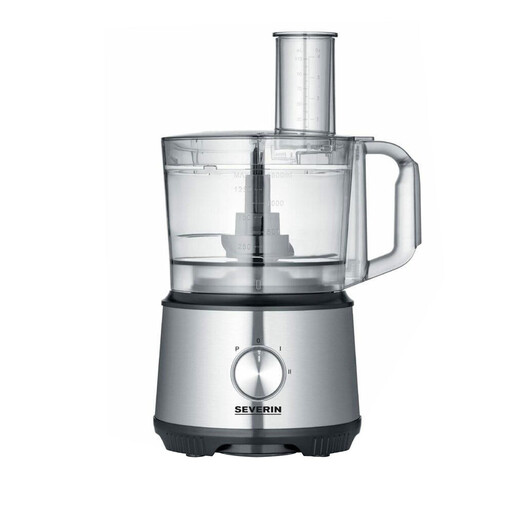 No image available
This model may be suitable for fresh ingredients and other preparation tasks if you’ll make use of its additional functions.
The product name lists functions for kneading, mixing, grating, shredding and grinding.
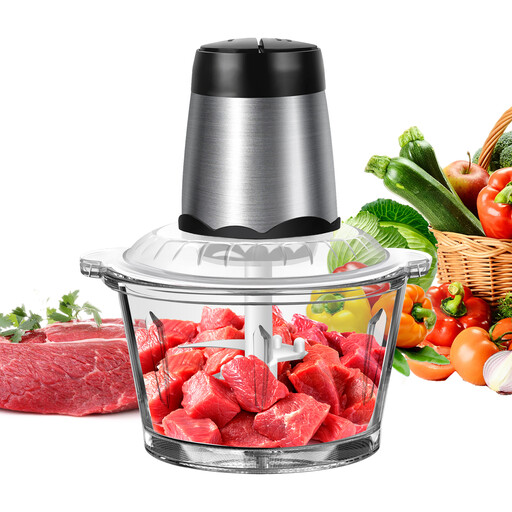 No image available
This appliance may suit a larger batch of fresh ingredients, provided its permitted working capacity matches the recipe quantity.
The product name lists a 2-l glass bowl and stainless steel blades.
 No image available
If you want to prepare different batch sizes depending on the recipe, the product name lists two bowl sizes. Check the instructions to find the right quantity.
The product name lists 2-l and 0.6-l glass bowls, as well as 300 W.
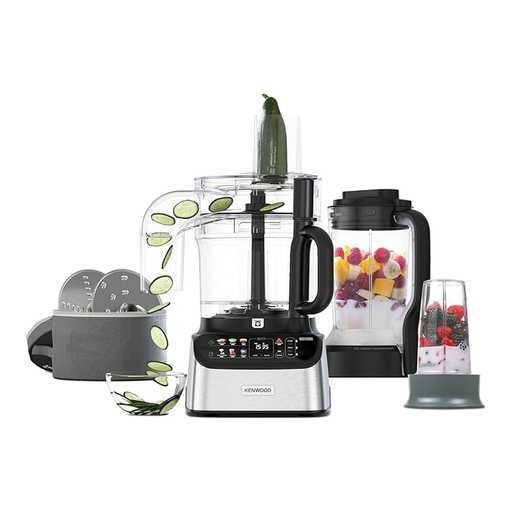 No image available
A food processor may be a good option if you want to tackle other kitchen preparation tasks as well as making paste. Check exactly what’s included with this variant.
The product name lists the FDM73850SS model in silver.
 No image available
This model may suit fresh ingredients such as garlic, onions and vegetables, provided the quantity and rest intervals fit your recipe and preparation routine.
The product name lists a 2-l bowl, 300 W, two speed settings and 304 stainless steel blades with four cutting edges.
Continuous operation is limited to 40 seconds, followed by a break of at least 2 minutes. After three cycles, a cooling period of 15 minutes is specified. This model is not designed for dry spices.
Not in every chopper. Braun advises against using dry spices in its 350-ml chopper, while Rommelsbacher describes the EGK 200 as suitable for small quantities of dry spices, which can then be combined with oil to make a paste. Check the instructions for your specific appliance.
Assemble the appliance according to its instructions, and only put parts expressly approved for dishwasher cleaning in the dishwasher. Wash food-contact parts and work surfaces thoroughly. The German Federal Institute for Risk Assessment points out that an item may look clean but still not be clean from a microbiological perspective.
According to the Verbraucherzentrale, when you buy from a retailer, your statutory rights are claims against the seller. A manufacturer’s guarantee is an additional voluntary service subject to its own terms. If there’s a fault, you should generally first seek a remedy, such as a repair or replacement.
According to the European Union, CE marking is required only for products covered by relevant harmonised EU rules that expressly require it. Parts that come into contact with food must also comply with EU rules on food-contact materials. Check whether the specific product listing meets these requirements.