
Lieferung heute & morgen

Qualitätsgarantie

Willkommens-Angebote freischalten: KOSTENLOSE Lieferung | Bis zu 80 % RABATT | Kostenlose 30-Tage-JoyPlus-Testphase
App herunterladen
A new cushion cover can transform the look of your sofa, bed or armchair, while protecting your cushions from everyday wear. Yet inaccurate measurements, hard-to-care-for fabrics and impractical fastenings can all lead to disappointing purchases. This is why it’s worth checking the specific product details, especially for decorative cushion covers, rather than relying on design claims alone.
A 50x50 cm cushion cover won’t necessarily fit every cushion described as a similar size. Even a difference of a few centimetres can leave the cover creased, stretched too tightly or sitting loosely. Before you buy, measure the cushion without compressing it too much, then compare its width and height with the product details.
Long cushions have different proportions. A 30x50 cm cushion cover, for example, is suitable for a slim back cushion or lumbar support, while 45x45 cm and 50x50 cm cushion covers are more commonly used for classic sofa cushions.
Velvet, chenille, cotton, polyester and acrylic all differ considerably in feel, shape retention and cleaning requirements. A velvet cushion cover may have a dense, soft surface, but that doesn’t mean it can be cared for in the same way as a washable cotton cushion cover. Always follow the care instructions for the specific product.
Terms such as ‘easy-care’ or ‘hard-wearing’ shouldn’t be considered in isolation either. Check whether the cover is machine-washable, needs spot cleaning only, or should not be ironed or tumble-dried.
Fringing, tassels, textured finishes and striking patterns can change the look of a room, but may show more wear with frequent use. A textured cushion cover with a concealed zip can offer a good balance of style and function. In homes with children or pets, smooth, wipe-clean or explicitly washable fabrics are often more practical.
Check the cover’s actual dimensions and shape:
The cover shouldn’t be stretched too tightly, or be so loose that the cushion pad shifts around. Also check whether the cushion pad is included. Several of the products featured here are explicitly supplied as covers only.
A cotton cushion cover can feel soft and breathable. Chenille has a tactile, textured finish thanks to its yarn structure. Polyester is often used for covers designed to retain their shape and be easy to care for. Acrylic may be used for knitted patterns, tassels or colourful jacquard designs.
Look for a specific material description wherever possible. ‘Linen look’, for example, describes an appearance and doesn’t necessarily mean the fabric is made from linen. The MEROPE model with a linen-look finish is listed as 100% polyester with a bamboo-like texture.
A cushion cover with a zip is generally easier to put on and take off than one with an overlapping envelope closure. A concealed zip can give the cover a more streamlined look, while a visible or colour-matched fastening is easier to check.
Read the care instructions before you buy:
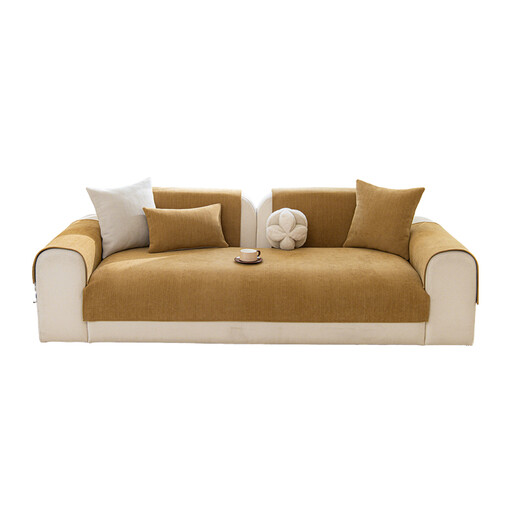
Why this product suits this shopper: The long shape is suitable for back cushions, slim sofa cushions or seating. Chenille and cotton are listed as materials in the product details.
The 30×50 cm dimensions and rectangular shape are clearly stated. This makes it easier to check the fit against your existing cushion before you buy.
Chenille surface with a herringbone texture; product details recommend spot cleaning and indicate that machine-washing may be possible, subject to the care label.
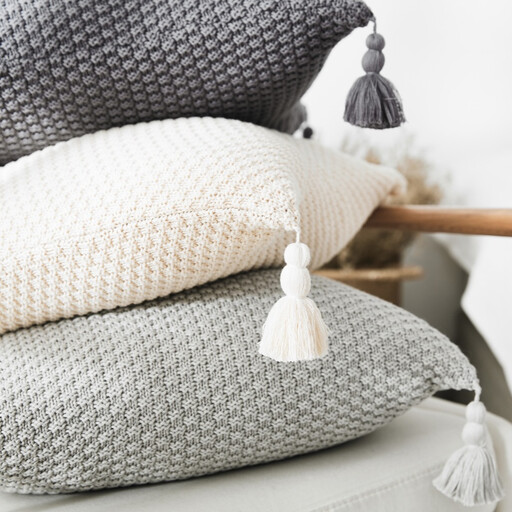
Why this product suits this shopper: Made from 100% cotton, this cover combines a knitted texture, tassels and a concealed zip for a decorative cushion on your sofa or bed.
The fabric composition is specified, rather than described only in general style terms. The dimensions, fastening and care instructions are also provided.
100% cotton according to the product details; concealed zip and Standard 100 by OEKO-TEX listed as product information.
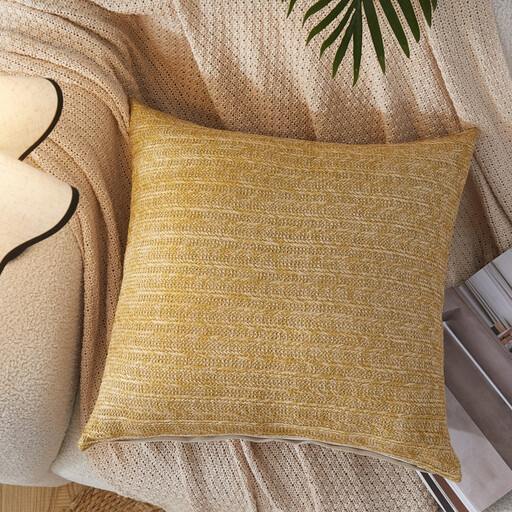
Why this product suits this shopper: This cover is for anyone looking for an easy-care surface for indoor use, with a herringbone pattern.
The care restriction is clearly stated: according to the product details, the cover isn’t suitable for machine- or hand-washing and should be spot-cleaned instead.
Water-repellent PE front according to the product details; polyester canvas back and concealed zip with a fabric flap.
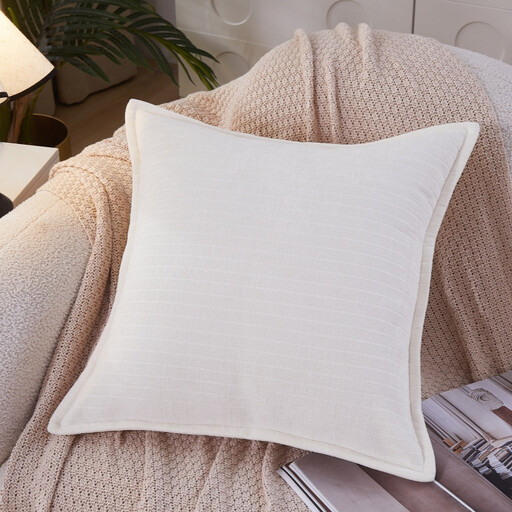
Why this product suits this shopper: The striped design is ideal for living spaces where you regularly change cushion covers and mix and match different colours.
The material, fastening and care instructions are clearly stated. The recommendation to wash gently below 30 °C helps you avoid choosing the wrong washing programme.
100% polyester according to the product details; matching zip and stated OEKO-TEX STANDARD 100 certification.
We’ve put together a complete, regularly updated list of products that meet these strict selection criteria and the safety requirements applicable in the EU.
Measure the width and height of your existing cushion pad. Common sizes for square cushions are 45x45 cm and 50x50 cm. Long cushions may need a 30x50 cm cover, for example. The cover should fit snugly without stretching the fabric too much.
How long it lasts depends on the material, friction, how often it’s washed, exposure to sunlight and how it’s cared for. A cover used every day should be cleaned according to the washing instructions and protected from unnecessary heat. With textured finishes and tassels, take extra care to avoid pulling or vigorous rubbing.
Not all cushion covers can be machine-washed. According to the product details, some cotton, polyester or knitted covers can be washed on a gentle cycle, while others should only be spot-cleaned. Always follow the care label and the information on the relevant product page.