
Lieferung heute & morgen

Qualitätsgarantie

Willkommens-Angebote freischalten: KOSTENLOSE Lieferung | Bis zu 80 % RABATT | Kostenlose 30-Tage-JoyPlus-Testphase
App herunterladen
Cushioned running shoes are designed to support your foot comfortably on impact without feeling unstable or unnecessarily heavy. For regular runs in Germany, breathability, reliable grip and a fit that doesn’t pinch even on longer outings also matter. If you only focus on terms like “maximum cushioning” or “high performance”, you’ll often miss important details.
A very soft midsole can feel pleasant the first time you try it on. For your own running profile, however, it may be too yielding. What matters is whether the shoe stays controlled through your stride and suits your preferred terrain. For longer training sessions, consider cushioning, sole width and stability together.
An airy upper can help with heat dissipation. In rain, mud or with frequent contact with branches, additional reinforcements are a good idea. Check whether the shoe uses sandwich mesh, woven textile or TPU-reinforced zones. A fully airy upper is not automatically suitable for trail running.
Running shoes should leave a little room at the front. Your toes shouldn’t hit the front when running downhill, while your heel still needs to be securely held. Depending on the brand and last, the same EU size can fit differently. If you have wider feet or want a roomier toe box, going up half a size can make sense, provided heel hold remains secure.
EVA cushioning is widely used because the material combines relatively low weight with elastic properties. Figures such as “rebound” or “energy return” shouldn’t be judged in isolation. Instead, look for:
For road runs and marathon preparation, a continuous cushioning setup can feel comfortable. On uneven ground, a stabilising geometry is additionally helpful.
Slip-resistant running shoes need a tread that suits the surface. A flatter rubber outsole works well on tarmac and paved paths, while trail-running shoes usually have more pronounced lugs and a more abrasion-resistant rubber compound. A balanced compromise is possible for shoes used on both road and trail, but no single tread works equally well on every surface.
When choosing, pay attention to tread orientation, rubber zones and ground contact. Wet, leafy paths, loose sand and rock each have different demands. Manufacturer terms such as ROCKYTEC or GCR describe brand-specific outsole concepts and should be cross-checked with the specific product details.
Breathable running shoes with mesh uppers can support air exchange. For runners with a broader forefoot, running shoes with a wide toe box or an expanded last are worth a look. It’s important that the extra space doesn’t lead to a loose midfoot fit.
A practical try-on checklist:
The following models are categorised based on the stated construction, materials, sizing information and intended use. This selection does not replace an individual try-on.
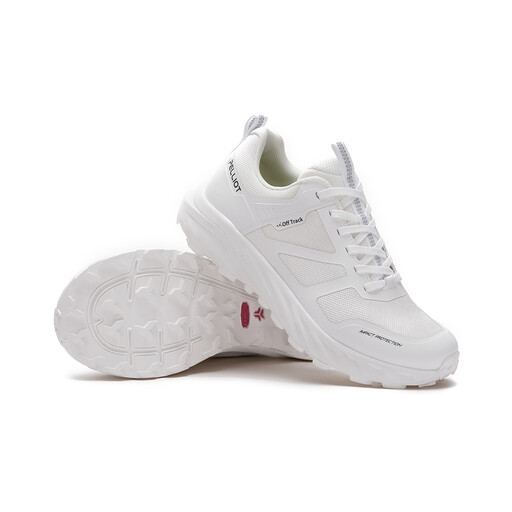
Why this product suits the profile: This unisex model combines a lightweight sandwich-mesh upper with an EVA midsole and is designed for switching between city paths and firm natural trails.
The product information explicitly states materials, foot shapes and sizes. This makes it easier to choose for narrow, standard or wider feet.
Light, breathable upper; elastic EVA midsole; ROCKYTEC rubber outsole for varied surfaces.
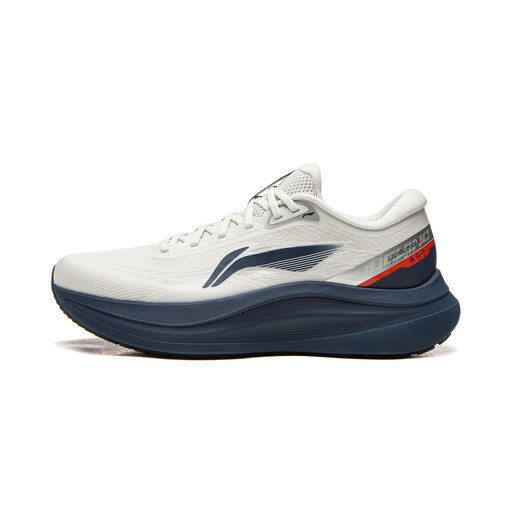
Why this product suits the profile: Men’s running shoes with an expanded forefoot and stabilised heel can be a solid choice for regular training on roads and well-made paths.
Fit isn’t described solely via cushioning: a widened heel, PROBAR LOC and the stated wide toe box provide concrete reference points.
Continuous Tempo Bounce midsole; textile upper with padding on tongue and collar; zoned rubber outsole.
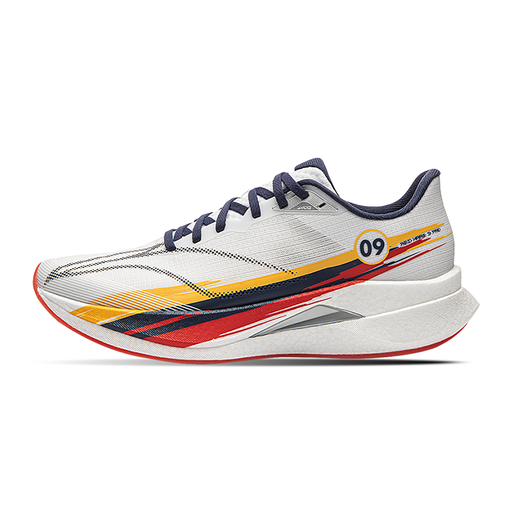
Why this product suits the profile: For high training volumes and structured sessions, this model offers a widened platform, a dual-layer BOOM midsole and a woven upper with ventilation zones.
The selection is based on platform width, torsion control, upper and outsole rather than blanket performance claims.
Dual-layer LI-NING BOOM foam construction; widened platform; GCR rubber outsole and ventilated BOOM FIBER upper.
We’ve compiled a complete, continuously updated list of products that fully meet these strict selection criteria and the safety regulations applicable in the EU.
The lifespan of a running shoe depends on body weight, running style, surface, training volume and care. A fixed kilometre figure therefore can’t be quoted responsibly for every model. Watch for:
Road shoes shouldn’t be used permanently on wet trails. Trail models can work on tarmac, but their coarse tread can wear faster there. For care, a damp cloth or hand wash with mild soap is sufficient for many textile models. Machine washing, harsh cleaners and direct heat can damage materials and adhesives.
That depends on your route, training volume, body weight, preferred ride feel and fit. More foam doesn’t automatically mean more comfort. A suitable combination of midsole, sole width and secure heel hold is more important than a shoe that’s as tall as possible.
There’s no blanket lifespan. Regularly check the midsole, outsole and heel area. If cushioning, stability or fit noticeably deteriorate, it’s time to switch models. Rotating between several pairs can reduce wear on each pair.
Lightweight running shoes can be suitable for training and marathon preparation if they hold your foot securely and the cushioning suits your individual running style. For long runs, test the model first on shorter sessions. On mixed terrain, choose shoes with an appropriate outsole and sufficient grip.