Tart bakers with a fitted kitchen
You want to bake a tart for sharing in an existing fitted kitchen, so you’ll need to check that the tin, heating functions and housing unit are all compatible.


For a custard tart to share, a built-in oven with conventional top and bottom heat is an obvious choice if you have a suitable housing unit and the tin fits inside. Fan cooking may also be useful if you plan to bake other suitable treats; a pizza setting isn’t essential for every tart. If you don’t have a housing unit, a mini oven may be an option, as long as the tin and the required clearance fit inside the cooking compartment.
You want to bake a tart for sharing in an existing fitted kitchen, so you’ll need to check that the tin, heating functions and housing unit are all compatible.
You’re making other treats alongside the tart, so you’re interested in the fan cooking and shelf positions offered by the specific model.
You’re looking for a freestanding oven and need to check whether your particular tart tin will fit in the usable cooking compartment.
First, check that the tin and oven will fit your kitchen. Then compare the heating functions and extra features with your recipe and planned baking schedule.
| What matters when buying | What to check | Who it matters to |
|---|---|---|
| Tart base and heating function | Check the specific model for conventional top and bottom heat and, where relevant, bottom heat or a pizza setting. Also check the recipe’s instructions for shelf position and preheating. | If you’re following a particular recipe, its recommended heating function and the oven settings should match. Around 30% of consumers would put choosing the right heating function first. |
| Room for the tin | Compare the tin’s external dimensions with the usable internal dimensions and the intended shelf position. For built-in models, check the housing unit too. | If you’ve already chosen the tart tin for your get-together, you’ll want to know above all whether it will sit securely on the rack or shelf. Around 30% of consumers would consider tin size their top buying priority. |
| Other bakes | Check the model’s shelf positions, included accessories and fan cooking details against recipe temperatures and cooking times. Bosch and Siemens specify fan cooking on certain models for up to three levels. | If you plan to bake other suitable treats alongside the tart, you’ll want to know how you can plan your baking session. Around 20% of consumers would prioritise accommodating several bakes. |
| Freestanding rather than built-in | Check the space available, the instructions and the oven’s actual internal dimensions. The capacity in litres alone doesn’t prove that your tin will fit. | If you don’t have a suitable housing unit, you’ll need a freestanding option that will actually fit your tin. Around 10% of consumers would put the option to position the oven freely ahead of other buying priorities. |
| Energy use and cleaning | Compare stated kWh figures only for the same heating function and comparable standard cycles. Consider the cleaning method and any extra cleaning effort separately. The Verbraucherzentrale explains the consumption figures for each standard baking cycle. | If you use your oven regularly, energy information and your preferred cleaning method may matter more than extra baking programmes. Around 10% of consumers would consider ongoing costs and effort first. |
A capacity in litres doesn’t tell you whether your particular tin will fit in the oven with the rack and the required clearance.
Compare the tin’s external dimensions with the usable internal dimensions and the intended shelf position.
If the tin doesn’t fit, you may need a different tin or oven.
NEFF’s explanation describes extra bottom heat as useful for dishes such as quiche. A different recipe or filling may call for a different approach.
Choose the specific recipe first, then check that its recommended heating function is available on the oven.
The stated consumption relates to a standardised baking cycle and a particular heating function. It doesn’t necessarily reflect the actual baking time or an additional cleaning cycle.
Compare label figures on the same basis and treat cleaning as a separate process. The Verbraucherzentrale explains the figures for each standard cycle; NDR notes the additional energy used for pyrolytic cleaning.
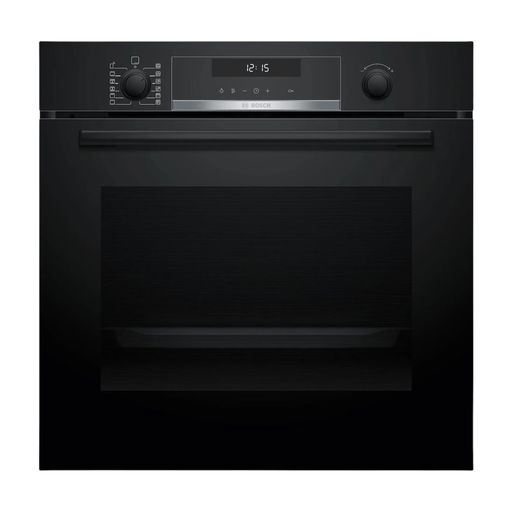
The HBA571BB4 built-in model combines conventional top and bottom heat with fan cooking and various cleaning functions.
The HB314G0S3 built-in model offers a useful comparison if you want to check bottom heat and a pizza setting as well as conventional top and bottom heat.
NEFF explains that its pizza setting combines bottom heat with fan cooking. The brand also has a tart recipe that describes blind baking.
The freestanding TO 2068 oven and toaster is an option if you’re not looking for a built-in appliance.
The BEE43511AB built-in model offers another option to compare for fan cooking, a timer and a cleaning function.
This selection includes built-in ovens and a freestanding mini oven. For each model, check that your tin will fit and that the listed features suit your recipe and baking plans.
 No image available
An option for a suitable housing unit and recipes using conventional top and bottom heat. The product information also lists 3D fan cooking for other suitable bakes.
71 l capacity, 3D fan cooking and pyrolytic cleaning.
 No image available
For a built-in kitchen where you’re also considering a pizza function. Check that the setting you want matches your recipe and the model’s instructions.
60 cm, AirFry and pyrolytic cleaning according to the product name.
 No image available
A built-in option if you’re considering a pizza function or bottom heat for a suitable recipe. Check the specific settings before choosing.
60 cm, AirFry and 3D fan cooking according to the product name.
 No image available
A freestanding alternative if you’re not looking for a built-in appliance. Measure your tin before buying and compare it with the usable internal dimensions.
23 l, two independently usable cooking zones, LED touchscreen and 15 programmes according to the product name.
 No image available
A built-in option for a suitable housing unit and a baking session where you want several cooking functions. Check the model’s dimensions against your kitchen.
78 l, nine cooking functions and A+ energy efficiency class according to the product name.
No, a pizza setting isn’t essential. NEFF describes the extra bottom heat as suitable for dishes such as quiche. Choose the heating function to suit your specific tart recipe and check which settings are actually available on the oven you’re considering.
Measure the outside of the tart tin and check that it fits on the intended rack or shelf. If your recipe calls for blind baking, have the specified equipment ready too. NEFF’s panna cotta tart recipe uses baking paper and dried pulses for this; it’s an example of a tart base, not the same as a custard tart recipe.
For ovens with the relevant label, compare the kWh figures per standardised baking cycle and for the same heating function. The Verbraucherzentrale says these figures relate to standard cycles; without knowing your actual usage time and electricity tariff, they don’t tell you what it costs to bake one tart. Pyrolytic cleaning is an additional process with its own energy use.
No. According to the European Commission, energy labelling applies to household ovens covered by the regulations; small ovens fall outside the scope described in its overview. So don’t automatically treat a mini oven without a label in the same way as a covered built-in oven without one.