
Lieferung heute & morgen

Qualitätsgarantie

Willkommens-Angebote freischalten: KOSTENLOSE Lieferung | Bis zu 80 % RABATT | Kostenlose 30-Tage-JoyPlus-Testphase
App herunterladen
For enthusiasts of DIY crafting, cutting dies are essential tools for adding a personal and professional touch to paper projects. Whether for creating custom cards, embellishing scrapbook pages, or other creative papercrafts, the selection of designs and shapes is vast. However, this variety can also be overwhelming. This guide is intended to provide you with direction and presents a selection of versatile metal cutting dies suitable for various applications.
To ensure your new cutting dies meet your expectations and work flawlessly, there are a few basic criteria to consider.
The most important factor is the die's compatibility with your existing die-cutting and embossing machine. Most metal cutting dies are designed as "wafer-thin dies" and are compatible with the most common machines on the market. Nevertheless, you should check the maximum processing width of your machine. It is especially important for large background dies that they fit onto your device's platform. Information on compatibility can usually be found in the product description of the dies or in your machine's manual.
High-quality cutting dies are typically made of carbon steel. This material is durable and ensures clean, precise cuts, even with intricate designs. The level of detail in a die significantly determines the final result. While simple shapes are ideal for beginners or minimalist designs, complex motifs with fine cut-outs and embossing lines create particularly impressive effects. Keep in mind that very detailed dies may require special paper or multiple passes through the machine to cut out all elements cleanly.
Consider which projects you primarily want to use the dies for.
Here is a compilation of three different cutting die sets that stand out for their versatility and application in card making and as scrapbooking supplies.

Rose Flowers Metal Cutting Die Cuts
Why it stands out: This set includes several dies for creating detailed rose blossoms and leaves. The individual elements can be layered to create a three-dimensional effect, adding special depth to cards and gift tags.
Pros:
Who it's for: Creatives who enjoy implementing floral and romantic designs. Ideal for crafters who want to give their projects a high-end look through layering techniques.
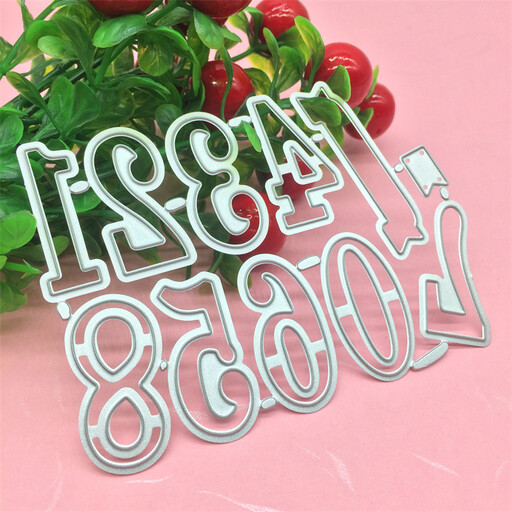
Alphabet Die Set – 26 Capital Letter Metal Cutting Dies
Why it stands out: A complete set of 26 capital letters and 10 numerals is a fundamental tool for personalisation. With this set, names, dates, initials, or custom messages can be precisely cut out.
Pros:
Who it's for: Essential for anyone who wants to add custom lettering to their scrapbook layouts, cards, or albums. A valuable addition to die-cutting machine accessories for both beginners and experienced crafters.
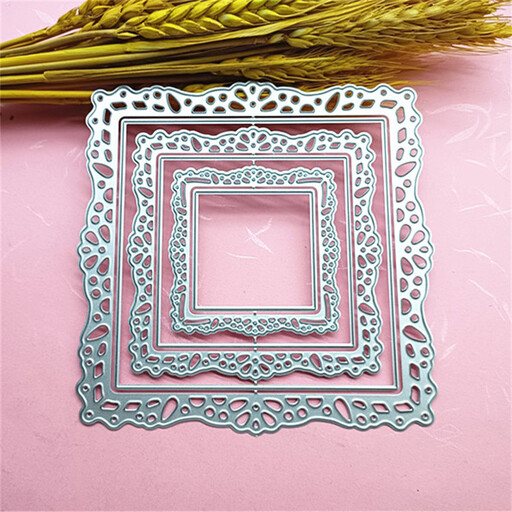
Square Hollow Lace Background Metal Cutting Dies
Why it stands out: This large-format die cuts an intricate, lace-like pattern in a square shape. It is perfect for quickly and easily creating an elegant background for a standard-sized card.
Pros:
Who it's for: Crafters looking for time-saving solutions for background design who have a preference for elegant, lace-like patterns.
The products shown here represent just a small fraction of the creative possibilities. If you are looking for other shapes, themes, or special embossing folders, it's worth taking a look at our broader assortment.
? Discover more embossing stamps for paper here
Cutting dies (or simply dies) are thin metal shapes with a sharp edge used to cut completely through paper and other thin materials. Embossing folders, on the other hand, are typically thicker plastic folders with a recessed and a raised pattern. The paper is placed between the two sides and pressed through the machine, which impresses a relief-like, three-dimensional pattern into the paper without cutting it. Some intricate cutting dies can also be used for embossing with a special rubber mat.
For most cutting dies, standard cardstock with a grammage between 160 g/m? and 240 g/m? is suitable. For very intricate designs, a slightly thinner paper (approx. 120 g/m?) can help to cut out all details cleanly. For sturdy layers or boxes, thicker cardstock up to 300 g/m? is appropriate. It is advisable to test with a small sample piece to see how the paper behaves with the respective die.
After die-cutting, small paper scraps often get stuck in the intricate openings of the die. These are best removed carefully with a pointed tool, such as a pick-me-up tool or a sturdy needle. A small, stiff brush (e.g., a die brush) can also be helpful to brush the remnants out of the die. Regular cleaning ensures that the cutting results remain precise for future use.