People sharing a supply of melon
If you share cut melon with others, you need a suitable place to keep it covered and chilled. The BfR advises chilling cut melon as quickly as possible.


You don’t need a separate fridge if there’s room in the shared fridge to store the covered melon and keep it chilled at all times. The German Federal Institute for Risk Assessment (BfR) recommends storing cut melon at +4 to +6 °C wherever possible, so check the actual temperature. If there isn’t enough reliable space, choose the size of any additional appliance based on everyone’s refrigeration needs, and compare its footprint, energy consumption and any extra freezer capacity you might need.
If you share cut melon with others, you need a suitable place to keep it covered and chilled. The BfR advises chilling cut melon as quickly as possible.
When several people use the same fridge, the space actually available, the interior layout and room for a possible extra appliance are all important considerations.
If you’re considering another appliance, look at its energy consumption alongside its usable capacity. The consumer advice centre recommends checking energy consumption figures and the energy label when choosing.
First, check whether the existing fridge has a suitable place to store the melon. If it doesn’t, choose an additional appliance based on everyone’s refrigeration needs and the space available.
| What matters | What to look for when buying | Who is this especially important to? |
|---|---|---|
| Chilling and hygiene | Check the temperature in the intended storage area; chill covered melon promptly. | I want to be able to store cut melon safely, covered and consistently chilled. Around 36% of consumers prioritise reliable refrigeration and hygiene above all else. |
| Usable fridge space | Check the interior dimensions and shelves; for appliances with a freezer compartment, consider the fridge space separately from the total capacity. | When I share a fridge with others, I need enough practical space for food and a suitable shelf for a covered portion. Around 29% of consumers have this as their main priority. |
| Energy consumption | Compare the kWh/year figure for the specific model on its current energy label. | I want to estimate the running energy costs of an additional appliance without choosing one with too little fridge space. Around 21% of consumers focus primarily on energy consumption. |
| Space and noise | Check the external dimensions and door clearance where the appliance will go; if it’s near a living area, also check the stated airborne noise emissions. | If there’s limited space in the shared kitchen or the appliance will be near a living area, its dimensions and noise rating need to suit the location. Around 14% of consumers prioritise these factors. |
A suitable spot in the existing shared fridge may be all you need. Another appliance only adds value if shared fridge space or reliable storage is a problem.
First, check the available space and the temperature where you plan to store the melon. Only consider an additional appliance if these conditions can’t be met.
In a fridge-freezer, some of the total capacity is taken up by the freezer compartment. The capacity in litres also won’t tell you whether a covered portion of melon will fit on a shelf.
Compare the stated fridge capacity and shelf dimensions, not just the total capacity.
The EU scale for new refrigeration appliances runs from A to G. Older ratings such as A++ can’t simply be treated as the current class of a different model.
Check the energy label for the specific model on offer, and compare its consumption in kWh/year as well.
Chilling alone won’t remove contaminants that may get onto the melon during cutting or storage. The BfR highlights the importance of chilling it promptly.
Use clean hands, knives and surfaces, cover the pieces and chill them as quickly as possible.
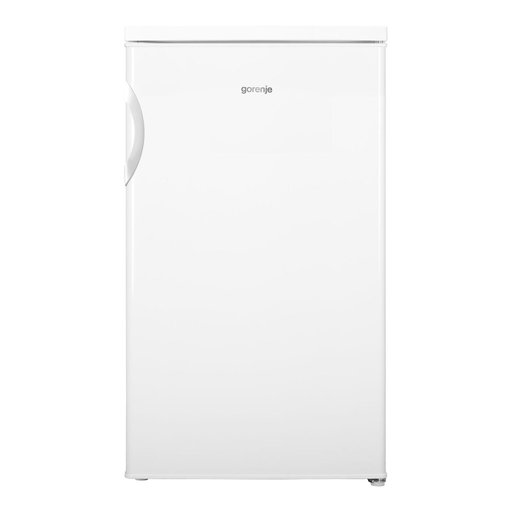
The TSE1424N is a freestanding fridge designed for spaces where floor area is limited.
The Rdgd 1401 Pure is a table-top fridge with an additional freezer compartment, designed for locations with limited floor space.
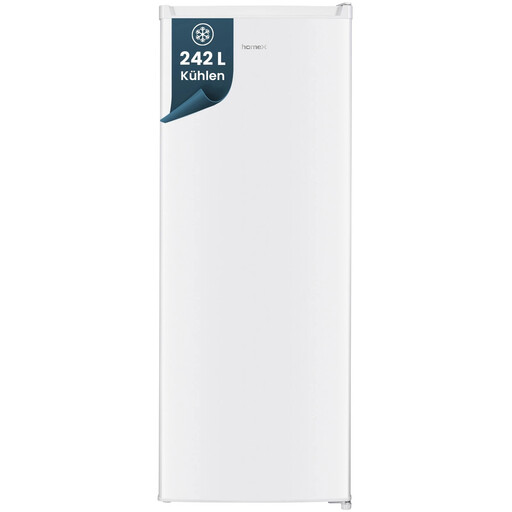
The VKS 8809 is a full-height fridge without a freezer compartment, for households that need more shared fridge space.
The appliances below range from compact fridges and fridge-freezers to models with more fridge space. The key is to find one with a fridge compartment, shelves and footprint that suit the food you share.
 No image available
Described as a fridge without a freezer compartment; its stated usable capacity of 133 l is all fridge space.
It has five shelves and a salad drawer. Dimensions are 56 × 57.9 × 84.5 cm, and the door is reversible.
Conflicting figures of 72 and 80 kWh/year are listed for annual consumption. Check the energy label for the specific appliance on offer.
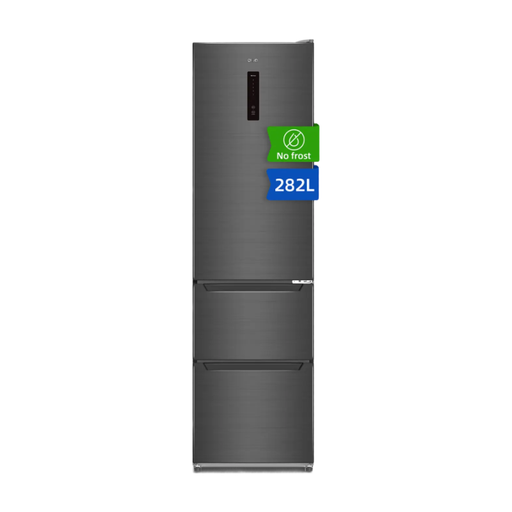 No image available
An option if you need freezer capacity as well as fridge space; 197 l is listed for chilled food.
The total capacity of 282 l includes the freezer compartment. The appliance is listed as 54 cm wide and 192 cm tall.
No Frost, Multi-Air-Flow and touch controls are listed as features; the energy class is E.
 No image available
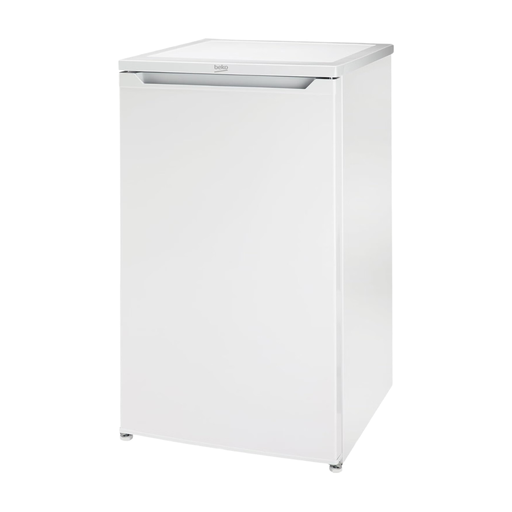
A freestanding fridge with no freezer compartment listed, if you’re looking for a separate, compact appliance for chilling food.
The description lists a total capacity of 88 l, three glass shelves, a salad drawer, an adjustable thermostat and automatic defrosting. The door is reversible.
It is listed as 47.5 cm wide. Check the actual temperature where food is stored when the fridge is filled as usual.
 No image available
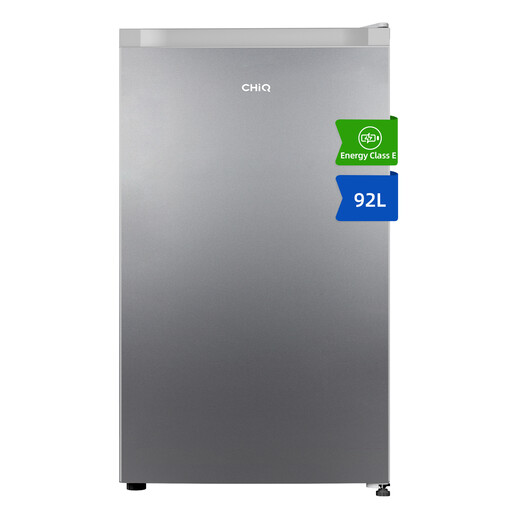
A compact appliance with adjustable temperature settings, ideal when space is limited and you need a separate fridge.
The model is listed as 92 l and 47 cm wide, with adjustable glass shelves and a salad drawer. The temperature control has seven settings.
According to the description, the separate cooling zone is only intended for short-term chilling; food stored there should not be left for more than two hours. Don’t use this zone for storing melon for longer periods.
 No image available
An option if several people regularly need more fridge space for fresh food.
It has five adjustable shelves, four door shelves and a salad drawer. Annual energy consumption is listed as 104 kWh.
The appliance needs to be defrosted manually if ice builds up. Consider this maintenance when choosing.
Cover the pieces and chill them as quickly as possible if they won’t be eaten straight away. The BfR recommends storing cut melon at +4 to +6 °C wherever possible. Use clean hands, knives and surfaces. Follow the BfR’s precautionary advice and throw away melon that has been left unrefrigerated for several hours.
No. What matters is the actual temperature where you plan to store the food. Check it when the fridge is filled and used as usual, as the appliance’s setting doesn’t confirm the temperature the food is kept at.
Compare the stated consumption in kWh/year for appliances with enough usable fridge space for your needs. The consumer advice centre notes that larger refrigeration appliances can use more electricity; actual consumption also depends on how you use them.
The current EU scale for refrigeration appliances that require a label runs from A to G. Your Europe explains that the label must also be clearly visible when shopping online. To understand running energy consumption, check the kWh/year figure for the specific model as well.