
Lieferung heute & morgen

Qualitätsgarantie

Willkommens-Angebote freischalten: KOSTENLOSE Lieferung | Bis zu 80 % RABATT | Kostenlose 30-Tage-JoyPlus-Testphase
App herunterladen
A cutlery organiser should keep knives, forks, spoons and smaller kitchen utensils neatly separated. In practice, however, the wrong dimensions, inserts that slide around or materials that are difficult to clean can quickly lead to a disappointing purchase. If you focus only on the number of compartments or a modern design, you can easily overlook important details.
This guide explains what households, families and people short on storage space should look for when buying a cutlery organiser.
A 5-compartment or 6-compartment cutlery organiser may look well organised at first. What matters, though, is whether the compartments are wide and deep enough for the cutlery you already own. Large serving spoons, kitchen tools or chopsticks won’t necessarily fit in narrow standard compartments.
Your cutlery organiser should therefore suit the amount of cutlery you actually have. Too many small sections can even reduce the available storage space.
Many cutlery organisers are described as space-saving or suitable for standard drawers. But that description is no substitute for checking the length, width and height. Plinths, drawer runners and inner edges can further reduce the usable space.
Before buying, measure the inside of the drawer in several places. Height is particularly important for a drawer cutlery organiser: when you close the drawer, the insert mustn’t catch on the drawer front or runners.
A non-slip surface can help stop cutlery sliding around when you open and close the drawer. However, it won’t necessarily keep the organiser itself in place. On smooth or slightly sloping drawer bases, the whole insert may still move around.
Check whether the cutlery organiser fits snugly, or whether you’ll need additional non-slip mats or side supports.
Start by measuring:
A shallow cutlery organiser is usually a better fit for low drawers. A taller cutlery holder or vertical cutlery holder may work better on the worktop. If storage space is limited, a kitchen drawer organiser can help you make full use of the space available.
Plastic options such as PET are lightweight, retain their shape and are easy to wipe clean. Even so, check the specific care instructions. According to the product information, the 5-Compartment Cutlery Holder TS PET is not dishwasher-safe and should be hand-washed with a mild detergent. The manufacturer also advises that high temperatures and prolonged exposure to direct sunlight may cause warping or discolouration.
Models made from steel and acacia wood have a different look and are often suitable for storing cutlery openly on the worktop. Don’t leave wood wet for long, as moisture can cause it to warp. Clean these organisers with a damp cloth, then dry them.
Before you buy, think about which categories you want to keep separate:
A 5-compartment cutlery organiser is enough for many households if you want to organise cutlery and a few kitchen tools together. Six separate sections can be useful if you regularly use several types of cutlery or additional utensils. Adjustable dividers offer more flexibility, but need a secure locking mechanism.
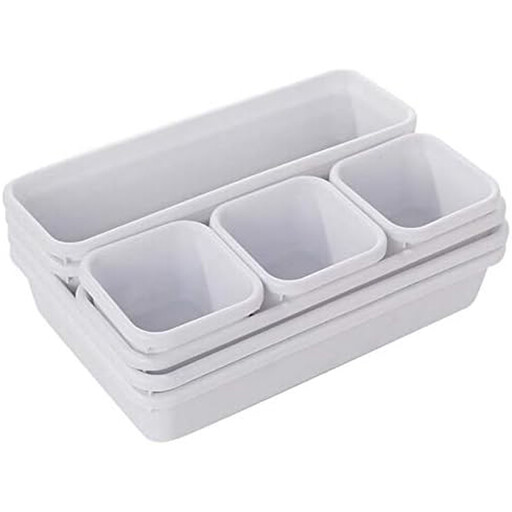
Why this product suits you: These boxes have built-in adjustable dividers, making them a flexible choice for households that want to organise cutlery or small kitchen utensils their way.
Adjustable dividers reduce the risk of fixed compartments not suiting the cutlery you already own. You should still check your drawer dimensions before buying.
Plastic construction, white finish, and built-in adjustable dividers.

Why this product suits you: Its five clearly separated compartments and detailed technical specifications make it easier to choose if you want to check the material, dimensions and care requirements carefully.
The dimensions of 32,7 × 23,5 × 4,6 cm make it easy to check whether it will fit your drawer. The hand-wash requirement also makes the cleaning expectations clear.
PET material, five compartments, stated dimensions of 32,7 × 23,5 × 4,6 cm, and a non-slip surface.
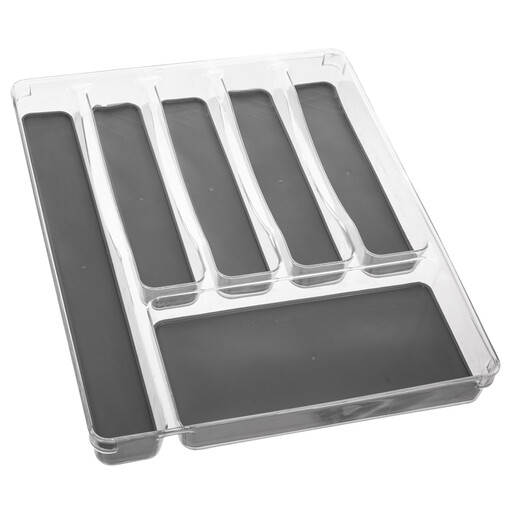
Why this product suits you: Six separate compartments are a useful option for families or frequent users who want to sort different types of cutlery and extra utensils separately.
The six fixed compartments keep items clearly separated. Before buying, check that the extra sections suit the width of your drawer and the size of your cutlery.
Six stated compartments and TS PET construction, according to the product description.
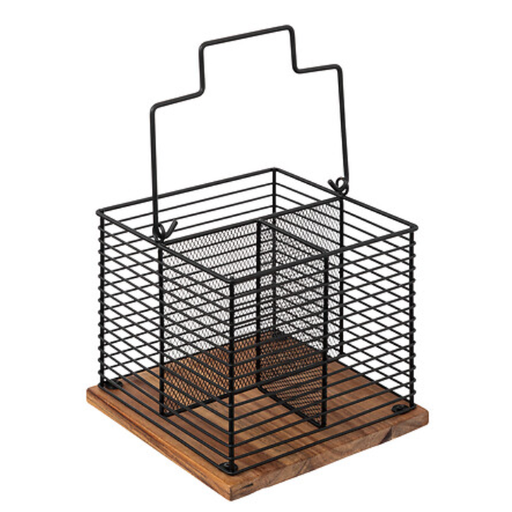
Why this product suits you: The combination of steel and acacia wood is designed for anyone who wants to keep cutlery visible and separated on the worktop.
The product description gives the dimensions as 18,5 × 18,5 × 29 cm. This makes it clear that the model is better suited to open cutlery storage than to a shallow drawer.
Two separate compartments, a steel and acacia wood construction, and an upright design for the worktop.
We’ve put together a complete, regularly updated list of products that meet these strict selection criteria and the safety regulations in force in the EU.
To keep your kitchen cutlery storage hygienic and practical in the long term, follow a few simple rules:
The right cutlery organiser doesn’t need to have as many features as possible. Accurate dimensions, a well-planned arrangement of compartments, suitable materials and care that fits your everyday routine matter more.
Measure the internal width, length and usable height in several places. Take the runners, edges and any uneven areas into account. The inside of the drawer should be slightly larger than the organiser’s external dimensions, so you can put it in and take it out easily.
Four or five compartments are often enough for knives, forks, tablespoons and teaspoons. Families or households with extra serving cutlery may find six compartments useful. The important thing is that the compartments suit the size and quantity of the utensils you own.
Its lifespan depends on the material, how heavily it is used, exposure to moisture and heat, and how it is cleaned. Don’t overload a plastic or PET insert or leave it exposed to high temperatures for long periods. For steel and wood models, keeping them dry and cleaning them gently will help them last longer.