
Lieferung heute & morgen

Qualitätsgarantie

Willkommens-Angebote freischalten: KOSTENLOSE Lieferung | Bis zu 80 % RABATT | Kostenlose 30-Tage-JoyPlus-Testphase
App herunterladen
A suitable cutlery organiser for the kitchen can keep your cutlery separated and make better use of unused space. However, not every model automatically leads to practical cutlery storage. What really matters are the dimensions, material, compartment layout and where you plan to put it.
A cutlery tray can look compact in product photos yet still be too wide or too tall for your existing drawer. Before buying, you should measure the inside of the drawer – not just the front. What matters is:
A model that is 34 cm long won't automatically fit every standard drawer. It's also wise to allow a few millimetres of wiggle room so the cutlery drawer organiser doesn't get stuck.
A cutlery tray with two sections might be enough for a small household. But if you want to separate knives, forks, tablespoons, teaspoons, cooking utensils or chopsticks, you'll need a different layout. A cutlery holder with lots of narrow compartments uses space efficiently, but it may not be suitable for large serving spoons.
So don't just look at the number of compartments – pay attention to their width and length too. An extra compartment for larger kitchen utensils can be more practical in daily use than several very narrow divisions.
Materials differ when it comes to cleaning effort. PET and metal can usually be wiped clean with a damp cloth, whereas wood or bamboo shouldn't be left in water for long periods. What's more, not every cutlery tray is dishwasher-safe.
That's why you should always check the manufacturer's instructions before buying. For the 5-Compartment Cutlery Holder TS PET, for example, hand washing with a mild detergent is recommended; the product is described as not suitable for the dishwasher. Abrasive cleaners and steel wool can damage surfaces.
For a drawer, flat models with clearly stated dimensions are best. The 5-Compartment Cutlery Holder TS PET measures 32.7 × 23.5 × 4.6 cm. The Bamboo Cutlery Tray is listed at 34 × 25 × 4.5 cm. These figures help you compare directly with your own drawer.
For the worktop, vertical cutlery stands or cutlery containers are worth considering. They take up less drawer space but sit visibly on your kitchen counter. With taller models, also check whether they fit under wall cabinets and stand securely.
A cutlery tray for a drawer should hold the cutlery you use every day without the pieces overlapping too much. Five compartments, for example, can be used for forks, knives, tablespoons, teaspoons and larger utensils. A model with six sections allows for even finer separation.
With a two-compartment cutlery stand, sorting is less detailed, but storage on the worktop stays easily accessible. Decide based on your household, the amount of cutlery you have and your cooking habits.
A non-slip surface can stop your cutlery from shifting when you open and close the drawer. However, it doesn't necessarily fix the entire cutlery organiser in place inside the drawer. The insert should therefore sit flat and stable.
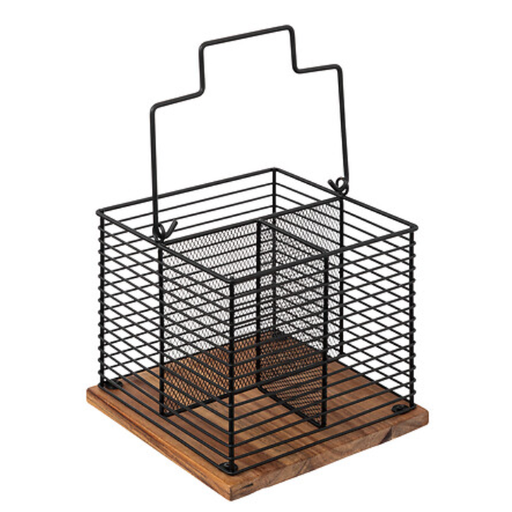
Why this product fits the profile: Two separate sections are enough for smaller amounts of cutlery or simple sorting on the worktop. The combination of steel and acacia wood brings together a compact form with a visible, natural design.
The clearly stated size of 18.5 × 18.5 × 29 cm makes it easy to check the available space. At the same time, the limited number of compartments prevents unnecessary drawer space being taken up for a small need.
Two compartments, steel-acacia wood construction and a height of 29 cm for upright storage.
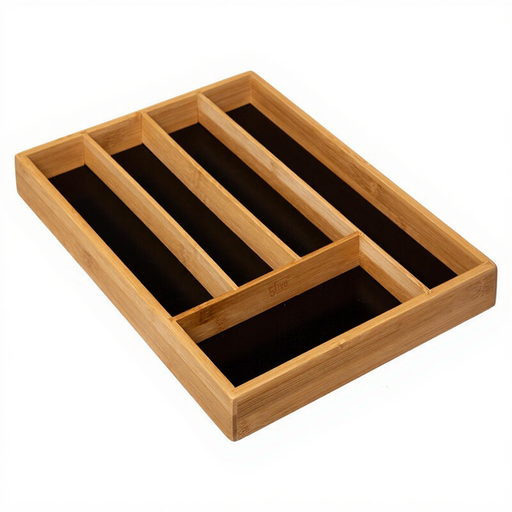
Why this product fits the profile: The bamboo cutlery tray offers five compartments and, at 34 × 25 × 4.5 cm, is designed to fit many standard drawers. The combination of a natural surface with a black detail suits a variety of kitchen styles.
The five clearly separated compartments reduce cutlery mixing. The care instructions – wipe with a damp cloth and then dry – make the extra effort required by the bamboo material transparent.
Five compartments, 4.5 cm height and bamboo as the dominant material; the weight is 0.6 kg.
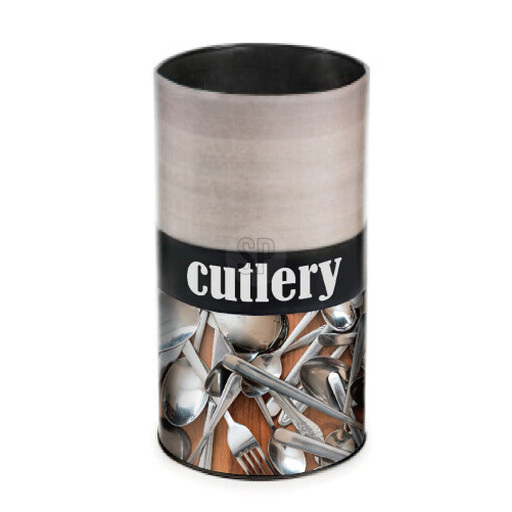
Why this product fits the profile: The compact cutlery container with lid is ideal for limited shelf space, cupboards or for taking to picnics and other events.
The dimensions of 10.5 × 17.2 cm are easy to compare with your available shelf space before buying. The lid protects the contents from dust; the tin is not intended for the dishwasher or microwave.
Compact dimensions, matching lid and tinplate construction for protected storage.
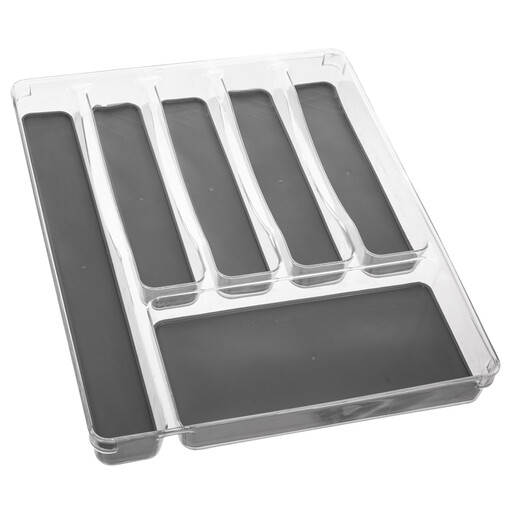
Why this product fits the profile: Six separate sections support detailed sorting of cutlery and smaller kitchen utensils. The model is designed for structured kitchen organisation in the drawer.
The number of compartments reduces the need to stack different types of cutlery on top of each other. Before inserting, you should compare the width, depth and height of your drawer with the actual product dimensions.
Six compartments and PET construction for separated storage in the drawer.
We've put together a complete, regularly updated list of products that fully meet these strict selection criteria and the safety regulations in force in the EU.
First, measure the clear internal width, depth and height of your drawer. Subtract a little margin from the width and depth so the insert doesn't get stuck. The height of the cutlery tray must also be compatible with the drawer runner and closing mechanism.
The lifespan depends on the material, how much it's used, moisture and cleaning. Don't overload the compartments and avoid using abrasive cleaning products. With bamboo and wooden models, it's important to wipe off water immediately. PET should be protected from prolonged heat and direct sunlight.
That depends on the space you have available. A flat cutlery tray uses a drawer and keeps your worktop clear. A vertical cutlery stand saves drawer space but needs surface area on your kitchen counter. For small kitchens, it's worth comparing the dimensions directly and thinking about how often you'll need to access your cutlery each day.