
Lieferung heute & morgen

Qualitätsgarantie

Willkommens-Angebote freischalten: KOSTENLOSE Lieferung | Bis zu 80 % RABATT | Kostenlose 30-Tage-JoyPlus-Testphase
App herunterladen
A cluttered cutlery drawer wastes time in daily use and often makes poor use of the available storage space. A suitable cutlery organiser kitchen can keep knives, forks, spoons and kitchen utensils neatly separated. However, many models look similar in product images but differ significantly in dimensions, material and everyday practicality.
A cutlery tray that is just a few millimetres too wide or too high may not fit properly. Before buying, you should measure the internal dimensions of the drawer – not just the outer measurements of the kitchen front. What matters are:
With a fixed cutlery insert for a drawer, you should also check whether the compartments suit your existing cutlery.
Many compartments are not automatically practical. Narrow sections may be unsuitable for wide serving spoons or kitchen utensils. What really counts is whether the compartment layout suits your household. For a two-person household, a compact cutlery tray with five compartments may be sufficient. Families or those with extensive kitchen equipment may need additional or adjustable sections.
Bamboo and wood require different care to plastic, PET or stainless steel. Wood should generally not be left in water for long periods. With PET models, check whether they are dishwasher-safe. A product marked “not dishwasher-safe” should be cleaned by hand with a soft cloth or sponge and then dried thoroughly.
A classic drawer organiser kitchen is often around 30 to 35 cm long and 20 to 26 cm wide. However, these are not fixed standard sizes. The Bamboo Cutlery Tray, for example, measures 34 × 25 × 4.5 cm and has five separate sections. The 5-Compartment Cutlery Holder TS PET is slightly more compact at 32.7 × 23.5 × 4.6 cm.
Measure your drawer in several places before buying. If the interior is irregular, a set of individual boxes or a model with adjustable dividers can offer more flexibility.
A fixed cutlery holder provides consistent organisation. Adjustable drawer dividers for the kitchen, on the other hand, can be adapted to different cutlery sizes. Pay attention to:
A non-slip surface can reduce cutlery shifting. However, it does not replace a precise fit. The organiser should sit on a flat, dry surface.
Bamboo and wood: natural look, lightweight and suitable for dry indoor areas. Do not soak for long periods and wipe dry after cleaning.
Plastic and PET: lightweight, available in many shapes and easy to clean with a damp cloth. Follow the respective instructions regarding heat, direct sunlight and dishwasher use.
Stainless steel: suitable for a cutlery holder on the worktop. The material is resistant to many everyday stresses, but should also be kept dry if you want to avoid water marks.
For products with explicit manufacturer statements about chemical safety, check this information in the product description. Claims about specific standards apply only to the model in question.
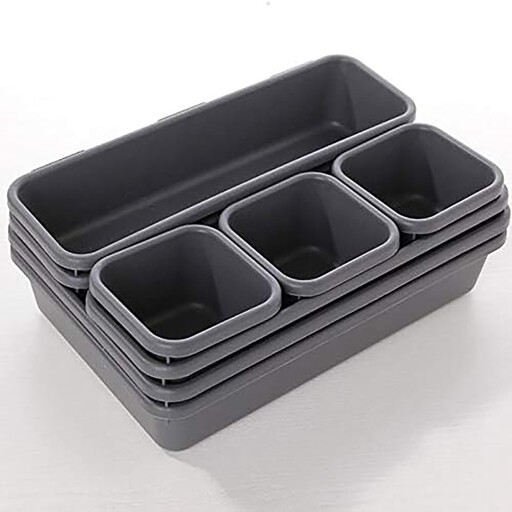
Why this product fits the profile: The plastic boxes with adjustable dividers are suitable for households that want to adapt their layout flexibly to different cutlery.
The integrated adjustable layout reduces the risk that fixed compartments are unsuitable for particularly wide or narrow kitchen utensils.
Plastic construction, integrated divider system and use in drawers.
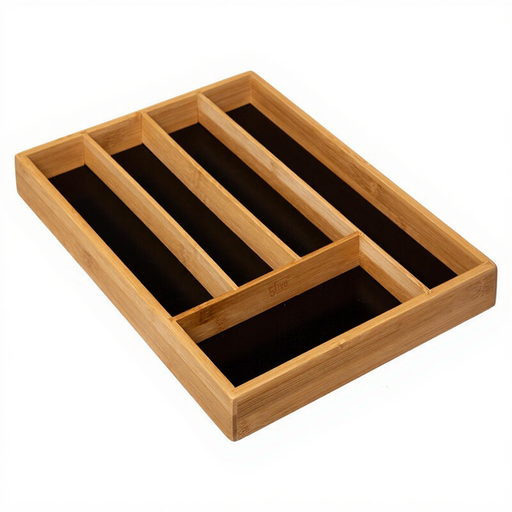
Why this product fits the profile: The bamboo model combines a natural surface with a clear layout for cutlery and selected kitchen utensils.
The stated dimensions of 34 × 25 × 4.5 cm make it easy to check before buying. Care with a damp cloth is clearly specified.
Five separate compartments, bamboo material and a weight of 0.6 kg.
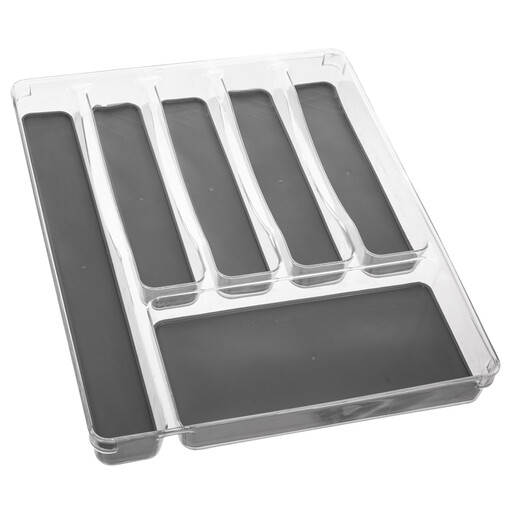
Why this product fits the profile: Six compartments offer differentiated cutlery storage, for example for knives, forks, spoons, teaspoons and serving cutlery.
The compartment layout prevents unintended mixing. The product details also indicate hand washing and protection from high heat.
Six compartments, TS-PET material and compact dimensions for many standard drawers.
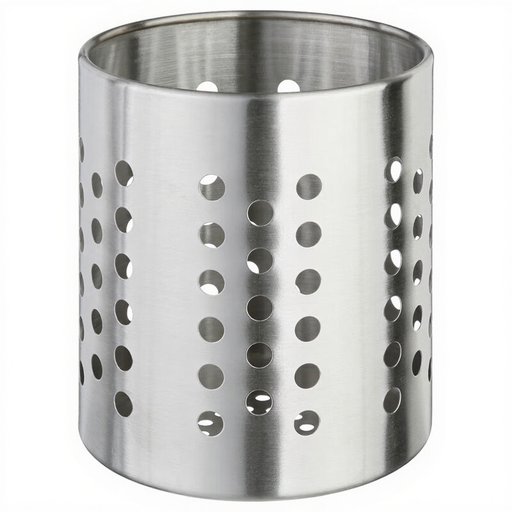
Why this product fits the profile: The cutlery holder is designed for people who want to keep knives, forks and spoons visible on the worktop or on a shelf.
Using it on the worktop avoids the common mistake of trying to squeeze a drawer insert into a drawer that is too shallow or already occupied.
Stainless steel, silver-coloured finish and compact dimensions of 11.5 cm diameter and 13.8 cm height.
We have put together a complete, regularly updated list of products that fully meet these strict selection criteria and the safety regulations in force in the EU.
After inserting the organiser, sort your cutlery by frequency of use first. Frequently used items belong in the front or central compartments. Serving cutlery and rarely needed kitchen utensils can be placed in a larger section. Do not overfill the compartments: too many items make it difficult to remove them and can cause them to knock against each other every time you open the drawer.
With a drawer organiser kitchen that has a non-slip base, you should still check that the insert sits level. Small gaps can be filled with suitable divider boxes, depending on the model. For worktops: the cutlery holder should stand stably and not be placed next to the hob, oven or a permanently damp sink.
Measure the width, depth and height on the inside of the drawer. Take into account guide rails, stops and protruding screws. Then compare these values with the product dimensions and allow a little extra room for smooth opening and closing.
It depends on where you will use it and how you care for it. Bamboo and wood suit dry drawers and a natural interior style. Plastic and PET are lightweight and available in different layouts. Stainless steel is particularly suitable for an open cutlery holder on the worktop.
The lifespan depends on the material, how much it is used, how it is cleaned and exposure to moisture. An organiser that is not overfilled, cleaned according to the care instructions and kept dry can remain functional for longer than a model that is constantly damp or overloaded. Check compartments, edges and stability regularly for damage.