
Lieferung heute & morgen

Qualitätsgarantie

Willkommens-Angebote freischalten: KOSTENLOSE Lieferung | Bis zu 80 % RABATT | Kostenlose 30-Tage-JoyPlus-Testphase
App herunterladen
A cluttered kitchen drawer wastes time in daily life and makes it harder to use the storage space you have. A suitable cutlery organiser for the kitchen can sort knives, forks, spoons and kitchen utensils into categories. However, a cutlery tray often looks more practical in product photos than it actually proves to be in your own kitchen.
Before you buy, there are three typical pitfalls to watch out for:
First, measure the internal width, internal depth and internal height of your drawer. What matters isn't the external measurement of the kitchen cabinet, but the actual space available. Also take into account runners, dividing strips and the gap to the drawer above.
A model roughly 32 to 34 centimetres long and 23 to 25 centimetres wide often fits standard drawers, but you should still compare it with your own measurements. For worktops, compact cutlery holders with a round or square base are often more suitable than a flat cutlery tray.
A classic cutlery tray with five compartments works well for households that want to separate knives, forks, tablespoons, teaspoons and larger serving utensils. Six compartments give you an extra sorting option, but depending on the design they need more space.
For a small kitchen, a cutlery holder with two sections may be enough. It's also practical if you want to store cutlery not in a drawer but on the worktop or in an open shelf. Check that the compartments are deep enough so that longer kitchen utensils don't stick out.
The material affects the look, the amount of care needed and where you can use it:
Regardless of the material, make sure you have a level, stable surface, clear care instructions and a weight capacity that matches your intended use.
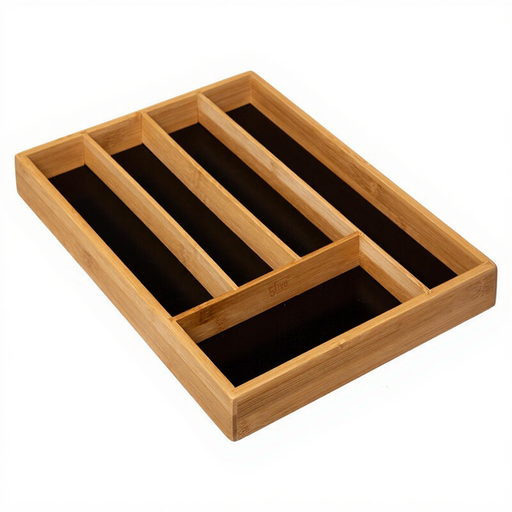
Why this product fits the profile: This bamboo compartment model offers five separate sections and at 34 × 25 × 4.5 cm is designed for many standard drawers. It suits households looking for straightforward cutlery storage with a natural look.
The stated dimensions and five compartments make it easy to check before buying. The care instructions recommend wiping and then drying thoroughly.
Five separate compartments, 0.6 kg weight and a low height of 4.5 cm.
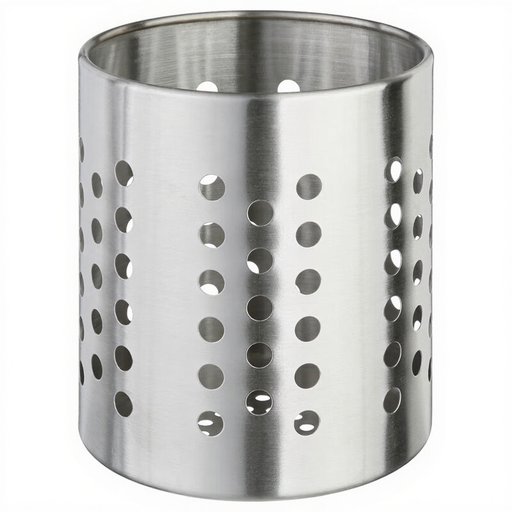
Why this product fits the profile: This compact stainless steel cutlery holder is designed for open storage on worktops or shelves. At 11.5 cm in diameter and 13.8 cm tall, it takes up very little space.
The specific dimensions show whether the holder will fit in your chosen spot. The open design avoids the problem of a drawer solution that's too small.
Stainless steel construction, lightweight at 0.15 kg and a compact footprint.

Why this product fits the profile: This PET model has five compartments, measures 32.7 × 23.5 × 4.6 cm and features a non-slip surface. It is designed for sorting cutlery and larger kitchen utensils in drawers.
The non-slip surface reduces cutlery moving around. The clear compartment layout limits different utensils getting mixed up.
Five compartments, PET material, 0.56 kg weight and hand wash according to product details.
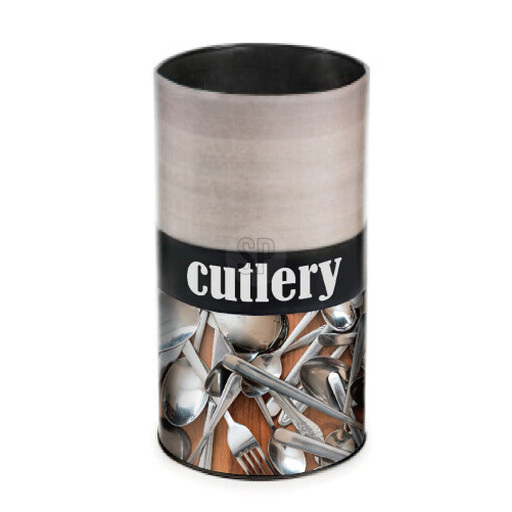
Why this product fits the profile: This 105 × 172 mm tin with lid is ideal for small kitchens, cupboards or taking to picnics and other trips.
The lid protects the contents from dust. The care instructions make it clear that the tin should be kept dry and not used in the dishwasher or microwave.
Matching lid, compact dimensions and lightweight for mobile use.
We've put together a full, regularly updated list of products that fully meet these strict selection criteria and the safety regulations in force in the EU.
Measure the usable internal area in several places, because drawers aren't always perfectly straight. Note the internal width, internal depth and available height. If necessary, allow a few millimetres of clearance so that the cutlery tray doesn't get stuck.
That depends on how you'll use it. Stainless steel and PET are available for different open or closed storage solutions. Bamboo and wood need more careful handling with moisture. So what matters isn't just the material, but also the care instructions, stability and suitable weight capacity.
Empty the cutlery storage completely on a regular basis and remove crumbs with a dry cloth or soft brush. Clean the material according to the manufacturer's instructions and dry it thoroughly afterwards. Avoid overfilling compartments so that cutlery can be easily taken out and put back.