
Lieferung heute & morgen

Qualitätsgarantie

Willkommens-Angebote freischalten: KOSTENLOSE Lieferung | Bis zu 80 % RABATT | Kostenlose 30-Tage-JoyPlus-Testphase
App herunterladen
A cutlery tray is designed to keep knives, forks, spoons and kitchen utensils neatly organised. Yet some purchasing decisions quickly lead to an impractical solution: the compartments are too small, the tray doesn't fit in the drawer, or the material is difficult to clean. So before you buy, it's worth taking a close look at dimensions, layout and where you plan to use it.
A cutlery tray for a drawer doesn't just need to be roughly the right size. What really matters are the length, width and height of the internal space. The runners or protruding elements of a drawer can also take up room. If specific product dimensions are missing, you risk not being able to close the drawer fully later on.
So measure the usable internal space and compare it with the stated dimensions. For example, a model measuring 34 × 25 × 4.5 cm is better suited to a standard drawer of that size than to particularly narrow pull-outs.
A cutlery organiser with two large sections might be enough for a small household. In a family home, however, you'll often need separate compartments for knives, forks, tablespoons, teaspoons and serving cutlery. So an organiser with compartments should match the actual amount of cutlery you have.
More compartments don't automatically mean better use, though. If the sections are too narrow, wide knife handles or larger kitchen utensils won't fit. So check which items you plan to store regularly.
Wood, bamboo, steel and PET all require different care. Materials containing wood shouldn't be left in water for long periods. PET models can be hand-washed according to the product details, but aren't necessarily dishwasher-safe. Ignoring these instructions risks warping, stains or a shorter lifespan.
For a classic cutlery drawer, external dimensions and height are crucial. A shallow cutlery tray is usually easier to fit into a pull-out drawer. A tall cutlery holder, on the other hand, is often designed for the worktop. The 5five model with two compartments, for example, measures 18.5 × 18.5 × 29 cm and, due to its height, is better suited as a standing cutlery caddy.
Five or six separate sections make it easier to sort your everyday cutlery. With a 5-compartment model, you can separate knives, forks, tablespoons, teaspoons and serving utensils. A 6-compartment cutlery tray offers extra space for chopsticks, kitchen tools or smaller items.
Make sure the compartments are wide and deep enough for your cutlery handles. Labelling or fixed assignments aren't necessary, but they can simplify your daily kitchen organisation.
Also ensure the tray sits on a level surface. Heavy or overfilled compartments can make handling difficult and may strain lightweight plastic models.

Why this product suits the profile: The five compartments and dimensions of 32.7 × 23.5 × 4.6 cm make it ideal for basic, tidy storage in many kitchen drawers.
The specific dimensions help you check against your drawer. The non-slip surface can reduce cutlery shifting when opening and closing.
PET construction, five compartments, no assembly required and a weight of 0.56 kg. Clean by hand with a mild detergent.
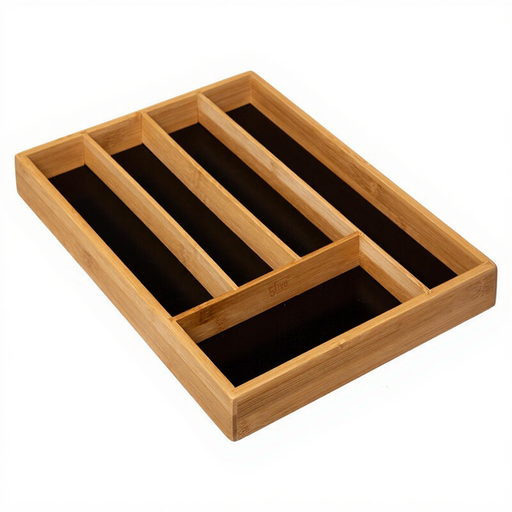
Why this product suits the profile: This bamboo cutlery tray combines five separate sections with a natural surface, making it ideal for those who value understated kitchen design.
The stated dimensions of 34 × 25 × 4.5 cm make installation planning easy. The care instructions explicitly advise avoiding prolonged exposure to water.
Five compartments, bamboo construction, 0.6 kg weight and a low profile of 4.5 cm. Simply clean with a damp cloth and dry afterwards.
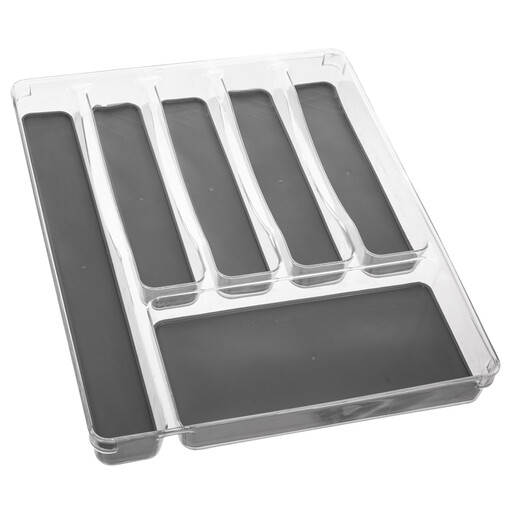
Why this product suits the profile: Six fixed sections create extra sorting options for cutlery, chopsticks or smaller kitchen tools in a household with lots of utensils.
The clear compartment layout prevents different types of cutlery from being mixed together in a single section. Before buying, check your drawer dimensions against the manufacturer's specifications.
Six separate compartments and, according to the product description, a durable TS-PET material. The tray is designed for space-saving use in drawers.
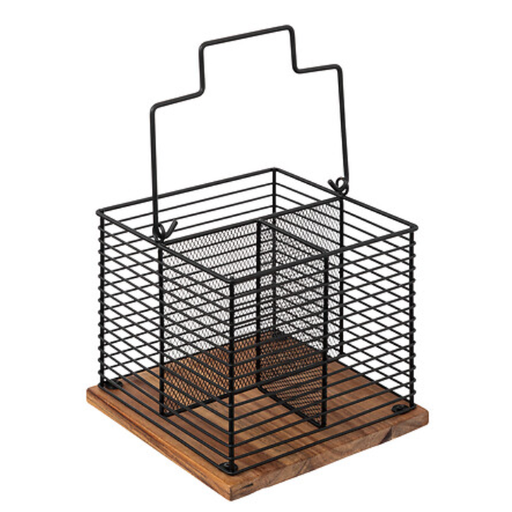
Why this product suits the profile: The tall, upright design is ideal for kitchens without a suitable cutlery drawer, or for frequently used utensils kept on the worktop.
The design makes it clear that this cutlery holder is primarily intended for a flat surface. This avoids planning a 29 cm tall model for a shallow drawer.
Two separate compartments, steel and acacia wood components, and a weight of 0.735 kg. The manufacturer recommends keeping it in a dry place and cleaning with a damp cloth.
Organise your cutlery storage according to your daily routine. Frequently used items belong in easily accessible compartments, while serving cutlery or rarely used kitchen tools can have a separate section. Don't overload individual compartments so the tray can be easily removed and cleaned.
For wood and bamboo models, it's best to dry them immediately after cleaning. Plastic models should be protected from high heat and prolonged direct sunlight. A non-slip base doesn't replace a level and stable placement.
We've put together a complete, regularly updated list of products that fully meet these strict selection criteria and the safety regulations in force in the EU.
First, measure the usable length, width and height of the drawer. Subtract a small margin for handling from the length and width. The external dimensions of the product must also not collide with runners or dividing strips.
The lifespan depends on the material, usage and care. Wood and bamboo should be kept dry; PET should not go in the dishwasher according to the product details. Avoid overloading, high heat and abrasive cleaning products to protect the surfaces.
That depends on where you plan to use it. A shallow cutlery tray with five or six compartments is suitable for a drawer. A tall cutlery holder with two compartments is better for the worktop. So the deciding factors are your drawer dimensions, available surface space and the amount of utensils you need to store.