
Lieferung heute & morgen

Qualitätsgarantie

Willkommens-Angebote freischalten: KOSTENLOSE Lieferung | Bis zu 80 % RABATT | Kostenlose 30-Tage-JoyPlus-Testphase
App herunterladen
A good cutting board is the foundation of any kitchen. But the market is flooded with products whose marketing promises often obscure more than they clarify. From supposedly indestructible materials that ruin your expensive knives to wooden boards that warp after just a few weeks, choosing the wrong board can quickly lead to frustration and unnecessary expense. Before you make a decision, you should be aware of the most common pitfalls.
The choice of material is the most important decision when buying a cutting board. Each material has specific advantages and disadvantages that make it suitable for different applications and preferences.
A wooden cutting board is a popular choice due to its natural properties and how gentle it is on knife blades. Hardwoods like oak, walnut, beech, or acacia are robust and durable. Wood also has natural antibacterial properties, as the tannins it contains can inhibit germ growth.
Plastic boards, usually made of polypropylene (PP) or polyethylene (PE), are the workhorses in many kitchens. They are inexpensive, lightweight, and dishwasher-safe, which makes cleaning significantly easier. A cutting board set made of plastic in different colours is ideal for preventing cross-contamination—one colour for meat, one for vegetables, one for fish.
A bamboo cutting board represents a compromise between wood and plastic. Bamboo is technically a grass, but its processed fibres create a very hard and dense surface. It is harder than most types of wood, which makes it resistant to deep cuts but also slightly less gentle on knife blades.
Beyond the material, it's the functional details that make a cutting board truly practical.
Based on these objective criteria, we have identified a few products that represent a considered choice for specific user profiles.
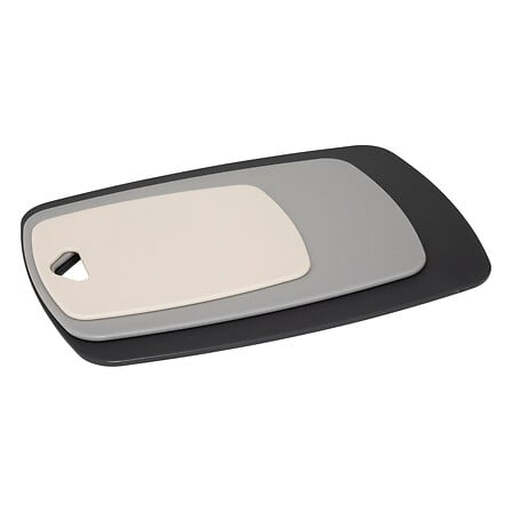
Why this set is a match: Ideal for anyone looking for a functional and cost-effective starter kit. The three different sizes and colours allow for hygienic separation of foods without much fuss.
This set focuses on practical hygiene through separation rather than vague "antibacterial" promises. The non-porous PP surface is easy to clean and dishwasher-safe.
The set offers excellent value for money and covers all basic kitchen needs with its three sizes.

Why this board is a match: For cooks who value quality, functionality, and aesthetics. The generous surface, juice groove, and knife-friendly bamboo material make it a versatile tool for demanding tasks.
It avoids the trap of knife-dulling materials like glass by using bamboo. The solid construction also prevents the warping common in cheap wooden boards.
The combination of a large work surface, integrated juice groove, and reversibility makes it a multifunctional kitchen and carving board.
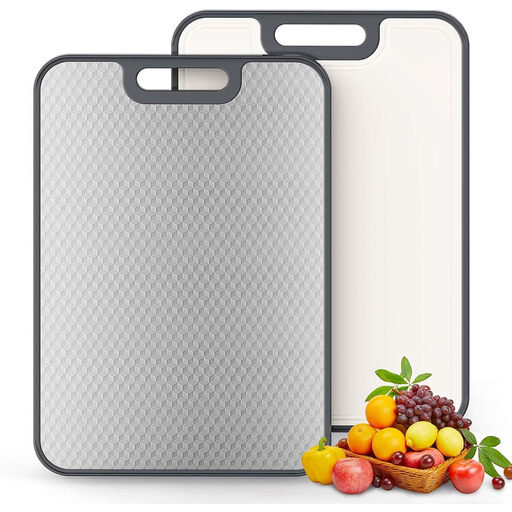
Why this board is a match: Perfect for users who prioritise maximum hygiene and easy cleaning. The double-sided design with stainless steel for meat and PP for vegetables is a smart solution for preventing cross-contamination.
It offers a genuine hygiene solution through material separation. The non-porous stainless steel surface is extremely easy to sanitise and resists odours and stains.
The board is dishwasher-safe, which makes cleaning and sanitising after handling raw meat or fish as simple as possible.
We have compiled a complete, up-to-date list of products that fully meet these strict selection criteria and local safety regulations.
There is no one-size-fits-all answer, as hygiene depends heavily on cleaning. Non-porous materials like plastic, glass, or stainless steel are the easiest to clean and sanitise because bacteria cannot penetrate the surface. However, plastic boards can develop deep grooves over time. Wooden boards have natural antibacterial properties but require careful manual cleaning and drying. The most hygienic practice is to use separate boards for different food groups (e.g., a cutting board set).
A wooden cutting board should never be put in the dishwasher or left to soak in water. After use, clean it with warm water, mild soap, and a brush. Dry it thoroughly with a cloth immediately and store it upright to allow air to circulate. To protect the wood from drying out and cracking, it should be regularly treated (about once a month) with a food-safe mineral oil.
No. Only cutting boards made of plastic (PP, PE) and some models made of stainless steel or wheat straw composite are generally dishwasher-safe. Boards made of wood or bamboo must never go in the dishwasher, as the high heat and moisture will cause the material to swell, warp, and crack. Always check the manufacturer's instructions before cleaning.