
Lieferung heute & morgen

Qualitätsgarantie

Willkommens-Angebote freischalten: KOSTENLOSE Lieferung | Bis zu 80 % RABATT | Kostenlose 30-Tage-JoyPlus-Testphase
App herunterladen
A good cutting board is the foundation of every kitchen. However, the selection can be overwhelming, and not every product delivers on its promise. As your Joybuy Product Recommendation Officer, I'll help you identify the essential features and avoid bad purchases that lead to dull knives, poor hygiene, or a short lifespan.
Many buyers are guided by marketing buzzwords or price, only to find that their new kitchen board has become unusable after just a few months. Let's focus on the three most common pitfalls:
To avoid these problems, it's crucial to understand the core parameters that define a functional and durable cutting board.
Before you make a decision, you should examine three key aspects: the material, the functional details, and the hygienic properties.
Each material has specific advantages and disadvantages that make it suitable for different applications.
Beyond the material, small details determine how practical a board is in daily use.
An antibacterial cutting board can be based on two principles: either the material itself has natural inhibitory properties (as with some types of wood), or the surface is treated with a special coating. For coated boards, it is important to follow the manufacturer's care instructions to avoid compromising its effectiveness, for example, by cleaning it in the dishwasher. Regardless of the material, the most important hygiene measure is to clean it immediately after use and let it air dry completely.
Here are some product recommendations tailored to specific user profiles that purposefully avoid the pitfalls mentioned earlier.
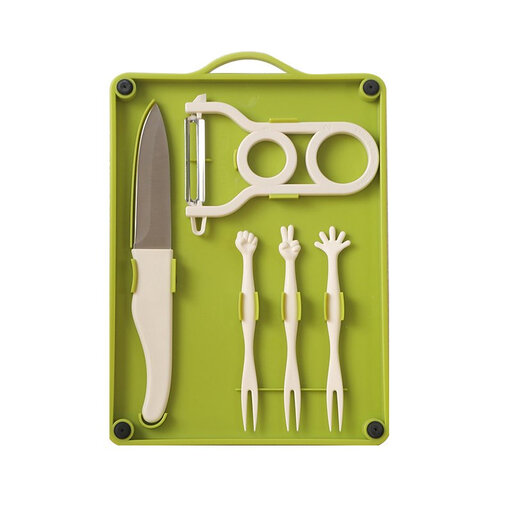
Why This Fits Their Persona: Ideal for families and health-conscious users who want to avoid cross-contamination. The set allows for clear separation of food types and is designed for preparing fruit or baby food.
Directly addresses the hygiene trap with a special antimicrobial surface treatment and double-sided use to separate raw and cooked foods.
A complete cutting board with knife set. The compact design is easy to store and also suitable for mobile use.
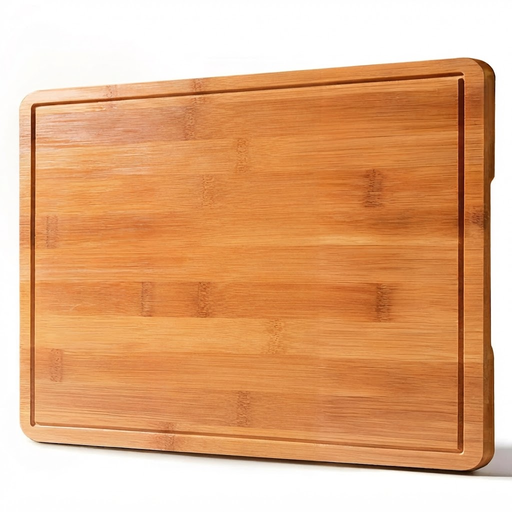
Why This Fits Their Persona: Perfect for users who value sustainable materials and a natural aesthetic without sacrificing functionality. Ideal as a robust, all-purpose carving board.
Carbonisation makes the bamboo cutting board more resistant to warping. The integrated juice groove and handles solve the problem of poor functionality.
The reinforced core ensures high stability and durability. The deep juice groove reliably catches liquids, making it an excellent carving board.
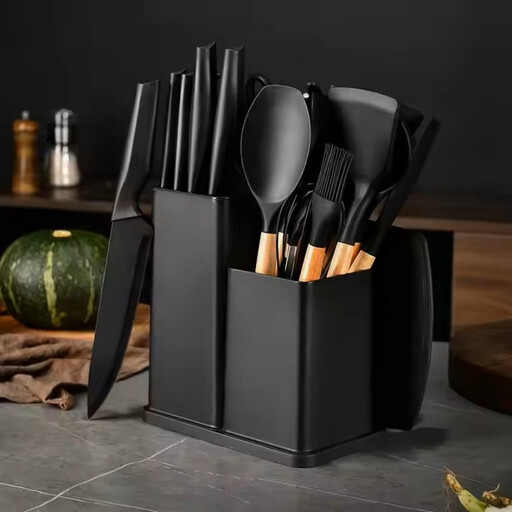
Why This Fits Their Persona: For anyone outfitting a new kitchen and looking for a comprehensive starter kit. This set complements a separately chosen, high-quality cutting board with all the necessary tools.
Instead of buying a low-quality combo product, this approach allows for the deliberate selection of a good board, supplemented by a versatile, separate tool set.
A comprehensive cutting board set in a broader sense: includes knives, a peeler, and other silicone utensils, providing a complete toolkit for a wide range of cooking tasks.
We have compiled a complete, up-to-date list of products that fully meet these strict selection criteria and comply with German safety regulations.
1. How often should you replace a plastic cutting board? A plastic board should be replaced as soon as it has deep grooves and scratches that can no longer be cleaned completely. In an average household, this can be every one to two years, depending on the frequency of use.
2. What oil is suitable for a wooden cutting board? Use food-grade, refined mineral oils or special wood care oils for cutting boards. These do not harden, do not go rancid, and are safe for contact with food. Apply the oil thinly, let it soak in, and wipe off any excess.
3. Can you clean a bamboo cutting board in the dishwasher? No, bamboo boards, just like wooden boards, should not be cleaned in the dishwasher. The high heat and aggressive cleaning chemicals can cause the material to swell, lead to cracks, and attack the glue between the bamboo strips. Clean it by hand with warm water and mild soap.