Joybuy Insights

Cutting Board Buying Guide: Choose the Right Board for Your Kitchen

A good cutting board is the foundation of all kitchen work. Yet, the market is flooded with products that over-promise and under-deliver. Many buyers invest in boards that warp after a short time, ruin their knives, or prove to be unhygienic. This guide will help you avoid common purchasing pitfalls and make an informed decision based on objective criteria.

As a Joybuy Product Recommendation Officer, I analyse market information to provide you with practical and objective advice, helping you find the perfect product for your needs.

Three Common Problems with Cutting Boards and How to Avoid Them

Before you buy a new kitchen board, you should be aware of the three most common flaws that often only become apparent after a few weeks of use.

  1. Warping and Cracking: A frequent nuisance, especially with budget-friendly wood or bamboo boards. If the material has not been sufficiently dried, treated, or structurally stabilised (e.g., through cross-lamination), it absorbs moisture unevenly. The result: the board bows, no longer lies flat on the work surface, and in the worst-case scenario, can develop cracks.
  2. Rapid Blade Dullness: Materials like glass, stone, or extremely hard plastics are often promoted for their appearance or supposed hygiene. In practice, however, they lead to the rapid dulling of high-quality kitchen knives. The blade strikes an unyielding surface, causing microscopic damage to the edge and requiring frequent resharpening.
  3. Deceptive Hygiene: The term "antibacterial cutting board" is often used as a marketing claim. While some materials possess naturally hygienic properties, bacteria can accumulate in deep cut marks, especially on soft plastic boards. Furthermore, coatings that promise an antibacterial effect can wear off over time and lose their function.

Crucial Selection Criteria for Your Next Cutting Board

To prevent these problems, you should base your choice on material, construction, and functional details.

The Material Question: Wood, Bamboo, or Plastic?

Each material has specific advantages and disadvantages that make it suitable for different purposes.

  • Wooden Cutting Board: Classic wooden boards, for example from walnut, oak, or acacia, are known for their knife-friendly properties. The wood fibres give way slightly, thus protecting the knife blade. End-grain boards, where the wood fibres are oriented vertically, are considered particularly durable and "self-healing," as small cuts can close up again. A wooden cutting board requires regular care with oil to protect it from drying out and moisture. It is excellently suited as a carving board or serving board.
  • Bamboo Cutting Board: Bamboo is technically a grass, but its processed stalks yield a very hard and dense material. A bamboo cutting board is therefore resistant to deep cuts and absorbs less moisture than many types of wood. Some models are additionally hardened by carbonisation at high temperatures, which reduces the risk of warping. Bamboo is a sustainable choice, but due to its hardness, it can be a bit tougher on knife blades than softer woods.
  • Plastic Cutting Board: Boards made of plastic (often polypropylene, PP) or newer composite materials like wheat straw are low-maintenance and often dishwasher-safe. This makes them a practical choice for handling raw meat or fish, as they can be cleaned easily and thoroughly to prevent cross-contamination. Look for high-quality, dense plastics, as soft materials quickly develop deep grooves where germs can settle.

Functional Features That Make a Difference

Besides the material, it's the thoughtful details that separate a good board from an impractical one.

  • Cutting Board with Juice Groove: A surrounding groove is indispensable when you're cutting juicy fruits, vegetables, or meat. It catches liquids and keeps your work surface clean and dry.
  • Size and Thickness: A large cutting board provides ample space for preparing multiple ingredients without everything getting mixed up. A greater material thickness (e.g., over 1.5 cm) ensures stability, prevents slipping, and contributes to longevity, as the board is less prone to warping.
  • Sets and Two-Sided Use: A cutting board set with different sizes is ideal for having the right board on hand for every task and for consistently separating food groups (e.g., vegetables and poultry). Alternatively, two-sided boards offer similar functionality in a more compact space.

Top Products for Different Needs

Here are some product recommendations tailored to the needs of different user profiles.

MATCH FOR: Budget-Conscious Beginners
VVM Carbonized Bamboo Cutting Boards for Kitchen, Set of 3

VVM Carbonized Bamboo Cutting Boards for Kitchen, Set of 3

Why This Fits Their Persona: Ideal for anyone looking for a versatile starter kit. This set offers three different sizes for various tasks—from a small kitchen board for fruit to a large board for the main meal—at an excellent value for money.

How It Avoids the Trap

The carbonisation of the bamboo at 500°F (according to the manufacturer) increases its resistance to moisture, thus preventing the typical warping and cracking often seen in cheaper boards.

Key Advantage & Pros

Three sizes in the set for maximum flexibility. Each board features an integrated juice groove and convenient handles.
MATCH FOR: Quality-Focused Home Chefs
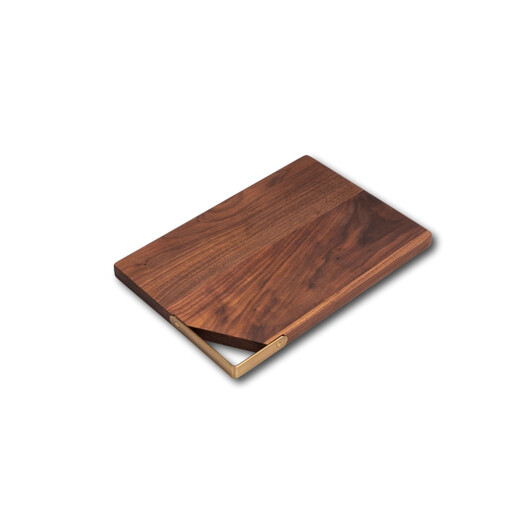
Suncha Walnut Cutting Board Household Antibacterial Solid Wood

Suncha Walnut Cutting Board Household Antibacterial Solid Wood

Why This Fits Their Persona: For cooks who value durability, aesthetics, and the care of their knives. Walnut wood is a premium material that combines functionality with an elegant appearance in the kitchen.

How It Avoids the Trap

As a solid walnut wood board, it is naturally knife-friendly and counteracts the problem of rapid blade dulling. With proper care, it is also extremely stable and durable.

Key Advantage & Pros

Made from solid walnut wood, known for its robustness and fine grain. The corner handle facilitates handling and storage.
MATCH FOR: Hygiene-Focused Family Managers
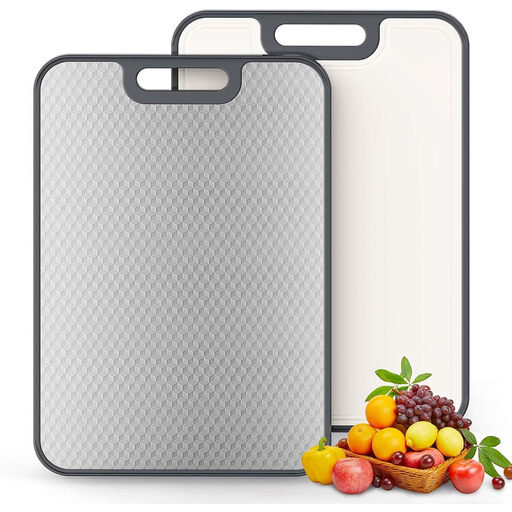
Double Sided Cutting Boards for Kitchen, Stainless Steel/Wheat Straw PP

Double Sided Cutting Boards for Kitchen, Stainless Steel/Wheat Straw PP

Why This Fits Their Persona: Perfect for busy family life where hygiene and efficiency are top priorities. This board allows for a clear separation of raw meat (on the stainless steel side) and vegetables (on the plastic side).

How It Avoids the Trap

It directly addresses the "deceptive hygiene" trap. The non-porous stainless steel surface is odour- and stain-resistant and extremely easy to sanitise, while the separate side for vegetables minimises cross-contamination.

Key Advantage & Pros

Two-sided design for optimal hygiene. The board is dishwasher-safe, making it particularly easy and time-saving to clean.

Looking for More Options?

We have compiled a complete, up-to-date list of products that fully meet these strict selection criteria and UK/EU safety regulations.

Frequently Asked Questions (FAQ)

1. How often should you oil a wooden cutting board?

The frequency depends on usage and climate. As a rule of thumb, oil your wooden board every 4 to 6 weeks, or whenever it looks dry and pale. Use a food-safe mineral oil or a special wood conditioner. Apply the oil generously, let it soak in for a few hours, and then wipe off any excess.

2. Which cutting board is the most hygienic?

There is no one-size-fits-all answer, as hygiene largely depends on proper cleaning and maintenance. Non-porous surfaces like stainless steel or high-quality, dense plastic are very easy to clean and sanitise, making them a very hygienic choice, especially for raw meat. Well-maintained wooden boards have natural properties that can inhibit bacterial growth. The key is to avoid deep grooves and to thoroughly clean boards after contact with raw meat.

3. Can any cutting board go in the dishwasher?

No. Wooden or bamboo cutting boards should never be put in the dishwasher. The high heat and harsh detergents strip the material of its natural moisture and oils, which inevitably leads to cracks and warping. Only boards explicitly labelled as dishwasher-safe—usually those made of plastic or stainless steel—should be cleaned in a machine.