
Lieferung heute & morgen

Qualitätsgarantie

Willkommens-Angebote freischalten: KOSTENLOSE Lieferung | Bis zu 80 % RABATT | Kostenlose 30-Tage-JoyPlus-Testphase
App herunterladen
A good cutting board is the cornerstone of any kitchen. Yet, the selection is vast, and many products fail to deliver on their promises. As a Joybuy Product Recommendation Officer, I see daily which features truly matter and which marketing gimmicks lead to costly mistakes. Before you decide on a new kitchen board, you should be aware of the common pitfalls that often only become apparent after a few weeks of use.
Many cutting boards look appealing in-store or online but prove to be impractical or short-lived in daily use. Pay close attention to these three points to make an informed decision.
To avoid these traps, you should base your selection on objective criteria. Material, size, and functional details are crucial for the longevity and utility of your cutting board.
The material is the most important characteristic of a cutting board. It affects how gentle it is on your knives, its hygiene, and the maintenance required.
Besides the material, practical features determine the comfort in your daily kitchen routine.
Based on these criteria, we have identified several products that represent a considered choice for different user profiles and their specific requirements.
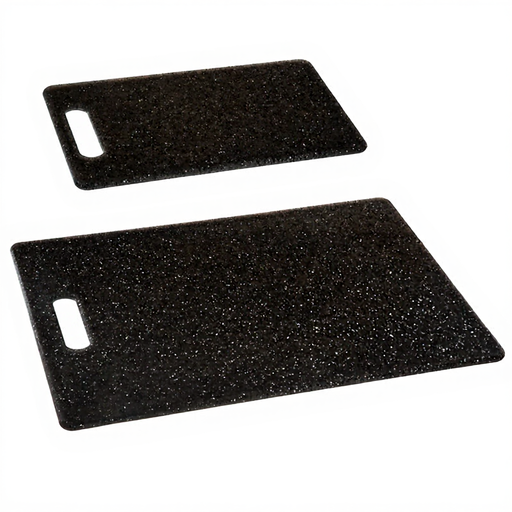
Why This Fits Their Persona: Ideal for daily use where hygiene and ease of handling are paramount. The set allows for easy separation of foods (e.g., meat and vegetables) to prevent cross-contamination.
It bypasses the "Knife-Killer" trap by being made of knife-friendly polypropylene (PP) instead of real stone. The non-porous material counteracts the "Hygiene Trap" as it does not absorb liquids.
Hygienic & low-maintenance: The material is moisture- and odour-resistant. Practical set: Two boards for better kitchen organisation.
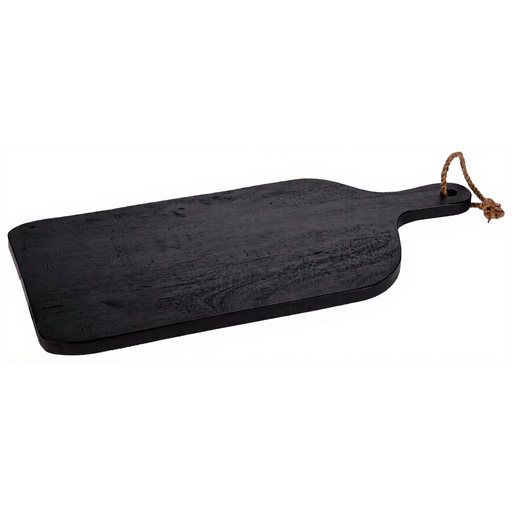
Why This Fits Their Persona: Perfect for those seeking a functional kitchen tool that doubles as an elegant serving platter for cheese, cold cuts, or snacks. The dark finish and natural grain are an eye-catcher on any dining table.
The solid rubberwood is dimensionally stable and resistant to warping with proper care. As a wooden board, it is naturally knife-friendly, thus avoiding the "Knife-Killer" trap of hard materials.
Generous surface: At 58 x 28 cm, it offers plenty of space for preparing and serving. Multifunctional: Suitable as a cutting, breakfast, and serving board. LFGB certified for food safety.
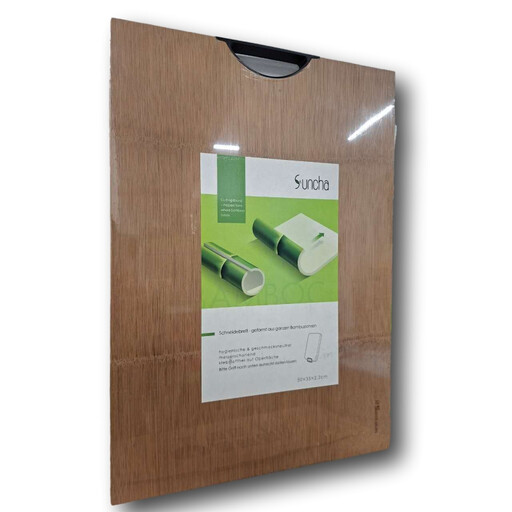
Why This Fits Their Persona: For users who value natural, sustainable materials. Bamboo is a rapidly renewable resource. Being crafted from a single piece of bamboo reduces the use of adhesives.
The solid and thick construction (2.6 cm) minimizes the risk of warping and cracking, a common weakness in cheaper, thin bamboo boards. The smooth surface is resistant to deep grooves.
Robust construction: Made from a single piece of Moso bamboo, ensuring high stability. Large work surface: Ideal for preparing larger quantities or for rolling out dough.
We have compiled a complete, up-to-date list of products that fully meet these strict selection criteria and German safety regulations.
Clean a wooden board by hand after use with lukewarm water and mild soap. Dry it thoroughly immediately and let it air dry completely, preferably standing on its edge. It should never be soaked in water or cleaned in the dishwasher. To protect the wood from drying out, rub it every few weeks with a food-safe mineral oil or a special wood care product.
Cutting boards made of wood (especially end-grain) and high-quality plastic (polypropylene) are the gentlest on knife blades. They give slightly under the pressure of the blade, which helps maintain sharpness longer. Harder materials like bamboo are a compromise, while glass, stone, or ceramic will dull blades the fastest.
For hygienic reasons, it is strongly recommended to use separate cutting boards for different food groups. Ideally, use one board exclusively for raw meat, poultry, and fish, and another for ready-to-eat foods like vegetables, fruits, and bread. A cutting board set with different colours can help you keep track and avoid cross-contamination.