
Lieferung heute & morgen

Qualitätsgarantie

Willkommens-Angebote freischalten: KOSTENLOSE Lieferung | Bis zu 80 % RABATT | Kostenlose 30-Tage-JoyPlus-Testphase
App herunterladen
A cutting board is part of your everyday kitchen kit. Yet unclear material descriptions, missing dimensions and exaggerated hygiene claims often lead to the wrong purchase. A board might look high-quality, but then slip on your worktop, warp when exposed to moisture, or be too small for what you actually need it for.
This buying guide from the Joybuy Product Recommendation Officer shows what households, home cooks and environmentally conscious shoppers should look for when buying in 2026. The focus is on verifiable features such as material, dimensions, care, stability and intended use.
Labels such as antibacterial cutting board or “antimould” describe the product positioning or the feature claimed by the seller. Without specific test conditions, standard references or verifiable evidence, no general hygienic effect can be inferred from this.
What really matters is your kitchen routine:
A stainless steel board can usually be wiped down easily. A bamboo cutting board or wooden cutting board, on the other hand, needs material-appropriate care and should not be left soaking in water for long periods.
An XL board offers more work surface, but also needs enough space on your worktop and in your drawer. Before buying, you should check the usable area, the height and the weight. A board measuring 40 × 28 cm is practical for extensive food preparation, but can be unwieldy in a small kitchen.
A cutting board with collection tray or cutting board with drip tray can hold ingredients, peelings and washing water. However, you will need extra storage space for the trays and inserts. Also check whether the individual components sit securely on top of each other and can be cleaned separately.
Bamboo is comparatively light and is often promoted as a renewable raw material. Products such as a bamboo board with handle are suitable for vegetables, fruit, bread or serving. However, the surface must not remain wet for long periods.
Solid wood, such as beech, walnut or rubberwood, offers a natural surface and works well with classic kitchen tasks. The grain and hardness can vary depending on the type of wood. Regular treatment with a suitable, food-safe wood oil can care for the surface. The manufacturer’s instructions are what you should follow.
Plastic or composite materials are often light and easy to wipe clean. With products made from wheat straw or rice husk fibres, you should pay attention to the material specifications, edge material and care instructions.
Stainless steel is resistant to moisture and easy to clean. However, the hard surface can feel less pleasant for certain knives. With a double-sided model, a plastic or fibre composite side can complement this use.
For everyday household use, dimensions around 30 × 20 cm to 40 × 28 cm are common. The right size depends on your work surface and the ingredients you use. A greater thickness can make the board more stable, but increases weight and storage requirements.
Look out for:
With a cutting board set, several sizes can be useful for different tasks. It is important that the boards are stored separately and dried completely after use.
Wood and bamboo boards are usually not suitable for the dishwasher. Hot water, prolonged exposure to moisture and strong temperature fluctuations can encourage warping or cracking. Clean such boards according to the manufacturer’s instructions with warm water and mild washing-up liquid, then dry them upright or in a well-ventilated place.
A board with a tray should be taken apart into individual pieces. This makes it easier to remove liquid residue and food remnants. Slate or bamboo products are also often intended for hand washing.
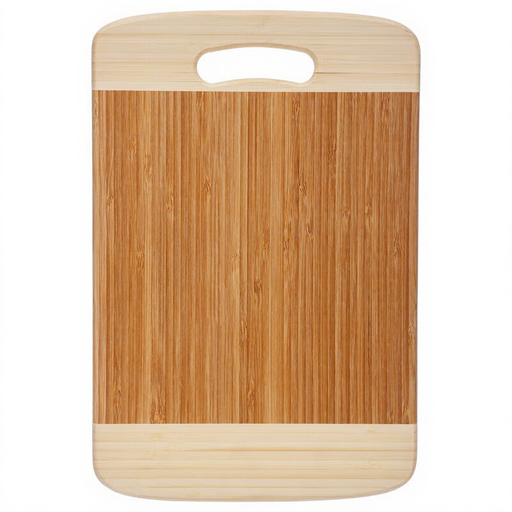
Why it fits the profile: The compact surface is ideal for smaller kitchens, single-person households and simple preparation tasks. The integrated handle makes it easier to carry and hang up.
The stated dimensions make it easy to assess storage requirements. Care is based on hand washing and thorough drying.
Bamboo material, 30 × 20 cm, integrated handle and less space required than XL models.
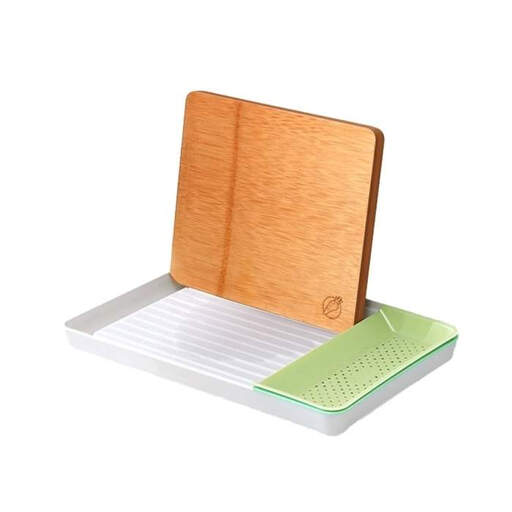
Why it fits the profile: The system combines a bamboo board with two removable storage trays and a drip tray. This supports pre-prepared ingredients and an organised work surface.
The components are removable according to the product information. This means the trays and board can be cleaned separately; the board itself should not be soaked.
392 × 254 × 37 mm, 1.27 kg, two storage trays and one drip tray.

Why it fits the profile: Three different sizes allow you to assign boards by ingredient or workload. Juice grooves and handles are designed for both chopping and serving.
The set reduces the need to use a single oversized board for every task. All boards are to be hand washed according to the product information.
Three sizes, juice grooves, integrated handles and bamboo construction.
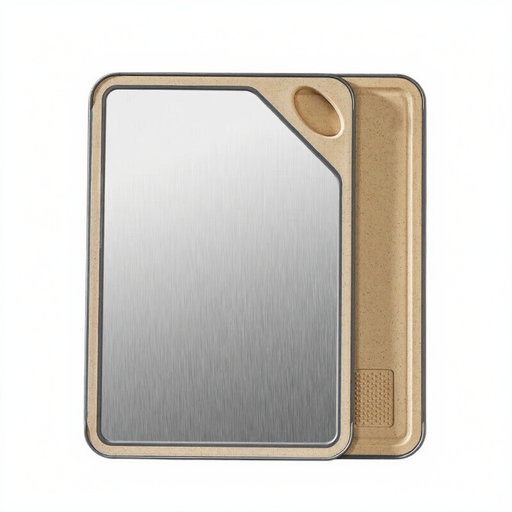
Why it fits the profile: The double-sided construction combines a stainless steel side with a wheat straw PP side. This model is aimed at users who prefer different surfaces.
The material sides are clearly separated. This makes choosing the surface according to the food type more straightforward than with a vaguely described universal surface.
25 × 36 cm, 304 stainless steel side, second composite side and hanging hole.
A cheese board or serving board does not need to meet the same requirements as a board for everyday chopping. Slate offers a dark presentation surface, but can be more sensitive to knocks and is often not dishwasher-safe. The “Cheese Board Slate Material 30 × 15 cm” is intended for cheese, cold cuts and snacks and can also be used as a coaster according to the product description.
If you prefer accessories, the “Secret de Gourmet Slate Cheese Board Set” includes a 32 × 16 cm slate board with three cheese knives. For a bamboo version with a storage drawer, the “Secret de Gourmet Bamboo Cheese Board Set” offers 30 × 30 cm and four cheese knives. For presenting pastries or snacks, the two-tier “Secret de Gourmet Bamboo Serving Board” with an approximate diameter of 25 cm is designed.
Discover a current selection of boards for chopping, preparing and serving, and compare materials, dimensions and features to suit your household.
The lifespan depends on the material, how intensively it is used and how it is cared for. Wood and bamboo boards can last a long time with regular hand washing, thorough drying and appropriate care. Deep cuts, cracks, significant warping or persistent odours are signs that it is time to replace it.
Choose a board that can be cleaned thoroughly after use, and use it separately for raw meat, fish and ready-to-eat foods wherever possible. The product label “antibacterial” does not replace cleaning or safe food hygiene.
For the products mentioned here, hand washing is recommended for bamboo and wooden boards. Prolonged soaking and the dishwasher can encourage warping or cracking due to heat and moisture. Always follow the care instructions provided by the manufacturer.