
Lieferung heute & morgen

Qualitätsgarantie

Willkommens-Angebote freischalten: KOSTENLOSE Lieferung | Bis zu 80 % RABATT | Kostenlose 30-Tage-JoyPlus-Testphase
App herunterladen
A good cutting board is the foundation of any kitchen. Yet, the market is flooded with products whose marketing promises often obscure more than they clarify. An unsuitable board can not only ruin expensive knives but also compromise hygiene during food preparation. As your Joybuy Product Recommendation Officer, I'll help you separate the wheat from the chaff and make an informed decision.
Before we delve into the ideal features, let's look at the three most common mistakes that lead to frustration in the kitchen.
To avoid a bad purchase, focus on the following three objective criteria. These determine the longevity, hygiene, and preservation of your knives.
Each material has specific advantages and disadvantages that qualify it for different applications.
The dimensions of a cutting board are crucial for working comfort. A board should be large enough to push chopped ingredients to the side without anything falling off. A thickness of at least 1.5 cm ensures stability and reduces the risk of the board warping. Non-slip feet or a high dead weight prevent the board from slipping during cutting.
A surrounding juice groove is not a luxury but a necessity when processing juicy foods like meat, melons, or tomatoes. It keeps the work surface clean and dry. Reversible boards offer the ability to use one side for raw meat and fish and the other for fruits, vegetables, and bread, which significantly improves kitchen hygiene.
Here are some recommendations tailored to different needs and kitchen habits.
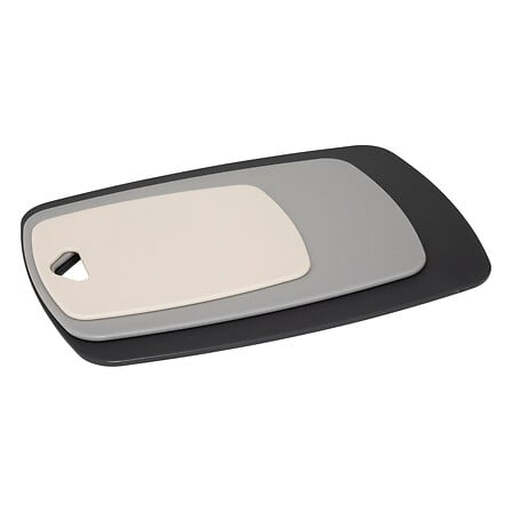
Why this set is a good fit: Ideal for starting out, as it allows for immediate and straightforward separation of food groups (e.g., meat, vegetables, bread) using different boards. This is a cornerstone of good kitchen hygiene.
This set bypasses the trap of owning just a single, unsuitable board. Instead of relying on a supposedly "antibacterial" all-in-one board, it employs the proven method of physical separation.
The set offers a cost-effective solution for a hygienic workflow. The lightweight polypropylene material is easy to clean and handle.

Why this board is a good fit: For anyone who values high-quality tools and a clean workflow. The generous surface area and robust bamboo construction are designed for daily, intensive use.
It solves two problems at once: the knife-friendly bamboo surface prevents rapid dulling of blades (Pitfall 2), and the integrated juice groove prevents a messy work surface (Pitfall 3).
The combination of a large, reversible work surface, a juice groove, and a durable material makes it a versatile and reliable kitchen assistant.
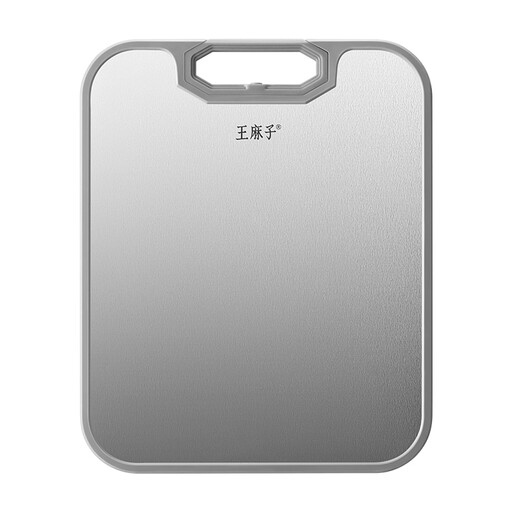
Why this board is a good fit: This board combines modern materials for maximum hygiene and efficiency. It is designed for cooks who want clear separation of foods and an extremely easy-to-clean surface.
It debunks the "false hygiene" trap (Pitfall 1). The non-porous stainless steel side offers no purchase for bacteria, unlike deeply scored plastic. The double-sided design is the logical implementation of hygienic separation.
The combination of a robust, hygienic stainless steel side (ideal for raw meat/fish) and a more knife-friendly plastic side (for vegetables/fruit) in a single product.
We have compiled a complete, up-to-date list of products that fully meet these strict selection criteria and UK safety regulations.
1. How often should you replace a cutting board? This depends on the material and its condition. Plastic boards should be replaced as soon as they show deep grooves and heavy discolouration, as bacteria can lodge here. Wood and bamboo boards are more durable. Superficial cuts are normal, but if the board develops cracks, warps significantly, or no longer lies flat, it's time for a replacement.
2. What kind of oil is suitable for a wooden cutting board? Use only food-safe, non-hardening oils. Refined, pharmaceutical-grade mineral oil, often sold as "cutting board oil," is a common choice. Special blends with beeswax are also well-suited. It is advisable to avoid vegetable-based cooking oils like olive or sunflower oil, as they can go rancid over time and develop an unpleasant odour.
3. Are bamboo cutting boards really more eco-friendly? Bamboo is a fast-growing resource that often requires no pesticides. Compared to slow-growing hardwoods, its raw material extraction can be considered more sustainable. However, the overall ecological footprint also depends on factors like the adhesives used in manufacturing and transportation routes. A board made from local, sustainably managed wood can be an equally good choice.