
Lieferung heute & morgen

Qualitätsgarantie

Willkommens-Angebote freischalten: KOSTENLOSE Lieferung | Bis zu 80 % RABATT | Kostenlose 30-Tage-JoyPlus-Testphase
App herunterladen
As a Joybuy Product Recommendation Officer, I see the incredible diversity of the paper crafting world every day. The sheer selection of cutting dies can be overwhelming, and finding the right design for your next project—whether it's a birthday card, a scrapbook layout, or a custom decoration—often costs valuable time.
This guide is designed to offer clear direction. We will introduce a selection of different cutting dies and provide you with practical criteria to help you make an informed decision. Our goal is to ensure you find the exact dies that bring your creative ideas to life with precision.
Before you buy die cuts, a few considerations can simplify the selection process. The following points are based on the technical properties of the products and the requirements of common crafting projects.
Most metal cutting dies are made of carbon steel. This material is known for its durability and its ability to produce clean cutting edges, even with intricate patterns. A crucial factor is compatibility with your die-cutting and embossing machine. Many dies are designed for standard machines like the Sizzix Big Shot. Nevertheless, it's wise to check the product description for compatibility notes and the recommended arrangement of cutting plates (the so-called "sandwich").
Consider what kind of projects you will primarily use the die for.
A die set that contains thematically related designs (e.g., various leaves and flowers) can be a great foundation for complex, multi-layered creations. Individual, particularly striking die cuts, on the other hand, are useful when you're looking for a very specific design for a one-off project. Sets often offer better value for money, while individual designs allow more creative freedom for special projects.
Here you will find a curated selection of cutting dies that cater to different creative needs. Each product has been chosen for its specific features and potential applications.
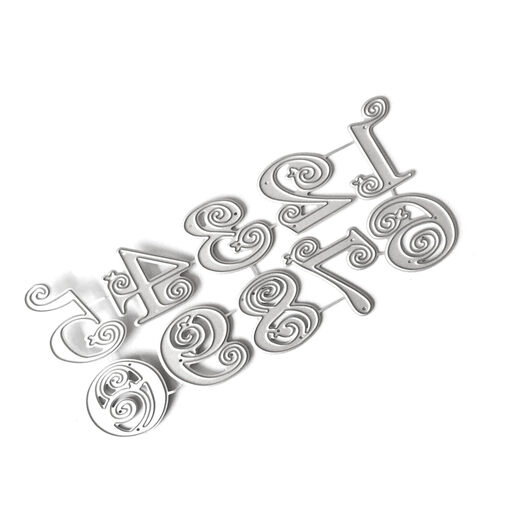
Why It Stands Out This set offers a complete collection of digits from 0 to 9 in a clear, legible font. Its universal applicability makes it a fundamental tool for numerous occasions.
Advantages
Who It's For For crafters who frequently create personalised projects like birthday cards, anniversary decorations, or homemade advent calendars and rely on recurring elements.
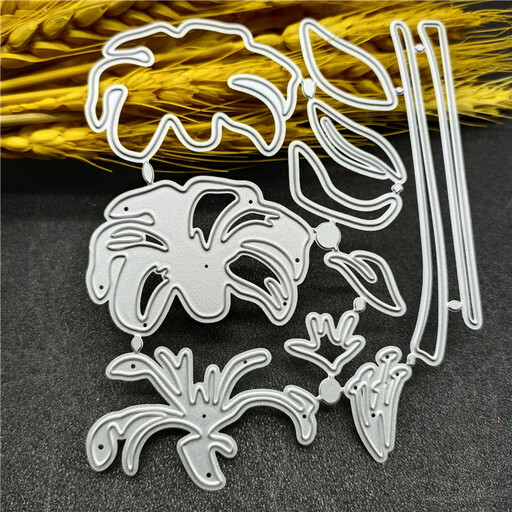
Why It Stands Out The intricate rendering of a lily flower allows for the creation of elegant and sophisticated paper crafts. The fine lines are not only suitable for die-cutting but can also be used for subtle embossing effects when paired with an embossing mat.
Advantages
Who It's For For creatives who specialise in designing high-end greeting cards for special occasions like weddings, christenings, or condolences, and who are looking for a design with symbolic depth.
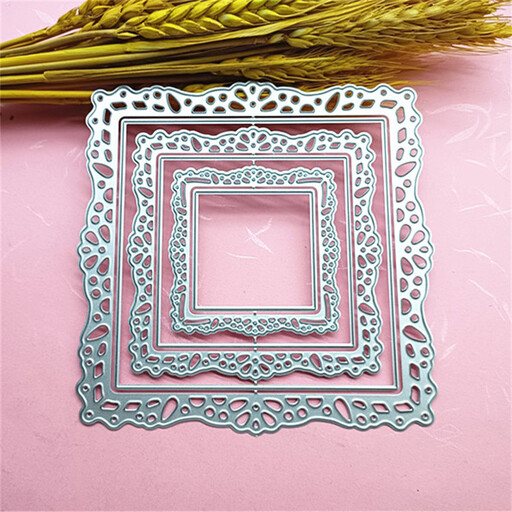
Why It Stands Out This large-format die cuts a complex, hollow lace pattern that is perfect as a background for cards or as an embellishment on scrapbook pages. It creates an elaborate-looking texture with just one pass through the machine.
Advantages
Who It's For For crafters using dies for card making and scrapbooking who want to quickly add professional depth and a decorative base layer to their projects.
The products presented here cover only a small fraction of the creative possibilities available. If you are looking for other themes, shapes, or specific designs, there is a much larger selection to explore.
Discover our entire collection of cutting dies and find the perfect design for your next project.
Cutting dies (also known as die cuts) are thin metal shapes with a sharp edge used to cut completely through paper, cardstock, or other thin materials. Embossing folders, on the other hand, are typically thicker plastic folders with a raised and a recessed pattern. The paper is placed between them and deformed by pressure, creating a three-dimensional relief without cutting the material.
The majority of metal cutting dies available on the market are made from carbon steel. This material is preferred for its hardness and durability, as it ensures the cutting edge remains sharp for a long time, resulting in clean and precise cuts.
Most thin metal dies are designed to work with the most common manual die-cutting and embossing machines (e.g., Sizzix Big Shot, Cuttlebug, Spellbinders Platinum). However, the required plate arrangement ("sandwich") can vary depending on the machine and the thickness of the die. It is always recommended to consult the machine manufacturer's instructions to avoid damaging the material and to achieve an optimal cutting result.