
Lieferung heute & morgen

Qualitätsgarantie

Willkommens-Angebote freischalten: KOSTENLOSE Lieferung | Bis zu 80 % RABATT | Kostenlose 30-Tage-JoyPlus-Testphase
App herunterladen
For paper crafting enthusiasts, creating custom cards and scrapbooks is a way to express creativity. To achieve precise and repeatable results, cutting dies are an indispensable tool. However, the sheer variety of designs and shapes can be overwhelming. This guide is here to help, presenting objective criteria to assist you in selecting the right dies for your projects. We will also showcase a selection of products for various applications.
As your Joybuy Product Recommendation Officer, I have compiled this information to provide you with an objective basis for your next crafting project.
To find the right dies for your needs, there are a few technical and design aspects to consider.
Not every cutting die is compatible with every die-cutting and embossing machine. Most dies are designed for standard manual machines that operate on the "sandwich" principle, where the die and paper are placed between two cutting plates and pressed through rollers. Pay close attention to the dimensions of the die and compare them with the maximum cutting width of your machine. This is especially crucial for large background dies.
The primary factor in your selection is the design. Are you looking for specific motifs like flower cutting dies for spring-themed decorations, or a 'Happy Birthday' cutting die for card making? Or do you need basic geometric shapes for your scrapbooking dies? Consider whether you prefer a set with several small, combinable elements or a single, large die. For purely tactile effects without a cutting edge, embossing folders, which only shape the paper, are a suitable alternative.
Most commercially available cutting dies are made of carbon steel. This material is durable and ensures clean, precise cuts even after repeated use. The level of detail in the design is also an important consideration. Highly intricate patterns produce impressive results but may require more care when releasing the paper from the die. Simpler shapes are often quicker to process and are well-suited for projects with children or for beginners making DIY cards.
Here is a curated selection of cutting dies that stand out for their specific designs and applications.
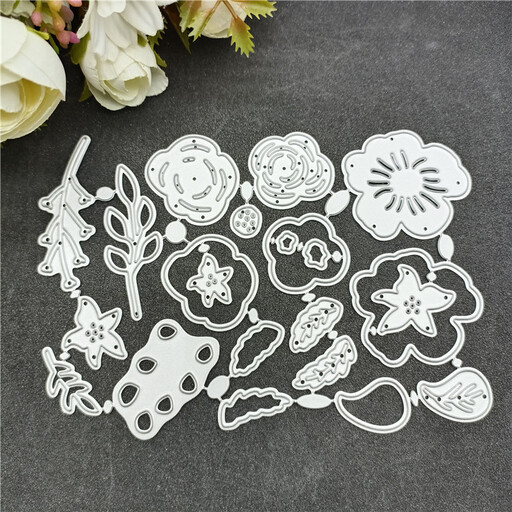
Why it stands out: This set consists of several separate dies for different flowers and leaves. This modularity allows you to freely arrange the individual elements and create multi-layered, three-dimensional floral compositions.
Pros:
Who it's for: Crafters who enjoy creating floral decorations and appreciate the flexibility of positioning and combining each element individually. Ideal for designing spring and summer projects.
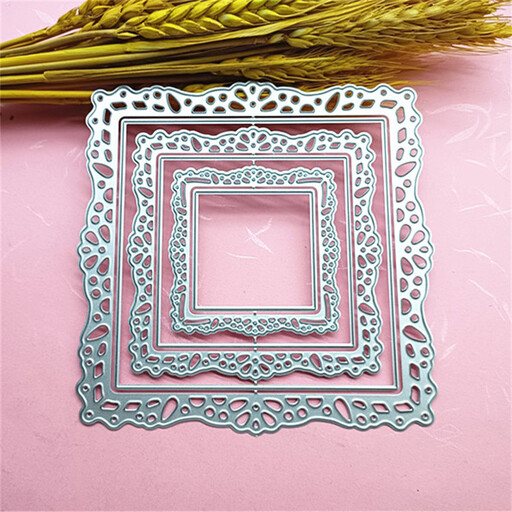
Why it stands out: This large-format die is designed to create a complete, decorative background in a single pass. The intricate lace pattern gives paper projects an elegant and sophisticated look.
Pros:
Who it's for: Users looking for an elegant and time-saving way to create backgrounds for cards or album pages. Especially suitable for festive occasions like weddings or anniversaries.
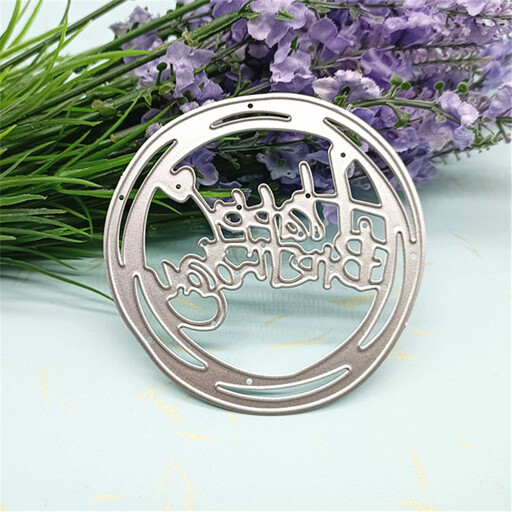
Why it stands out: This die offers a clean and stylish solution for the most common greeting occasion. The modern script can serve as the central element of a birthday card, ensuring a polished, professional look.
Pros:
Who it's for: All crafters who regularly make birthday cards and are looking for a reusable, precise sentiment as a design element.
If the dies featured here don't quite match what you're looking for, or if you wish to expand your collection of craft supplies, you can find more options in our broader category. There, we offer a wide variety of tools to complement your creative projects.
Discover Our Full Range of Stamps and Accessories
Cutting dies, also known simply as dies, are designed to precisely cut shapes and motifs from materials like paper, cardstock, or felt. They have a raised, sharp edge. In contrast, embossing folders only shape the material to create a raised (embossed) or recessed pattern without cutting through it.
A die-cutting and embossing machine is required to use metal cutting dies. These devices press the die onto the paper with high pressure. Most manual machines use a "sandwich" system of various plates that is fed through rollers. It is important to follow the instructions for your specific machine and to check the compatibility of the die size.
With very detailed designs, the cut paper can get stuck in the die. To release it without damaging the intricate design, a pointed tool like a piercer or a needle can be used. Many dies have small holes on the back through which the paper can be gently pushed out. A special brush with stiff bristles can also help to quickly remove small paper scraps from the crevices.