
Lieferung heute & morgen

Qualitätsgarantie

Willkommens-Angebote freischalten: KOSTENLOSE Lieferung | Bis zu 80 % RABATT | Kostenlose 30-Tage-JoyPlus-Testphase
App herunterladen
As a Joybuy Product Recommendation Officer, I see every day how the right tools bring creative ideas to life. Especially when it comes to designing cards, albums, and decorations, high-quality cutting dies make all the difference. They enable precise cuts and repeatable designs that are nearly impossible to achieve by hand.
However, the selection of designs and shapes can be overwhelming. This guide is designed to offer you clear direction. We'll introduce a selection of metal cutting dies and provide practical criteria to help you find the perfect scrapbooking supplies for your unique projects.
To ensure your new dies meet your expectations and work smoothly, there are a few technical aspects to consider.
Not every cutting die is compatible with every machine. Most metal cutting dies on the market are designed for standard manual die-cutting and embossing machines. Nevertheless, pay attention to the die's thickness and the manufacturer's specifications. The process relies on the pressure the machine applies to the die and the paper. An incompatible combination can lead to unclean cuts or even damage to the machine or the die.
Consider the primary occasions you want to use the dies for. Are you specifically looking for Christmas cutting dies or birthday cutting dies? Or do you prefer versatile designs like geometric shapes, floral elements, or sentiments that are suitable for a wide range of projects? A good mix of occasion-specific and timeless designs provides a solid foundation for diverse DIY decor and card making.
Intricate and detailed dies produce impressive results but often require a bit more care during use. Fine lines can easily get stuck in thick or fibrous paper. For such designs, smooth paper with a weight of about 120 to 180 g/m? is often a good choice. In contrast, sturdy, large-area shapes are more straightforward to handle and can reliably cut thicker cardstock up to 240 g/m? or even materials like felt or craft foam.
Here is a selection of cutting dies that stand out for their specific designs and applications.
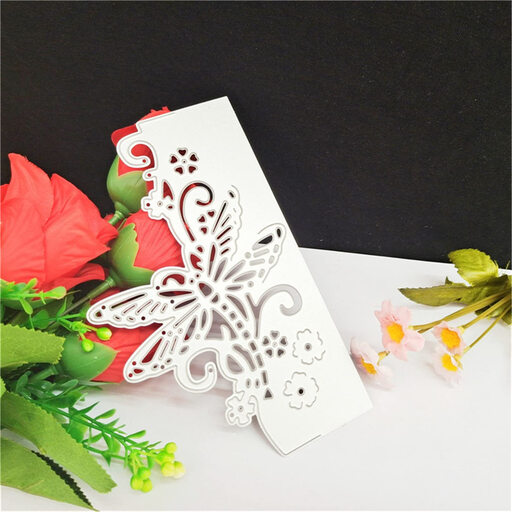
Why It Stands Out: This die offers a large-scale background pattern with Christmas motifs. Instead of just cutting a single element, it creates a complete scene that can serve as a base for card making or as a decorative page in a scrapbook.
Pros:
Who It's For: For crafters who want to efficiently and stylishly create a series of cards or album pages during the holiday season. Ideal for users looking to create a complete background scene with just one tool.
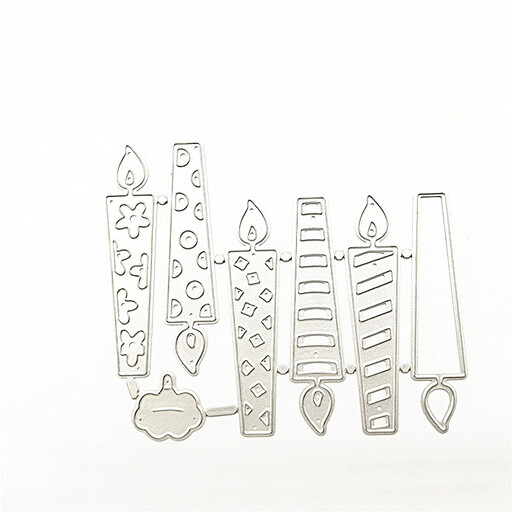
Why It Stands Out: This set combines a classic ‘Happy Birthday’ sentiment with separate candle designs. This modularity allows for flexible arrangement on your card. The text is clearly legible, and the candles can be individually placed and coloured.
Pros:
Who It's For: For anyone who regularly makes birthday cards and is looking for a versatile, reusable solution. The combination of text and images saves time during the design process.
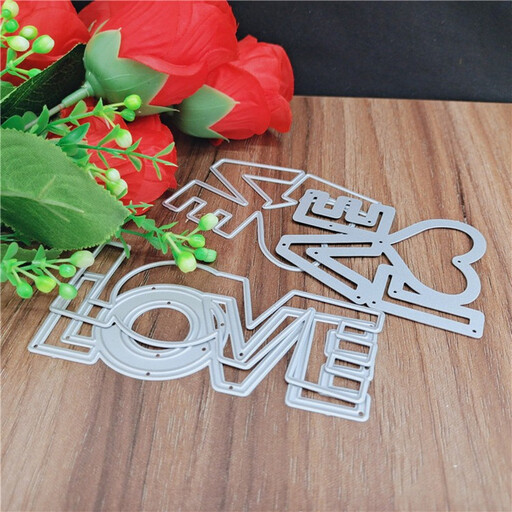
Why It Stands Out: The ‘Made with Love’ sentiment, in an elegant, handwritten-style font, adds a personal touch to any project. The die is not tied to a specific occasion and can be used year-round for gift tags, card backs, or as an accent in albums.
Pros:
Who It's For: For creatives who want to add a loving detail to their handmade works. Perfect for gift tags, Valentine's Day cards, wedding decorations, or simply as a little extra on any DIY decor.
Your creativity knows no bounds—and neither does our selection. If you're looking for more designs, special shapes, or other types of embossing folders, you're sure to find the perfect fit for your next project in our extensive category of metal card and cutting dies.
Cutting dies are thin metal shapes with a sharp edge used to cut completely through paper, cardstock, or other materials. Embossing folders, on the other hand, are typically thicker plastic folders that do not cut the material but instead press a three-dimensional, raised or recessed pattern into it.
The choice of paper depends on the die's level of detail. For most designs, standard cardstock with a weight between 120 g/m? and 240 g/m? works very well. For very intricate designs, a smoother, thinner paper (around 120 g/m?) can lead to cleaner results, as the fine details are easier to release from the die. It is recommended to perform a test cut with your chosen material before starting your final project.
After cutting, small paper scraps may remain in the die. These can be best removed with a pointed tool (like a needle or a special die-pick tool) or a small, stiff brush. For storage, magnetic sheets or special storage sleeves are suitable. Storing them flat prevents the thin metal shapes from bending and ensures you can enjoy your scrapbooking supplies for a long time.