
Lieferung heute & morgen

Qualitätsgarantie

Willkommens-Angebote freischalten: KOSTENLOSE Lieferung | Bis zu 80 % RABATT | Kostenlose 30-Tage-JoyPlus-Testphase
App herunterladen
As a Joybuy Product Recommendation Officer, I see countless products for creative hobbies every day. My goal is to help you find the right tools for your projects without being swayed by marketing promises. When it comes to cutting dies, there are several common pitfalls that can quickly spoil the crafting fun. This guide will show you what to look for to identify durable, functional products.
Many crafters know the disappointment: you invest in a new, beautiful-looking die, but the result is unsatisfactory. Before you spend your money, you should be aware of these three common flaws:
To avoid these problems, you should check three technical features before buying. These define the quality and longevity of a cutting die.
Most high-quality cutting dies are made of carbon steel. This material offers a good balance of hardness and flexibility. Pay attention to an adequate material thickness. Dies that are too thin (under 0.8 mm) tend to warp under the pressure of the rollers. A sharp, precisely engineered cutting edge is crucial for clean results, especially with complex designs like floral cutting dies or fine lettering.
Always check the exact dimensions of the cutting die before purchasing and compare them with the maximum pass-through width of your die-cutting and embossing machine (e.g., Sizzix Big Shot, Cricut Cuttlebug, or other models). Most thin metal dies, often called "wafer-thin dies," are universally compatible with common machines. However, for larger background dies or wide border dies, checking is essential.
The more intricate a design, the higher the demands on the quality of the die. For detailed patterns, such as those often used for card making or as scrapbooking accessories, good construction is critical. High-quality dies often have small holes on the back to make it easier to remove the die-cut paper (a process known as "weeding") with a tool. This saves time and prevents the delicate design from being damaged.
Here are some recommendations tailored to the different needs of creatives, which take the aforementioned quality criteria into account.
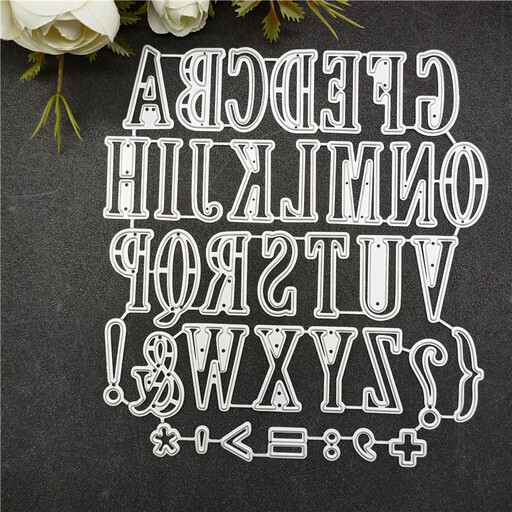
Why it's a great fit: Ideal for anyone who wants to personalize their projects. A set of alphabet dies is a fundamental investment that can be used again and again for cards, albums, banners, and decorations.
The sturdy carbon steel construction prevents bending. The clean, simple shapes of the letters ensure clean cuts every time, avoiding the frustration of incomplete results that can occur with more complex designs.
Universally applicable for names, titles, and custom messages on almost any paper project.
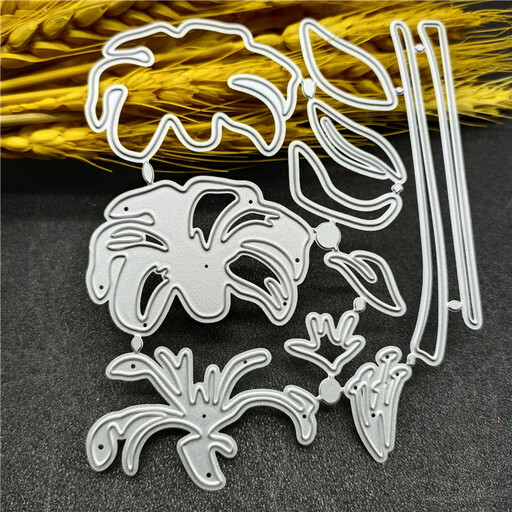
Why it's a great fit: For crafters who want to create elegant and detailed floral arrangements for card making or as decorations. The lily motif has a particularly sophisticated look.
The precisely engineered cutting edges ensure clean results even on the fine lines of the lily blossom. This makes weeding much easier—a common problem with intricate nature designs.
Creates an elegant, multi-layered floral motif that achieves high visual impact on cards and in albums.
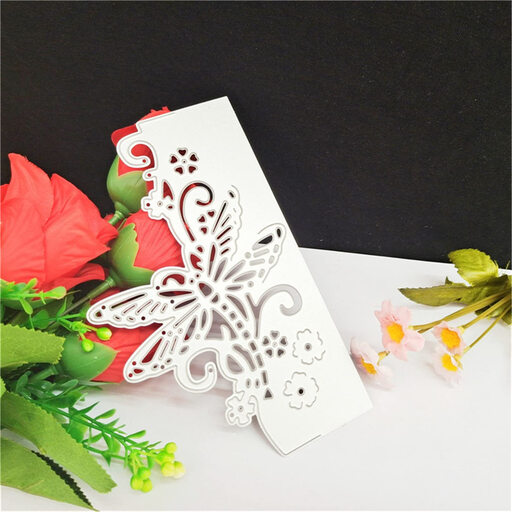
Why it's a great fit: Perfect for creatives who focus on seasonal projects. This set offers a selection of Christmas cutting dies for designing greeting cards, gift tags, and festive decorations.
Themed sets can sometimes be of lower quality. This set is made of durable metal, ensuring it can be used for Christmas crafting for many years to come without the edges becoming dull.
A comprehensive set that includes several coordinated Christmas motifs, enabling a cohesive design.
We have compiled a complete, up-to-date list of products that fully meet these strict selection criteria and quality standards.
The majority of thin metal cutting dies available on the market are compatible with the most common manual die-cutting and embossing machines. These include models from brands like Sizzix (e.g., Big Shot, Vagabond), Spellbinders (e.g., Platinum), We R Memory Keepers (Evolution Advanced), and Cricut (Cuttlebug). It is still advisable to know the maximum pass-through width of your machine and compare it with the dimensions of the die.
Care is straightforward. After use, remove all paper scraps from the die, for which a pick tool or a small brush is suitable. Store the dies flat to prevent bending. Magnetic storage sheets are a practical solution for this. Keep the dies dry to prevent rust.
Cutting dies are metal shapes with a sharp edge used to precisely cut shapes from paper, cardstock, or other materials. Embossing folders, on the other hand, are usually plastic folders with a raised and a recessed pattern. The paper is placed inside the folder and run through the machine, which impresses the pattern onto the paper without cutting it. There are also dies that can combine both functions.