
Lieferung heute & morgen

Qualitätsgarantie

Willkommens-Angebote freischalten: KOSTENLOSE Lieferung | Bis zu 80 % RABATT | Kostenlose 30-Tage-JoyPlus-Testphase
App herunterladen
For paper crafting enthusiasts, cutting dies are an indispensable tool. They enable precise and repeatable designs that would be nearly impossible to achieve by hand. However, the market is vast, and not every product delivers on its promise. Before you purchase your next scrapbooking accessories, it's wise to understand the most common pitfalls that can lead to frustration and unnecessary expense.
Many crafters invest in dies that later prove to be unusable. Typical problems include:
An informed choice will protect you from these problems and ensure that your DIY craft supplies enhance your creativity instead of hindering it.
To make the right choice, you should focus on objective features rather than marketing promises. The following three parameters are crucial for the functionality and longevity of your cutting dies.
The quality of a cutting die depends heavily on the material used. Most high-quality dies are made of carbon steel. This material offers a good balance of hardness and flexibility. It is robust enough to maintain sharp edges even after many uses and is resistant to bending. Look for a smooth, burr-free surface and clearly defined cutting edges. A poorly finished die can damage not only your paper but also your machine's cutting plates.
Die-cutting machines operate on a "sandwich" principle: the die and paper are placed between several plates, which are then passed through the machine to generate the necessary pressure. The thickness of the die is critical here. While most manufacturers use a de facto standard that works with common machines (e.g., from Sizzix, Vaessen Creative, or Spellbinders), variations exist. Before buying, check the dimensions of the die, especially if you have very large designs or a compact machine. The product description should ideally include information on compatibility or at least the thickness of the die.
The more intricate and detailed a design is, the more important the functionality for releasing the paper becomes. Good embossing folders and cutting dies for complex designs have small, strategically placed holes on the back. Using a pointed tool (like a piercing tool), you can easily and safely push the die-cut paper element out through these ejection holes. If these holes are missing on a very delicate design, there is a high risk of tearing the motif during removal.
Based on the quality criteria mentioned, we have put together a selection of products for different user profiles and projects.
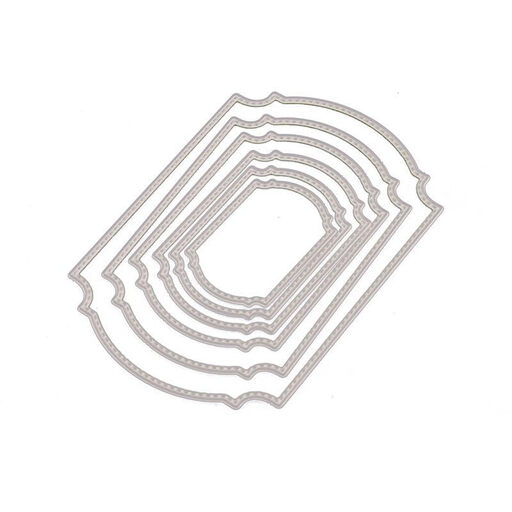
Why this product is a good fit: This die set is ideal for getting started. Frames are universally versatile, whether for dies for card making, as photo frames in a scrapbook, or for creating tags. The different sizes allow for the popular layering technique.
The simple, clean shapes place minimal demand on the machine and typically cut without issue, which minimizes the problem of poor cutting quality seen with more complex designs.
High versatility with six nestable sizes. The decorative stitching adds a professional touch to any project.
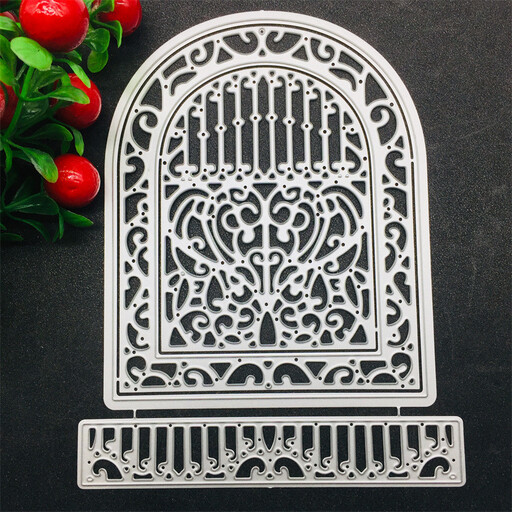
Why this product is a good fit: Those who create elaborate greeting or invitation cards look for unique die-cut designs. This intricate window frame creates an elegant focal point and interactive elements (e.g., that can be opened).
Despite the intricate design, the main structures are stable. The open areas are large enough that the paper generally releases well and doesn't get stuck in tiny details.
Creates a three-dimensional effect and is excellent as a central design element for sophisticated card projects.
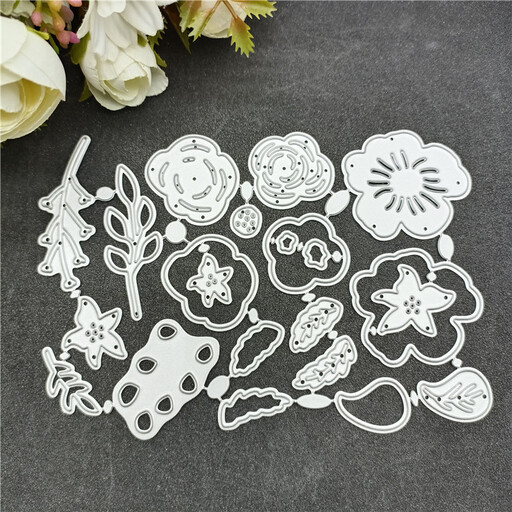
Why this product is a good fit: Floral motifs are a classic in scrapbooking. This set offers various flowers and leaves that can be used individually or combined to decorate layouts for diverse occasions (birthdays, spring, garden themes).
The designs are detailed but not overly complex. The shapes are clearly separated, which facilitates cutting and subsequent arrangement without tearing delicate parts.
Provides a collection of thematically matched but individually usable elements. This allows for a high degree of creative freedom across different projects.
We have compiled a complete, up-to-date list of products that meet these strict selection criteria.
The choice of paper depends on the project. For intricate designs, smooth paper with a weight between 120 GSM and 220 GSM works best. It's sturdy enough not to tear but not so thick that the machine struggles to cut. For more robust shapes like frames or tags, thicker cardstock up to 300 GSM can also be used. When using a new die, it's best to test it with a small piece of paper to find the right pressure.
After use, small paper scraps may remain in the dies. These can be most easily removed with a brush (like a stiff toothbrush) or a special bristle tool. For storage, magnetic sheets or panels in binders are ideal. This keeps the dies securely fixed, flat, and neatly organized.
If a die isn't cutting cleanly, there could be several reasons. First, check that your "sandwich" is assembled correctly for your machine. Sometimes, adding an extra sheet of paper (a "shim") can help to slightly increase the pressure. Try rotating the die 90 degrees and running it through the machine again. In stubborn cases, placing a piece of wax paper between the die and the paper can also help; this facilitates both the cut and the release of the paper.