
Lieferung heute & morgen

Qualitätsgarantie

Willkommens-Angebote freischalten: KOSTENLOSE Lieferung | Bis zu 80 % RABATT | Kostenlose 30-Tage-JoyPlus-Testphase
App herunterladen
As a Joybuy Product Recommendation Officer, I see every day how the right selection of tools brings creative projects to life. However, with the abundance of cutting dies on the market, it's not always easy to find the right ones. A failed cut or a bent die can quickly dampen your crafting enthusiasm. This guide will help you avoid common purchasing pitfalls and identify the right dies for your ideas.
The most common problems when buying cutting dies are often invisible until it's too late:
To avoid these problems, it's important to pay attention to a few key features before buying.
The selection of the right die depends on objective parameters that determine the success of your project. Instead of being guided by beautiful designs alone, you should check the following technical aspects.
The longevity and functionality of a cutting die are largely determined by the material. Look for metal cutting dies that are explicitly declared as made from carbon steel. This material offers good hardness and edge retention, which ensures precise and clean edges. A solid material thickness prevents the die from bending under the machine's pressure, which is especially important with repeated use. The cutting edges should be sharp and clearly defined to slice through the paper cleanly rather than just crushing it.
Not every die fits every machine. Check the dimensions of the die and compare them with the maximum opening width of your machine. Many crafters use devices like the Sizzix Big Shot, which is why searching for dies for Big Shot is very common. Look for notes on compatibility with popular models in the product descriptions. If this information is missing, proceed with caution. The thickness of the die also plays a role in the correct "sandwich" setup (the stack of plates, paper, and die) in your machine.
Consider what you primarily want to use the die for. Do you want to cut out simple shapes for scrapbooking accessories or create complex, intricate patterns for professional card making?
Based on the criteria above, we have identified some products that are suitable for different creative needs.
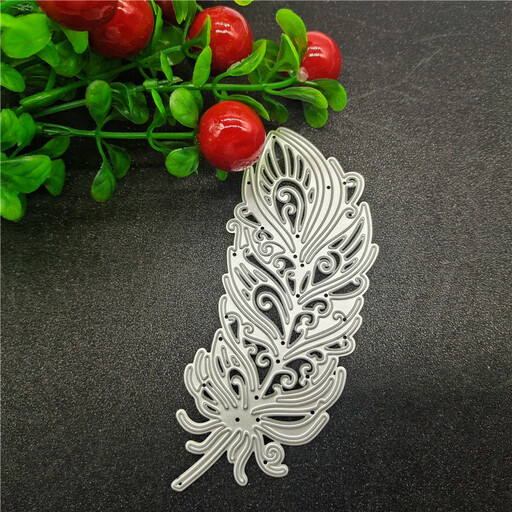
Why This Fits Their Persona: The simple and universally applicable leaf designs are ideal for first projects. They are suitable for decorating cards, albums, or gift tags without overwhelming the user with complex details.
The clear, uncomplicated design with continuous cutting lines prevents standard craft paper from tearing, thus avoiding the frustration that arises with overly intricate dies.
A versatile design suitable for various occasions and seasons. Ideal for building a basic collection of scrapbooking accessories.
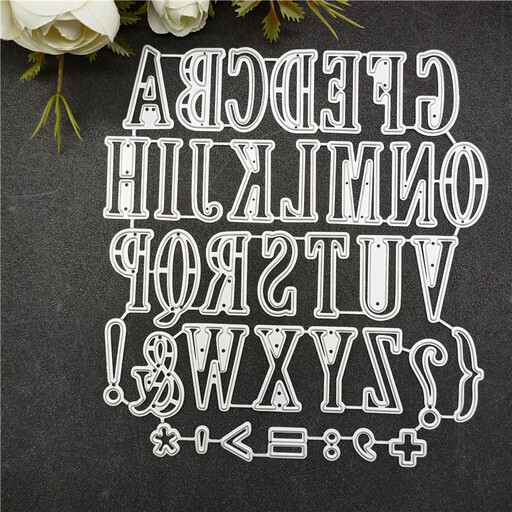
Why This Fits Their Persona: This set allows for the complete personalization of cards and scrapbook pages. Names, dates, greetings, or custom messages can be created precisely and in a uniform font.
As a complete alphabet set, it ensures a consistent font size and style, solving the problem of mismatched or hard-to-combine individual letter dies.
Contains 26 capital letters for unlimited text possibilities. The robust metal cutting dies are designed for repeated use.
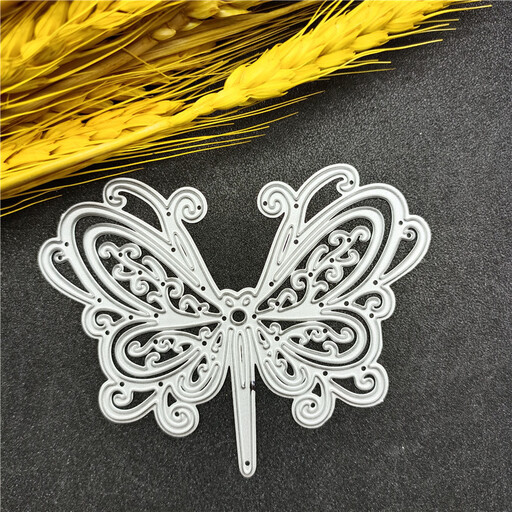
Why This Fits Their Persona: The intricate butterfly design allows for elegant and professional-looking embellishments. It is ideal for sophisticated cards or as a centrepiece in an art journal.
Although the design is detailed, the lines are clearly defined. When used with high-quality cardstock (>160 gsm), it cuts cleanly without the typical tearing seen in poorly designed intricate dies.
Creates fine, detailed cutouts for a high-end look. The shape can be used as both a cutting die and an embossing folder for subtle effects.
We've compiled a complete, up-to-date list of products that meet these strict selection criteria and quality standards.
For most die-cutting projects, a smooth, sturdy cardstock with a weight between 160 gsm and 220 gsm is a good choice. It's stable enough to allow for clean cuts without breaking. For very intricate designs, a lighter paper around 120 gsm can be advantageous as it is easier to cut. It's always recommended to do a test cut on a scrap piece.
After use, small paper scraps can be carefully removed from the die with a pointed tool (e.g., a needle or a special pick tool) or a fine wire brush. For storage, magnetic sheets or special collector binders are suitable. This protects the dies from bending and keeps your collection organized. Store them in a dry place to prevent rust.
Most thin metal dies (so-called "wafer-thin dies") are compatible with the Big Shot and other common die-cutting machines. The key is the correct arrangement of the cutting plates (the "sandwich"). Refer to your machine's manual for this. For very large dies, you must ensure their width does not exceed your machine's maximum opening width. Standard Big Shot machines typically have a width of about 15 cm (6 inches).