
Lieferung heute & morgen

Qualitätsgarantie

Willkommens-Angebote freischalten: KOSTENLOSE Lieferung | Bis zu 80 % RABATT | Kostenlose 30-Tage-JoyPlus-Testphase
App herunterladen
By Joybuy Product Recommendation Officer, July 05, 2026
For lovers of DIY projects, cutting dies are an essential tool. They allow you to precisely cut paper, cardstock, and other materials into countless shapes to create custom greeting cards, scrapbook pages, or decorations. However, the selection of designs is vast, and choosing the right die can be challenging.
This article serves as a practical guide. We'll explain the criteria you should consider when making your selection and present a curated list of cutting dies for scrapbooking and card making, suitable for various occasions. Our goal is to provide you with an informed basis for your decision, so you can find the perfect DIY crafting supplies for your creative ideas.
To find the right metal cutting dies for your projects, there are several technical and design aspects to consider.
Not every cutting die is compatible with every machine. Most dies available on the market, often called "wafer-thin dies," are designed for the most common manual die-cutting machines (e.g., from Sizzix, Spellbinders, or We R Memory Keepers). Before purchasing, check the dimensions of the die and the maximum pass-through width of your machine. For very large or thick dies, it's wise to consult the manufacturer's specifications on compatibility.
Consider which projects you primarily want to use the dies for. Are you looking for versatile basic shapes like circles and labels, or specific designs for particular occasions?
The quality of a cutting die is evident in its durability and the precision of the cut. Most dies are made of steel, making them robust and reusable. High-quality manufacturing is crucial, especially for intricate and detailed designs. Sharp cutting edges ensure clean results without frayed edges, even with fine lines and complex patterns.
Here is a selection of cutting dies that stand out for their specific designs and applications.
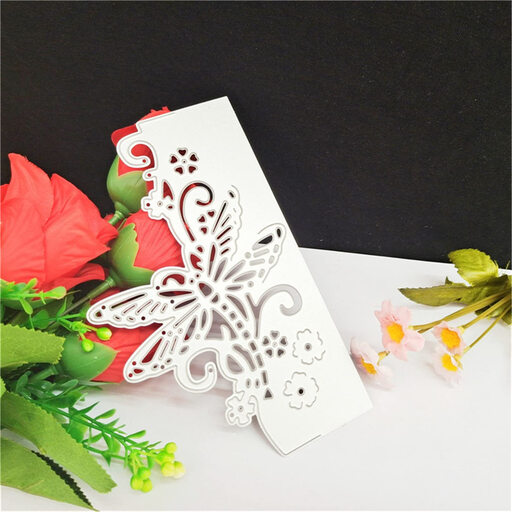
Why It Stands Out: This die combines multiple elements—a detailed background with snowflakes and a central sentiment. It allows you to create a complete card front in a single pass.
Advantages:
Who It's For: Crafters who want to quickly and easily batch-produce festive Christmas cards without sacrificing a detailed design.
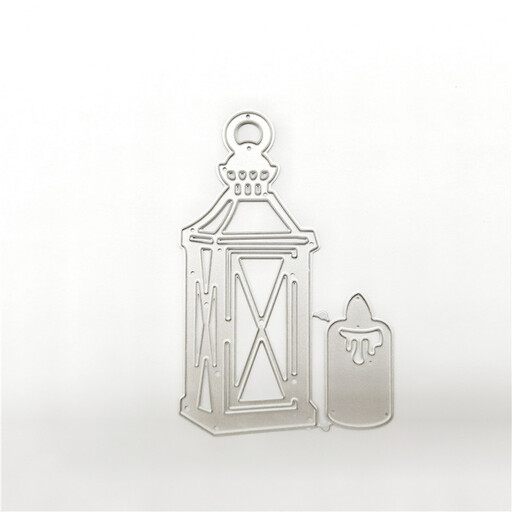
Why It Stands Out: The special feature of this die is the extremely fine, openwork pattern of the lamp. Such designs create an elegant and high-end impression, well-suited for festive occasions like birthdays or anniversaries.
Advantages:
Who It's For: Advanced crafters looking for a challenge who want to add a special, artistic touch to their projects. Ideal for cutting dies for card making for celebratory occasions.
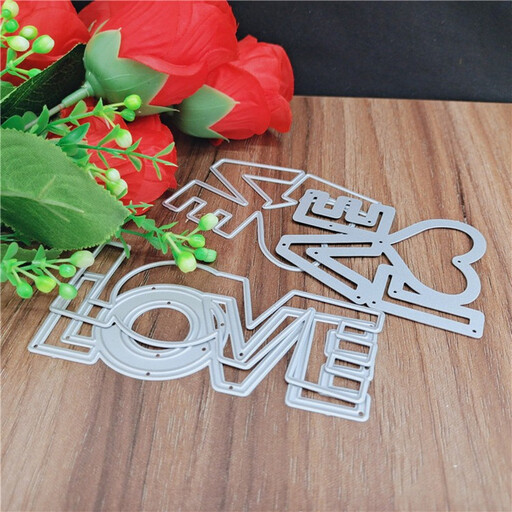
Why It Stands Out: This die offers a clear and universally applicable sentiment. The design is simple and modern, making it suitable for a variety of styles—from romantic to minimalist.
Advantages:
Who It's For: Anyone who wants to label their handmade creations and convey a clear, heartfelt message to the recipient. A fundamental addition to any collection of love-themed cutting dies.
Our selection covers only a small fraction of the creative possibilities. If you are looking for other shapes, themes, or more complex sets, you will find a wider range of options in our main category.
? Explore our entire range of Cutting Tools here.
1. What is the difference between cutting dies and embossing folders?Cutting dies are thin metal shapes with a sharp edge used to completely cut out designs from paper or other flat materials. Embossing folders, on the other hand, are typically thicker plastic folders that press a design into the paper to create a raised, three-dimensional texture without cutting it.
2. What paper is best for die-cutting? For most metal cutting dies, paper with a weight between 120 g/m? and 240 g/m? works best. Very thin paper (under 100 g/m?) can easily tear with intricate designs. Very thick cardstock (over 250 g/m?) may not be cut cleanly by some dies, especially with complex patterns. It is recommended to perform a test cut with a small scrap piece.
3. How do I clean and store my cutting dies? After use, small paper scraps may get stuck in the die. These can be easily removed with a pointed tool (e.g., a needle or a special pick tool) or a small, stiff brush. For storage, magnetic sheets or storage sleeves are ideal. This keeps the dies flat, protected from damage, and neatly organized.