
Lieferung heute & morgen

Qualitätsgarantie

Willkommens-Angebote freischalten: KOSTENLOSE Lieferung | Bis zu 80 % RABATT | Kostenlose 30-Tage-JoyPlus-Testphase
App herunterladen
By a Joybuy Product Recommendation Officer, August 28, 2026
For creative paper projects like card making or scrapbooking, cutting dies are an indispensable tool. They enable precise and repeatable designs that would be nearly impossible to achieve by hand. However, the market is vast, and the selection can quickly become overwhelming. It's not uncommon for a purchase to lead to frustration when the result doesn't meet expectations.
The most common problems when buying cutting dies can often be traced back to a few crucial factors. By understanding these, you can specifically search for the right products for your projects and avoid poor investments.
To avoid these pitfalls, it's helpful to familiarise yourself with the basic parameters of metal cutting dies before making a purchase.
The functionality of a cutting die depends on objective criteria. Instead of being guided by marketing promises, you should pay attention to the following three technical specifications.
The durability and sharpness of a cutting die are largely determined by the material used. Most high-quality dies are made of Carbon Steel. This material offers a good balance of hardness and flexibility, ensuring the cutting edge remains sharp even after many uses and delivers clean cuts. Dies made from softer metal alloys tend to wear out or bend more quickly, leading to messy results.
Compatibility with your die-cutting and embossing machine is crucial. Check two things before you buy:
For crafting with cutting dies, it is therefore advisable to compare the dimensions of the die with the specifications of your machine.
Especially with intricate designs like lettering for wedding cutting dies or delicate floral patterns, the ratio of size to detail is important. A very small die often cannot cleanly cut a highly complex pattern because the paper fibres are put under too much stress in a confined space. As a rule of thumb: the more intricate the design, the larger the die should be to ensure a clean result. This is a key aspect to consider when you buy die-cuts to achieve professional-looking results.
Based on these objective criteria, we have identified some products from our range that are suitable for different creative profiles.
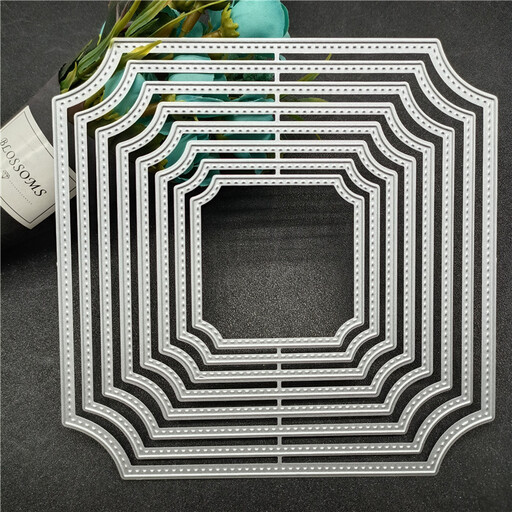
Why This Fits Their Persona: This set offers a selection of nesting frames that form a solid foundation for almost any card making or scrapbooking project. The different sizes allow for versatile layered looks.
The clear, geometric shapes without overly intricate details ensure high compatibility with most die-cutting machines and reliably deliver clean cutting results.
The 8-piece set offers excellent value for money and maximum flexibility for designing backgrounds and frames.
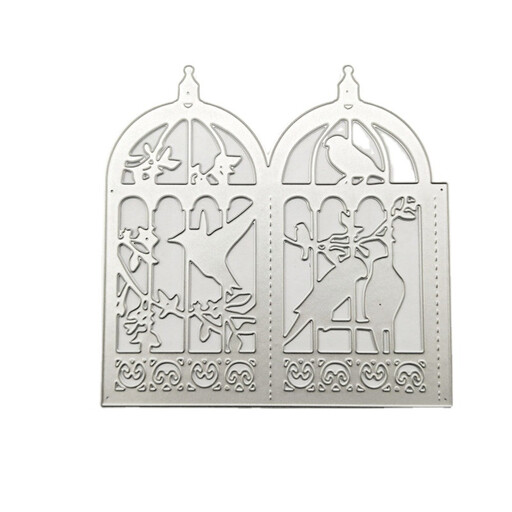
Why This Fits Their Persona: Ideal for anyone looking to personalise invitations, place cards, or thank-you notes for a wedding. The motif is distinct and thematically appropriate for a romantic design.
The design focuses on a clear silhouette rather than tiny, illegible details. This prevents the die-cut shape from becoming unrecognisable and ensures a clean cut.
A specific wedding motif that allows for consistent and themed decoration across various paper elements.
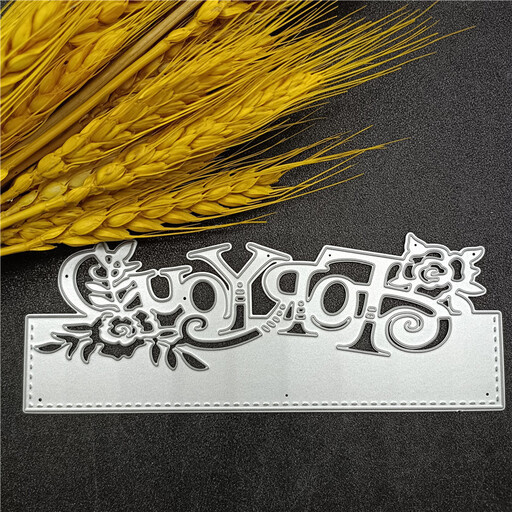
Why This Fits Their Persona: This border die is perfect for adding an elegant and professional touch to scrapbook pages, card edges, or photo corners. It is a classic element in scrapbooking supplies.
Despite its intricate design, the die is made from sturdy carbon steel. This provides the necessary sharpness to prevent paper fraying—a common problem with complex border dies.
The intricate lace edge design allows for the creation of elegant and decorative finishes that give handmade projects a high-end appearance.
We have compiled a comprehensive, up-to-date list of products that meet these strict selection criteria. Discover more accessories for your creative projects, from card making to complete event decoration.
No, universal compatibility is not always guaranteed. While most metal cutting dies are designed for the most common manual die-cutting machines, it's important to know your machine's maximum platform width. Additionally, different types of dies and paper require a specific arrangement of cutting plates (the "sandwich"). Checking your machine's instruction manual is always recommended.
After cutting, small paper scraps often get stuck in the die. The easiest way to remove them is with a special die-pick tool or a stiff brush (Die Brush). A handy tip: place a sheet of wax paper between the die and the cardstock. This can help the die-cut piece release more easily.
Cutting dies are metal shapes with a sharp edge used to cut designs completely out of paper or other materials. Embossing folders, on the other hand, are usually thicker plastic folders that impress a pattern into the paper without cutting through it. The result is a raised, three-dimensional relief. Some thin cutting dies can also be used for embossing with the addition of a rubber mat.