
Lieferung heute & morgen

Qualitätsgarantie

Willkommens-Angebote freischalten: KOSTENLOSE Lieferung | Bis zu 80 % RABATT | Kostenlose 30-Tage-JoyPlus-Testphase
App herunterladen
Published on August 30, 2026 by Your Joybuy Product Recommendation Officer
Choosing the right cutting dies can make or break a creative project. Whether for card making, scrapbooking supplies, or other DIY craft projects, the seemingly endless variety of designs and manufacturers often makes the decision difficult. Many crafters invest in dies that end up sitting unused in a drawer because they don't deliver the expected results. This guide will help you spot common pitfalls and make an informed choice.
Before you spend your money, you should be aware of the most common issues that can arise with low-quality or unsuitable cutting dies.
To avoid these problems, focus on three core technical parameters. These will help you objectively assess the quality and suitability of a cutting die.
The durability and cutting quality of a die depend directly on its material. Look for products explicitly made from carbon steel. This material provides the necessary hardness and stability to cut precisely through thicker cardstock or multiple layers of paper. It is more resistant to bending and ensures long-lasting sharp edges. Simple sheet metal is often not robust enough for repeated use or complex designs.
Before buying, always check the exact dimensions of the die and compare them with the maximum pass-through width of your die-cutting and embossing machine. Machine manufacturers (e.g., Sizzix, Vaessen Creative, Cricut) typically provide clear instructions for creating the "sandwich" (the combination of plates and the die). A die that is too thick can damage the machine, while one that is too thin may not provide enough pressure for a clean cut.
Intricate designs, often found in dies with floral designs or delicate lettering, present a unique challenge. Here, it's not just about the quality of the cut, but also how easily the die-cut paper element can be removed from the die. High-quality dies often have small holes on the back. You can use these to gently push the paper out with a pointed tool (a "pick") without damaging it. The same principle applies to embossing folders, where uniform material thickness ensures a crisp, deep impression.
Here are some product recommendations tailored to different user profiles and projects.
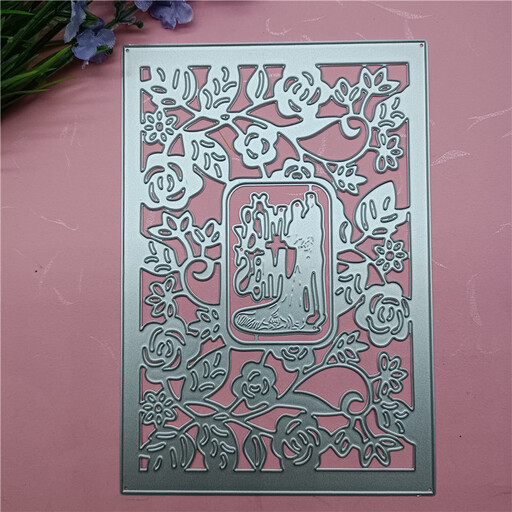
Why This Fits Their Persona: This set is ideal for beginners as it includes both clear stamps and the matching cutting dies. This allows for the creation of perfectly coordinated designs right from the start, without the tedious search for matching individual parts.
As a coordinated stamp and die set, the problem of incompatibility between the stamp design and the die is solved from the outset. The dies are perfectly matched to the stamp designs.
High versatility for various projects like card making and scrapbooking. Offers a cost-effective entry point with immediately visible, professional results.
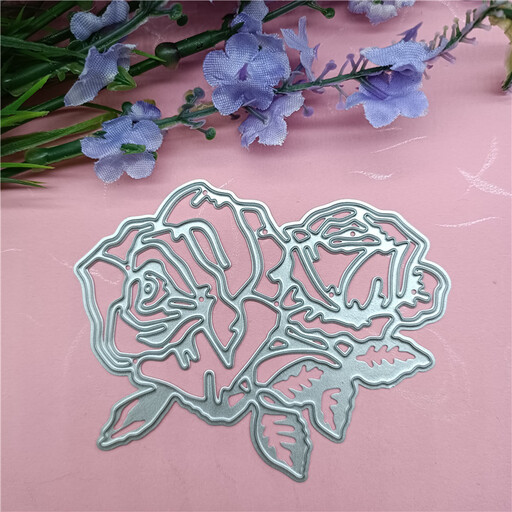
Why This Fits Their Persona: This set is aimed at advanced crafters who value elegant and intricate details. The rose designs are perfect for sophisticated projects like wedding cards, anniversaries, or elaborately designed photo albums.
The intricate design suggests a manufacturing process geared towards precise cuts. Such designs require a certain material hardness to avoid bending, which reduces the risk of a low-quality product.
Specialises in a timeless and popular motif (floral cutting dies). Enables the creation of multi-layered, three-dimensional-looking flowers for a special visual effect.
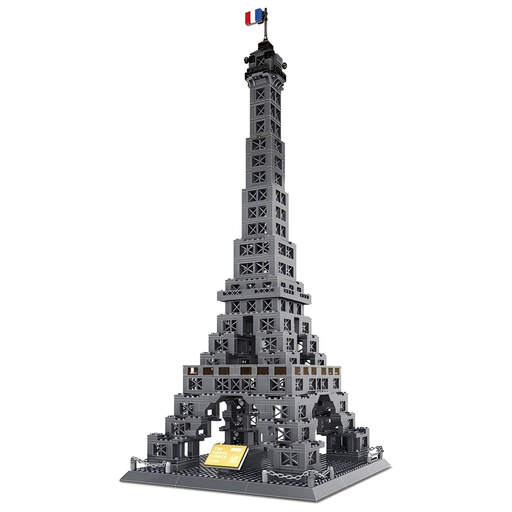
Why This Fits Their Persona: For creative minds whose interests go beyond paper. This set offers a challenging building project that promotes concentration and spatial reasoning. The finished model is an impressive decorative and collector's item.
This building block set offers a clearly defined project with an exact number of pieces and detailed instructions. The material specification (ABS plastic) promises high precision and stability, which is often a problem with inferior building kits.
A detailed replica of a famous landmark. The finished model has high decorative value and is a must-have for architecture and building block enthusiasts.
We've curated a comprehensive, up-to-date selection of products that meet our criteria for quality and usability.
Yes, the ability to cut other materials depends on the type of die and the power of your machine. Thin metal dies (often called "thinlits" or simply "dies") are generally suitable for cardstock, craft felt, foam sheets, and sometimes thin sheet metal. For thicker materials like leather or thick felt, more robust "steel-rule dies" are required, which are built like cookie cutters with a blade mounted on a wooden block.
After die-cutting, small paper scraps often remain in the die. You can carefully remove these with a small brush or a special tool (pick tool). To store your dies safely and keep them organised, magnetic sheets or panels that can be filed in binders or boxes are a proven solution. This keeps the dies flat, protected, and easy to access.
For beginners, manual crank-operated machines are often a great choice. They are usually less expensive to purchase than electronic models and require no prior technical knowledge. Look for a model with a standard platform width (approx. 15 cm or 6 inches), as most dies available on the market are designed for this size. This ensures maximum compatibility with your future card-making accessories.