
Lieferung heute & morgen

Qualitätsgarantie

Willkommens-Angebote freischalten: KOSTENLOSE Lieferung | Bis zu 80 % RABATT | Kostenlose 30-Tage-JoyPlus-Testphase
App herunterladen
As a passionate crafter, you know the feeling: you spot a beautiful cutting die online, instantly envision the finished cards and scrapbook pages, but disappointment follows after your purchase. The intricate design tears the paper, the die bends after just a few uses, or the result simply doesn't match the product image. Such bad investments are frustrating, costing not only money but also valuable creative time.
Many online listings rely on appealing images while concealing crucial weaknesses. Two of the most common traps are:
This guide will help you recognise these pitfalls and choose the right cutting dies for your projects.
To objectively assess the quality of a cutting die, you should pay attention to three key parameters. These will help you find durable and functional scrapbooking accessories that support your creativity instead of hindering it.
The choice of material is crucial for the longevity and functionality of a cutting die. Look for products explicitly made from carbon steel. This material offers high hardness and resilience.
Not every die fits every machine. While most metal cutting dies are designed for popular models like the Sizzix Big Shot, Cricut Cuttlebug, or similar devices, the thickness of the die (the so-called "wafer-thin die") can vary.
A detailed floral cutting die or one with a lace pattern is visually appealing but places high demands on manufacturing quality. With very fine lines that are close together, there is a risk of the paper getting pinched and torn between the cutting edges.
Based on the criteria above, we have compiled a few products for different creative needs.
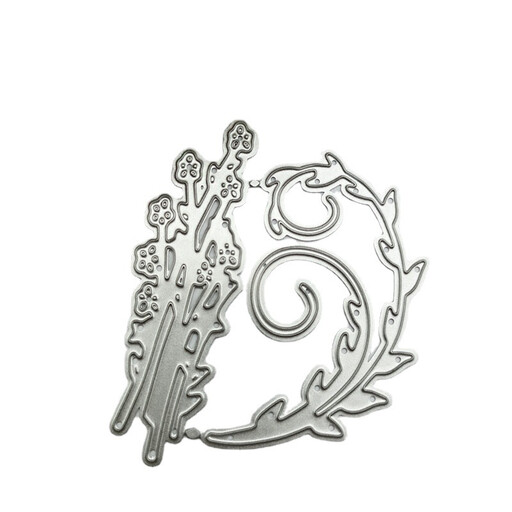
Why This Fits Their Persona: Ideal for crafters looking for a basic set of versatile motifs. The individual elements (leaves, flowers) can be combined for countless projects in DIY crafting and card making without breaking the bank.
The designs are clear and not overly complex. This minimises the risk of paper tearing and ensures that even beginners can achieve clean results with standard-weight cardstock.
The set includes several separate dies that can be arranged flexibly and used repeatedly. Made from carbon steel for good durability.
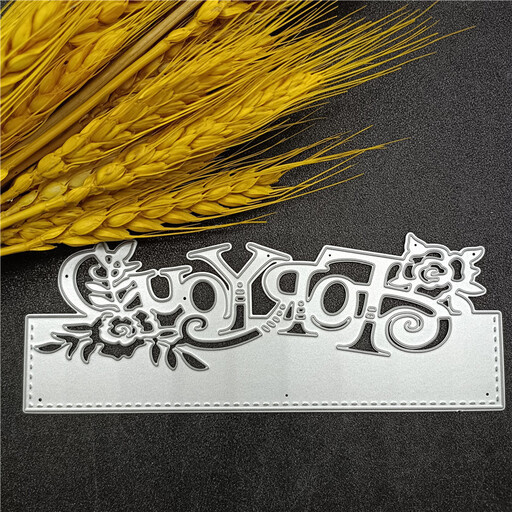
Why This Fits Their Persona: Perfect for experienced crafters seeking elegant accents for wedding invitations or sophisticated card-making dies. The border creates a high-end, lace-like effect.
Despite the intricate design, the cutting lines are clearly separated. The shape is designed as a border, which increases stability and reduces the risk of tearing compared to a free-standing, complex motif.
Creates a continuous, decorative edge that gives cards and album pages a professional finish. The robust carbon steel construction is suitable for repeated use.
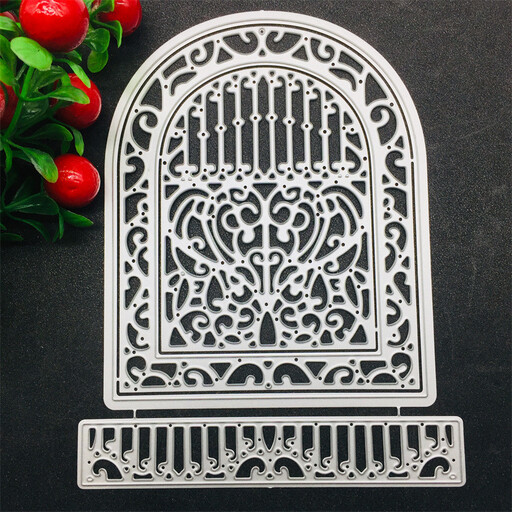
Why This Fits Their Persona: For creatives who enjoy building scenes or need a solid foundation for their cards. A frame motif like this provides a structure that can be filled with other die-cuts, stamps, or decorations.
This die avoids the "single-purpose motif" trap. Instead of just cutting a single object, it creates a versatile frame that forms the basis for countless different designs, thus offering high reuse value.
The set consists of multiple parts (frame and window) that can be used together or separately. This allows for the creation of 3D effects (e.g., open window shutters) and increases creative flexibility.
We've curated a complete, up-to-date list of products that meet these strict selection criteria and quality standards.
After die-cutting, small paper scraps often get stuck in the intricate gaps. Most dies have small holes through which you can gently push out the scraps with a pointed tool (e.g., a piercing tool or a special die-pick tool). A stiff-bristled brush can also help to quickly clean the die without damaging the cutting edges.
For highly detailed designs, the choice of paper is crucial. A smooth paper with long fibres and a weight between 120 g/m? and 220 g/m? often yields the cleanest results. Paper that is too fibrous or too thin tends to tear in delicate areas. Always perform a test cut with a small piece of paper when using a new, complex die.
No, there is an important distinction here. Cutting Dies are designed to cut paper. Embossing Folders, on the other hand, are usually thicker plastic folders that press a pattern into the paper without cutting it. However, some thin metal cutting dies can also be used for embossing with a special rubber mat in the die-cutting machine. This process impresses the design into the paper instead of cutting it out. For this, refer to your die-cutting machine's instructions.