
Lieferung heute & morgen

Qualitätsgarantie

Willkommens-Angebote freischalten: KOSTENLOSE Lieferung | Bis zu 80 % RABATT | Kostenlose 30-Tage-JoyPlus-Testphase
App herunterladen
As a Joybuy Product Recommendation Officer, I see the vast selection of creative supplies every day. The range of cutting dies, in particular, can be overwhelming. Many crafters invest in dies that quickly become unusable or fail to deliver the desired results. This guide will help you identify the common pitfalls and choose products that will reliably support your creative projects.
Before you spend your money, you should be aware of the three most common flaws found in low-quality dies, which lead to frustration instead of creative joy.
To avoid these problems, you should check three technical features before buying. These define the quality and usability of a die and are more important than any marketing message.
The longevity and sharpness of metal cutting dies depend directly on the material used. Look for products explicitly made from carbon steel. This material offers high hardness and resilience. It ensures that the cutting edges remain sharp even after frequent use and that even fine details are cut precisely from the paper. Dies made of simple, non-hardened metal tend to dull and warp quickly.
Most thin metal dies, often called "wafer-thin dies," are designed for a wide range of die-cutting and embossing machines. This includes popular dies for the Big Shot and similar models. Nevertheless, it is wise to compare the die's dimensions with the maximum pass-through width of your machine. This check is crucial, especially for large background dies or borders, to ensure the die will physically fit.
It is important to distinguish between cutting dies and embossing folders.
Many sets offer both, expanding the possibilities for card making and scrapbooking supplies. Clarify which function you need for your project before you buy.
Based on the quality criteria mentioned, we have compiled a few products for different creative needs.
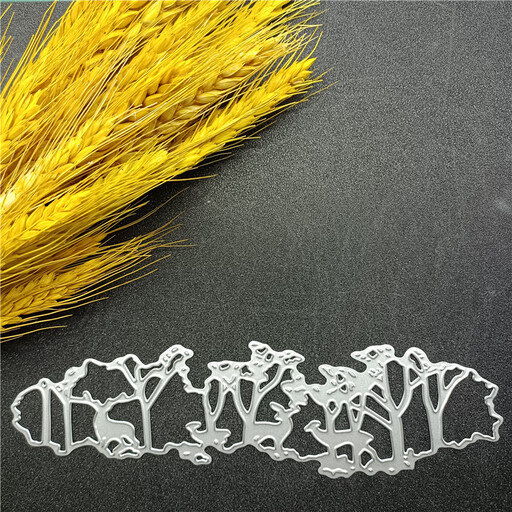
Why this product is a good fit: Ideal for anyone starting out with paper crafting. This set offers basic shapes that can be used for a variety of projects like greeting cards, gift tags, or scrapbook layouts, without committing to a specific theme.
The die is made of carbon steel, providing solid stability and sharpness that minimises the problem of warping and unclean cuts common in entry-level products.
Versatile basic shapes that form a great foundation for a growing collection of DIY dies.
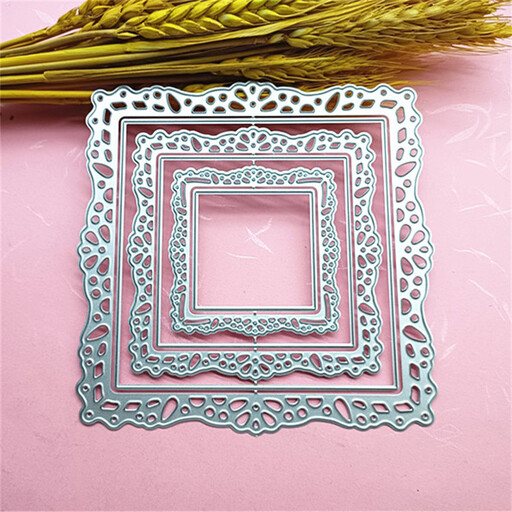
Why this product is a good fit: Perfect for experienced crafters who design intricate cards or scrapbook pages. The delicate lace pattern creates an elegant background and lends a professional touch to projects like wedding invitations or festive greeting cards.
With such a detailed design, a sharp cutting edge is essential. The carbon steel construction ensures that even the finest elements of the lace pattern are cut cleanly without tearing the paper.
Creates large, intricate backgrounds that serve as a central design element for sophisticated paper projects.
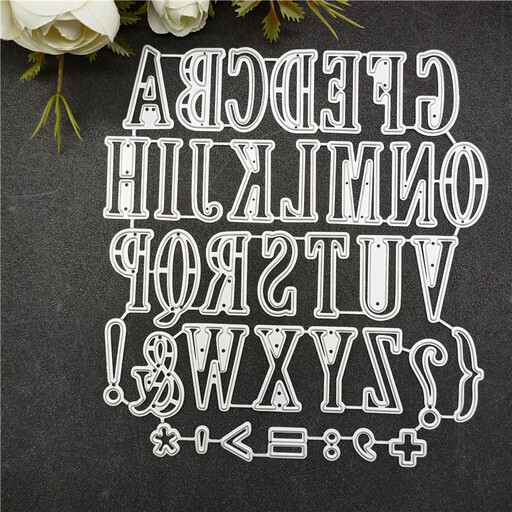
Why this product is a good fit: For anyone who wants to add names, custom messages, or dates to their projects. A complete alphabet set is a versatile tool for personalising albums, banners, and cards for birthdays or anniversaries.
An alphabet set is a long-term investment. The robust carbon steel construction ensures that the letters remain sharp and do not lose their precision even after hundreds of cuts.
Offers unlimited possibilities for personalisation and is reusable for countless occasions and projects.
We have curated a comprehensive selection of products that meet the quality criteria mentioned here. Find the right tools for your next creative project.
1. Which die-cutting machine is compatible with these metal dies? Most thin metal cutting dies, often called "wafer-thin dies," are designed to be compatible with the most common die-cutting and embossing machines. These include well-known models like the Sizzix Big Shot, the Cuttlebug, or the Spellbinders Platinum. It is still recommended to compare the die's dimensions with the maximum pass-through width of your own machine to ensure compatibility.
2. How do you care for cutting dies to extend their lifespan? To maintain the sharpness and shape of your dies, you should clear them of small paper scraps after each use. A small brush or a special release tool (die pick) is well-suited for this. Store the dies flat, ideally on magnetic sheets, to prevent bending. This keeps them ready for your next project.
3. What is the difference between cutting dies and embossing folders?Cutting dies are metal shapes with a sharp edge used to precisely cut designs from paper or other materials. Embossing folders, on the other hand, do not cut. They are typically plastic folders with a recessed and a raised pattern. When paper is placed between them and pressed through the machine, a tangible, three-dimensional texture is created on the paper.