
Lieferung heute & morgen

Qualitätsgarantie

Willkommens-Angebote freischalten: KOSTENLOSE Lieferung | Bis zu 80 % RABATT | Kostenlose 30-Tage-JoyPlus-Testphase
App herunterladen
As a Joybuy Product Recommendation Officer, I see a wealth of crafting supplies daily. Choosing the right cutting dies can be a challenge given the vast array of designs and shapes. The goal of this guide is to provide clear direction and help you find the perfect tools for your craft projects, such as card making or scrapbooking. We will introduce a selection of products and provide practical criteria to guide your decision.
To ensure your next DIY projects are a success, a few key considerations are helpful when selecting your dies.
Most high-quality cutting dies are made of metal, typically carbon steel. This material ensures durability and precise cuts, even with repeated use. Make sure the dies are compatible with your existing die-cutting and embossing machine. Most standard models on the market are designed for common, thin metal dies (known as "wafer-thin dies"). For particularly thick or large dies, check your machine's specifications. The right die-cutting machine accessories, such as different plate combinations, can expand compatibility.
Consider which projects you primarily want to use the dies for.
Intricate and detailed crafting dies produce impressive results but often require a bit more care when cutting and removing the paper from the die. A tool for releasing the paper pieces (a "die-picker") can be very helpful here. Simpler, larger shapes are easier to handle and are well-suited for beginners or for projects that need to be completed quickly.
Here you will find a curated selection of cutting dies that stand out for their versatile applications.
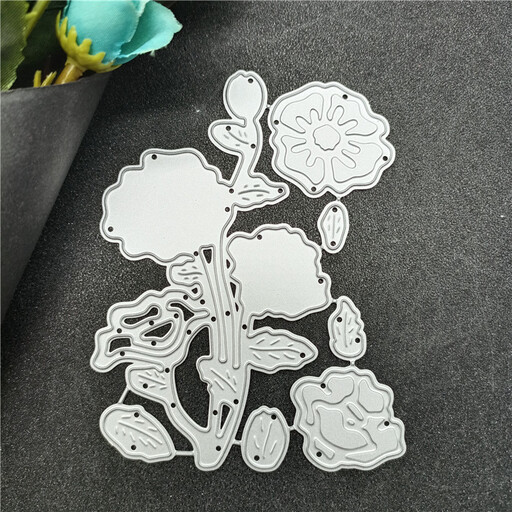
Why it stands out: This set combines a classic label shape with a floral frame. This combination allows you to create both functional and decorative elements with just one tool.
Advantages:
Who is it for? For crafters looking for a versatile tool that is suitable for various card making projects and for small DIY decor elements.
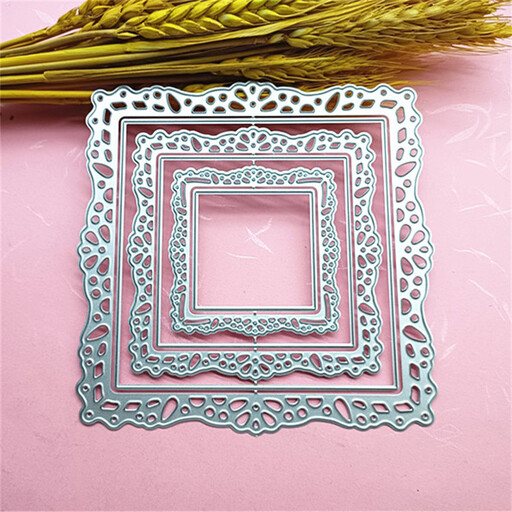
Why it stands out: This large-format die is specifically designed to create a complete, detailed background for square cards or scrapbook pages. The intricate lace pattern adds an elegant touch to any project.
Advantages:
Who is it for? For scrapbooking enthusiasts and card makers who love to create impressive backgrounds and want to give their projects a romantic or sophisticated feel.

Why it stands out: As an "edger" die, this tool is specialized to cut a decorative edge on paper rather than cutting a shape from the center. The integrated "Best Wishes" sentiment makes it a functional tool for greeting cards.
Advantages:
Who is it for? For anyone who frequently creates greeting cards for various occasions and is looking for a quick yet elegant method to produce a professional-looking finished edge.
The products presented here are just a small glimpse of the creative possibilities. If you are looking for more designs, specific themes, or other types of die-cutting tools, you will find a wide selection in our comprehensive category.
Discover more die-cutting tools here
Cutting dies are sharp metal shapes used to completely cut through paper or other thin materials to create a specific shape. Embossing folders, on the other hand, are usually made of plastic and consist of two hinged sides with a relief pattern. The paper is placed between them and pressed through the machine, which impresses a raised, three-dimensional pattern onto the paper without cutting it.
For most metal cutting dies, cardstock with a weight between 160 gsm and 250 gsm works very well. This weight is sturdy enough to ensure clean cut edges but not so thick that it overwhelms most standard die-cutting machines. For very intricate designs, a slightly thinner paper (around 120 gsm) can help to cut out all the details cleanly.
The majority of thin metal cutting dies are compatible with most common manual die-cutting and embossing machines (e.g., from Sizzix, Cricut, Spellbinders). Nevertheless, it is advisable to check the product description of the die and the manual of your machine. The required "sandwich" combination of cutting plates can vary by manufacturer. Larger dies naturally require a machine with a correspondingly wide opening.