
Lieferung heute & morgen

Qualitätsgarantie

Willkommens-Angebote freischalten: KOSTENLOSE Lieferung | Bis zu 80 % RABATT | Kostenlose 30-Tage-JoyPlus-Testphase
App herunterladen
Precision is a critical factor when creating custom greeting cards, scrapbook pages, or decorations. Anyone who wants clean edges and repeatable, detailed designs will quickly find that scissors and craft knives have their limits. Cutting dies offer a functional solution for shaping paper and other thin materials with accuracy and ease.
This article serves as a guide. It introduces different types of cutting dies and explains which criteria are relevant when choosing them for your specific project. The goal is to provide you with an objective basis for your purchasing decision.
The selection of designs and shapes is vast. To find the right tools for your creative projects, the following objective criteria can be helpful.
Most metal dies are made of carbon steel. This material is known for its durability and its ability to create sharp cutting edges. Before purchasing, it is important to check the die's compatibility with your existing die-cutting and embossing machine. Pay attention to the dimensions of the die and the machine manufacturer's specifications. Most standard dies are compatible with common machines, but checking the product description provides final confirmation.
Consider the occasions for which you primarily want to use the dies. Are you looking for designs for birthdays, Christmas, weddings, or more universally applicable geometric shapes and frames? A targeted selection that matches your most frequent projects ensures you make the most of your scrapbooking supplies. Many sets combine graphic designs with matching sentiments, which simplifies the creation of greeting cards.
It is useful to know the difference between cutting dies and embossing folders.
Some thin metal dies can also be used for embossing with the appropriate mats in a die-cutting machine. This significantly expands the creative possibilities for your DIY decor.
Based on the criteria mentioned, we have compiled a selection of cutting dies that stand out for their specific areas of application.
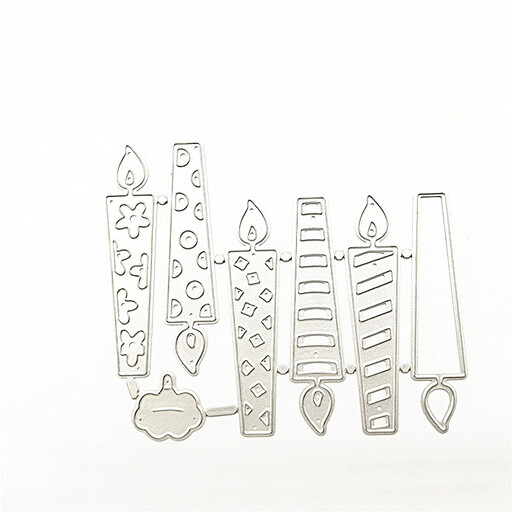
Why it stands out: This set combines a classic candle design with the sentiment "Happy Birthday" and other decorative elements. It offers a complete solution for creating birthday cards.
Advantages:
Who it's for: Users who regularly craft birthday cards and are looking for a versatile, thematically appropriate set.
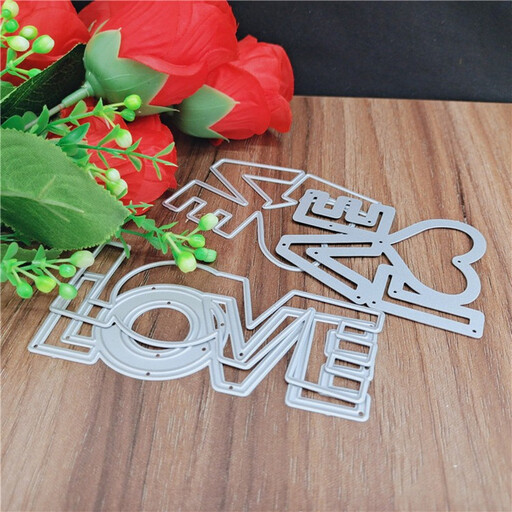
Why it stands out: The intricate heart design with the integrated "Made with Love" sentiment is perfect for projects that require a personal and loving touch.
Advantages:
Who it's for: Crafters who create detail-oriented decorations for romantic occasions like weddings or Valentine's Day and want to expand their scrapbooking supplies.
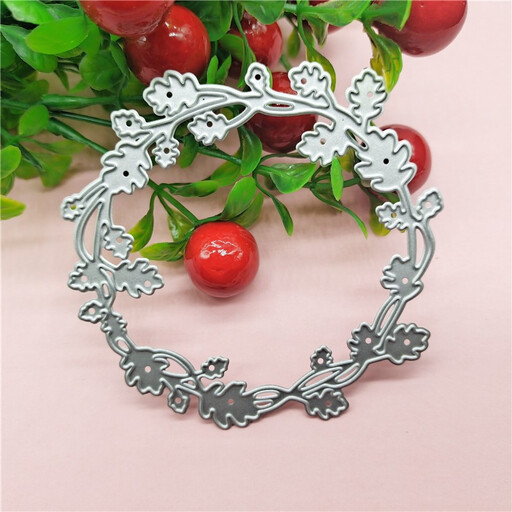
Why it stands out: A classic wreath design is a versatile base element for festive creations. It can be used on its own or seasonally adapted with other die-cut elements like berries, bows, or flowers.
Advantages:
Who it's for: Crafters looking for a reusable basic shape for various festive occasions who enjoy customising their projects.
If the designs presented here don't exactly match what you're looking for, or if you need more specialised shapes, it's worth exploring a wider selection. From basic geometric shapes to complex floral patterns, there is a suitable tool for every project.
Discover our entire selection of metal embossing tools and find the perfect dies for your next creative endeavour.
For optimal results, cardstock with a weight between 120 g/m? and 250 g/m? is generally recommended. Thinner paper can easily tear with intricate designs, while very thick cardstock may not be cut through completely. It is advisable to perform a test cut with a small piece of your chosen material beforehand.
Yes, a die-cutting and embossing machine is required to use metal dies. Most dies are compatible with common manual machines (e.g., from Sizzix, Spellbinders, or Cuttlebug). The key is the correct arrangement of the plates (the so-called "sandwich"), as described in the instructions for the respective machine.
Cutting dies are sharp-edged metal shapes that cut designs out of materials like paper, craft foam, or thin felt. Embossing folders, usually made of plastic, do not cut the material but instead press a pattern into it. This creates a raised, tactile texture on the paper's surface.