
Lieferung heute & morgen

Qualitätsgarantie

Willkommens-Angebote freischalten: KOSTENLOSE Lieferung | Bis zu 80 % RABATT | Kostenlose 30-Tage-JoyPlus-Testphase
App herunterladen
As a passionate crafter, you know how a precisely cut detail can transform a handmade project from good to exceptional. Cutting dies are an indispensable tool for adding professional finesse to greeting cards, scrapbook pages, and decorations. However, the selection of designs is vast, and choosing the right die shapes can be a challenge.
This article serves as a guide. We'll introduce you to a selection of different cutting dies and provide practical criteria to help you choose the perfect crafting accessories for your projects.
Before you expand your collection, there are a few technical and design aspects to consider. These will help ensure that your new dies are compatible with your equipment and match your creative vision.
Most cutting dies available on the market are thin metal shapes known as "wafer-thin dies". These are generally compatible with the most common manual die-cutting and embossing machines. Nevertheless, you should check the maximum pass-through width of your machine. Particularly large background cutting dies may require an A4-format machine, while smaller designs work perfectly well with compact models.
Consider which projects you primarily want to use the dies for.
A cutting die set often provides several coordinated designs, such as various flowers and leaves or a collection of sentiments. Such sets are practical for creating cohesive designs. Individual, unique dies, on the other hand, are ideal for adding specific accents or bringing a very particular idea to life.
Here you'll find a curated selection of dies that stand out for their versatile applications in common paper projects.
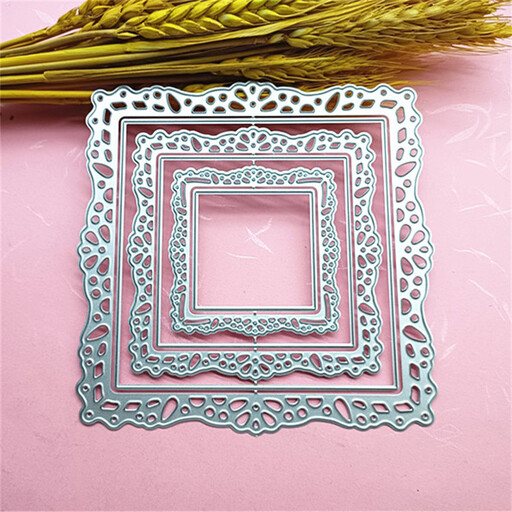
Why It Stands Out This die creates a large, intricate lace background. Its size makes it perfect for decorating the entire front of a standard card with just one pass. The pattern is detailed and adds an elegant touch to any project.
Advantages
Who It's For For crafters who focus on card making and want to quickly create impressive, elegant backgrounds without having to combine many small elements.
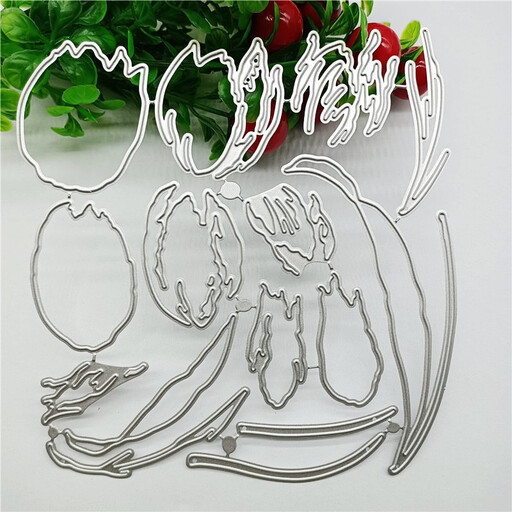
Why It Stands Out This set bundles several common German greetings and wishes in a modern, clean font. Its versatility makes it a fundamental part of a basic card-making toolkit.
Advantages
Who It's For For anyone who regularly makes greeting cards and needs a reliable selection of German text elements that fit many different styles.
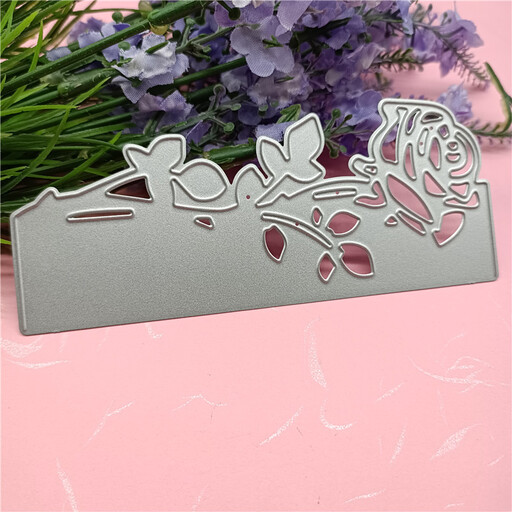
Why It Stands Out This flower cutting die consists of several individual pieces that can be layered after being cut. This creates a rose with a three-dimensional effect, serving as a central focal point on cards or as a decoration in your scrapbooking supplies.
Advantages
Who It's For For DIY enthusiasts who enjoy detailed designs and want to give their projects a special tactile and visual quality through layered elements.
The dies presented here are ideal for paper and cardstock projects. However, if your creative endeavors also involve working with other or thicker materials and you're looking for more powerful cutting tools, a look at our range of cutting machines might be helpful.
Discover more tools in our Sawing Machine category.
Cutting dies, also known as die shapes, are metal forms with a sharp edge that precisely cut designs from paper, cardstock, or other thin materials. Embossing folders, on the other hand, are typically plastic folders with an embedded pattern. The paper is placed inside and run through the machine, which presses the pattern into the paper as a relief without cutting it.
For most cutting dies, standard craft cardstock with a weight between 160 g/m? and 250 g/m? yields good results. For very intricate designs, a smoother, heavier cardstock can be advantageous as it is less prone to tearing. It's always good practice to do a small test cut with your chosen paper before starting the actual project.
After use, small paper scraps stuck in the die can be carefully removed with a small brush or a pointed tool (e.g., a piercing tool). For storage, magnetic sheets kept in binders or boxes have proven effective. This keeps the dies flat, organised, and prevents them from getting lost.