
Lieferung heute & morgen

Qualitätsgarantie

Willkommens-Angebote freischalten: KOSTENLOSE Lieferung | Bis zu 80 % RABATT | Kostenlose 30-Tage-JoyPlus-Testphase
App herunterladen
As a passionate crafter, you know how a precisely cut shape can elevate a paper project from good to extraordinary. Whether for card making, scrapbooking, or custom decorations, the right cutting dies are crucial. However, with the vast array of designs and types available, the selection can quickly become overwhelming.
This article serves as a practical guide. It introduces various types of dies and provides concrete criteria to help you choose the right accessories for your die-cutting machine. The goal is to provide you with an informed basis for your next creative endeavour.
Before you expand your collection, there are some technical and practical aspects to consider. These points will help you find the right cutting dies for your specific needs and existing equipment.
Not every cutting die is compatible with every machine. Most thin metal dies on the market (often called "wafer-thin dies") are designed for standard manual die-cutting and embossing machines. Nevertheless, it's important to check the maximum width your machine can handle. Also, pay attention to the plate combination ("sandwich") recommended by your machine's manufacturer to achieve a clean cut and to protect both the die and the machine. The right plates are essential die-cutting machine accessories.
The primary factor in your choice is the project you have in mind. Are you looking for a solution for recurring tasks or a specific design?
The quality of a cutting die is evident in its durability and the precision of its cut. Most dies are made of carbon steel, which is considered robust and long-lasting. For very intricate and detailed designs, high-quality construction is particularly important to ensure all fine lines are cleanly released from the paper. Some dies are also suitable for embossing when used with a special rubber mat. These are often referred to as embossing dies, although they are primarily designed for cutting.
Here is a selection of cutting dies that stand out for their specific applications. Each product has been chosen for its functionality and potential value for common crafting projects.
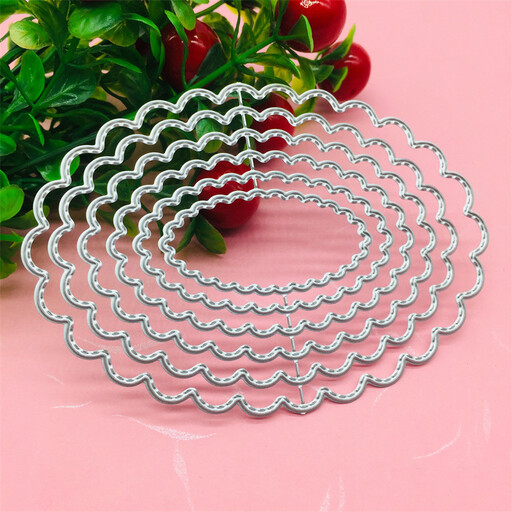
Why It Stands Out: This set consists of several nesting frame dies with an intricate lace border. The "nesting" principle allows you to cut frames in various sizes that can be perfectly combined. This enables the creation of multi-layered backgrounds and elegant overlays.
Advantages:
Who It's For: For crafters who frequently design greeting cards or invitations and value a classic, ornate design. It's a great addition for anyone looking to expand their scrapbooking supplies with versatile basic elements.

Why It Stands Out: This die is designed to create all the necessary cutting and scoring lines for a small 3D box in a single pass through the die-cutting machine. The design is optimised for creating small gift boxes or advent calendars.
Advantages:
Who It's For: For users who enjoy making personalised gifts and are looking for a quick and straightforward solution for box making. It is excellent for producing small batches, such as for party favours at weddings or celebrations.
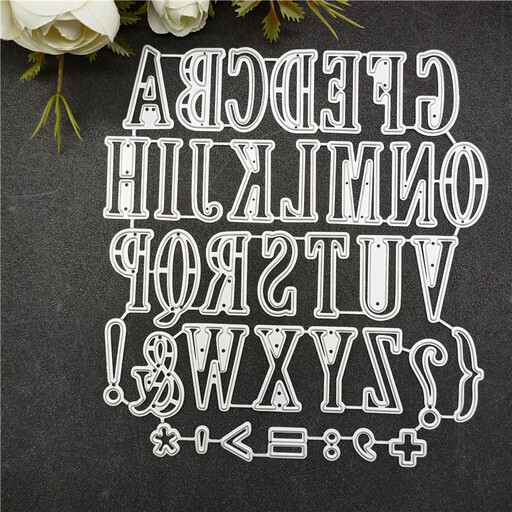
Why It Stands Out: This set includes all 26 capital letters of the alphabet in a clear, legible font. The ability to cut individual words, names, or monograms offers the maximum level of personalisation for any project involving paper crafts.
Advantages:
Who It's For: For all DIY enthusiasts who want to add a personal touch to their creations. From the scrapbooker who needs titles for their pages to the card maker who wants to write custom greetings – alphabet dies are a core tool for advanced projects.
Wasn't the right design for your current project among them? The world of cutting dies is vast and diverse. From complex 3D flowers to simple labels, there's a die for almost every idea.
Discover a wider selection of designs in our Dies for Scrapbooking category and find the perfect addition to your creative workshop.
1. What is the difference between cutting dies and embossing folders?Cutting dies (also known as dies or wafer-thin dies) are thin metal shapes with a sharp edge used to cut completely through paper and other thin materials. Embossing folders, on the other hand, are typically thicker plastic folders with a raised and a recessed pattern. The paper is placed between them and pressed through the machine, which impresses a three-dimensional, embossed pattern into the paper without cutting it.
2. What paper is best for die-cutting? For most die-cutting projects, cardstock with a weight between 120 g/m? and 240 g/m? works well. Very thin paper can tear easily with intricate designs, while very thick cardstock (over 300 g/m?) may require multiple passes through the machine or may not be cut cleanly by some dies. The result depends on the die, the paper, and the machine.
3. How do you properly clean and maintain cutting dies? After use, small paper scraps can get stuck in the intricate parts of the die. These are best removed carefully with a special die-picking tool (a type of brush with a pick) or a simple needle. To improve cutting performance with very detailed designs, it can help to place a sheet of wax paper between the die and the cardstock. This lightly lubricates the blades and helps the die-cut piece release more easily.