
Lieferung heute & morgen

Qualitätsgarantie

Willkommens-Angebote freischalten: KOSTENLOSE Lieferung | Bis zu 80 % RABATT | Kostenlose 30-Tage-JoyPlus-Testphase
App herunterladen
Whether you’re renovating, packing, sewing or preparing food, your cutting tools need to suit the material, the type of cut and how often you’ll use them. A utility knife for cardboard has a different job from mitre shears for PVC trim or a rotary cutter for fabric.
Three common marketing pitfalls often lead to the wrong purchase:
Before buying, look beyond the price and check the blade material, cutting capacity, ergonomics, safety features and what’s included.
First, check that the tool is suitable for the material you intend to cut. Paper, cardboard, fabric, felt and thin leather require different cutting tools from PVC, seals or soft wood.
SK5 replacement blades are commonly used in utility and craft knives. SK5 is a type of carbon steel used for cutting blades. However, blade thickness, grind, locking mechanism and intended use are also important. A 9 mm utility knife is better suited to lighter tasks, while an 18 mm utility knife offers a wider blade for cardboard and packaging materials.
Adjustable mitre shears are useful for mitre cuts. Models with a scale and stop can help you make repeatable angled cuts. Check the stated angle range and whether the tool is designed for soft materials such as PVC, plastic profiles, seals or soft wood.
For trim, cable trunking and seals, the cutting angle is a key consideration. Mitre shears with a range of 45 to 135 degrees can handle a variety of tasks. A clear scale and a fixed 45-degree stop make it easier to set the angle.
With electric shears and cordless cutters, the key factors are the maximum material thickness, blade shape and cutting control. A figure such as 11,000 revolutions per minute describes the motor speed, but on its own it doesn’t tell you which materials can be cut safely or how thick they can be. Always consider this information alongside the product description.
Electric shears or a cordless cutter can reduce strain on your hands when making repeated cuts. Check:
With a multi-tool, accessory compatibility and speed settings are also important. An oscillating tool, for example, can cut, scrape and sand. For renovation work, check that the included accessories are clearly listed, such as a wood saw blade, multi-material blade, sanding pad and scraper.
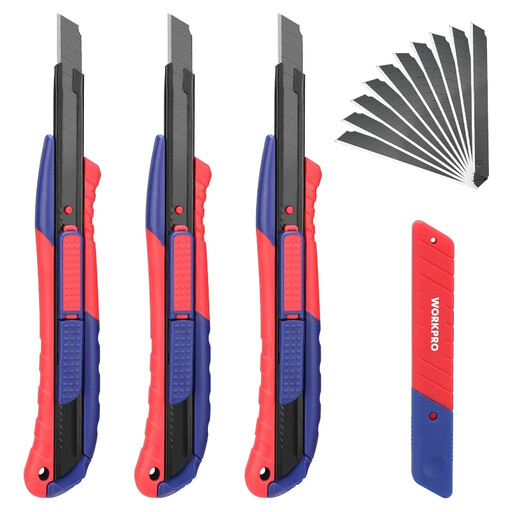
Why this product suits this profile: This set is designed for households, offices and craft enthusiasts who want to cut cardboard, paper, tape or lightweight craft materials, and need several cutters.
The set includes 10 SK5 blades in the standard 9 mm size. This makes it easier to check how many spare blades you’ll need and whether they’re compatible than with vague claims of universal compatibility.
Three cutters, 10 SK5 blades included, an ABS-TPR handle and a product weight of 170 g.
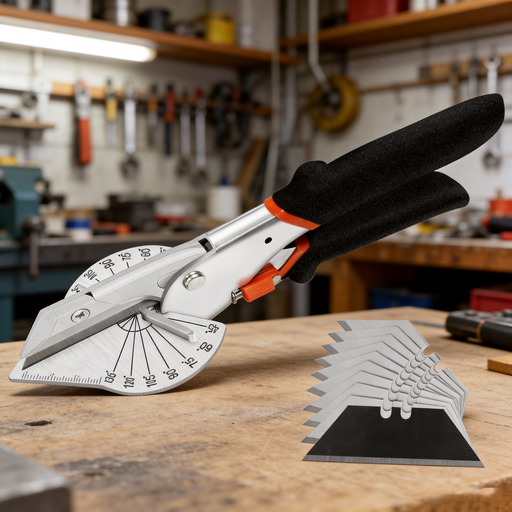
Why this product suits this profile: For repeated mitre cuts in soft wood, plastic, PVC, rubber seals and decorative trim, an adjustable angle range and an engraved scale are useful features.
The angle range, suitable materials and replacement blades are all specified. The safety lock helps keep the blade covered when the tool isn’t in use.
Aluminium handle with a non-slip PPC coating, SK5 steel blade and 10 replacement blades.
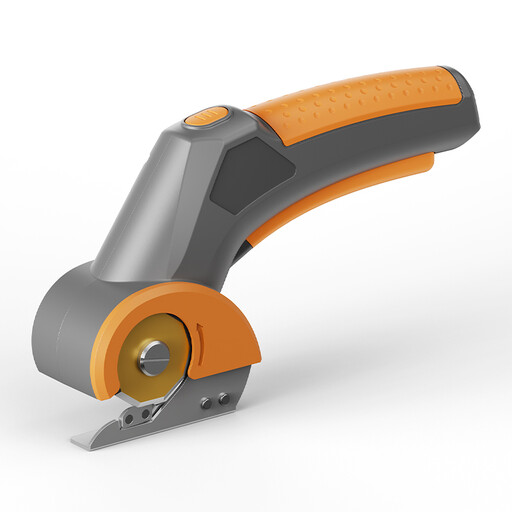
Why this product suits this profile: For frequent cuts in paper, corrugated cardboard, carpet, leather, felt and plastic, this cordless cutter offers an alternative to manual tools.
USB-C charging, a safety lock, a dust bag and a stated runtime of up to two hours are listed in the product details. Even so, check the material limits before use.
4 V lithium battery, 11,000 revolutions per minute, 470 g weight and high-carbon steel blade.
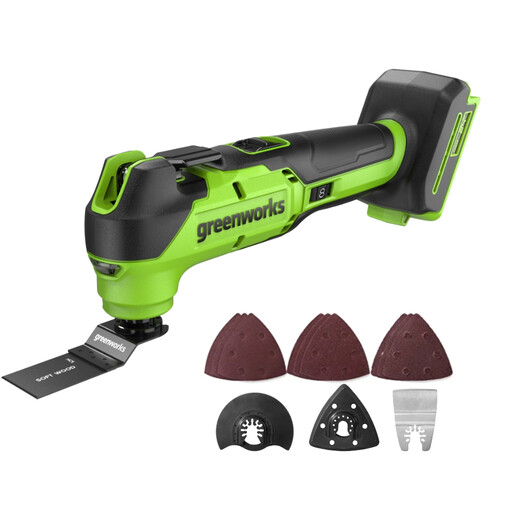
Why this product suits this profile: Designed for renovation, repairs and detailed work, this tool lets you cut, scrape and sand with one system.
The package includes five accessories and offers eight speed settings. Important: the 24 V battery and charger are not included.
Up to 18,000 OPM, LED work light, tool-free accessory changes and compatibility with Greenworks 24 V batteries.
Food calls for different types of cutting tools. A bread slicer uses a serrated blade and an adjustable cutting thickness. According to the product description, the Ritter Sono¹ offers a cutting thickness of up to around 20 mm, a removable carriage, and both a safety momentary switch and a continuous-operation switch.
An egg slicer is designed for softer foods such as boiled eggs, kiwi fruit or potatoes. The Leifheit Combi ProLine offers three cutting styles. Its stainless steel wires are rust-resistant; the care instructions recommend hand washing.
We’ve put together a complete, regularly updated list of products that meet these strict selection criteria and fully comply with the safety regulations in force in the EU.
Sharp blades, rotating cutting discs and oscillating accessories call for careful handling:
A 9 mm or 18 mm utility knife, a cardboard cutter or electric shears are suitable for thin to medium-weight cardboard. The key factors are the cardboard thickness, cut length and a secure blade lock. For larger quantities, a cordless cutter can reduce repetitive hand movements.
Blade life depends on the material, cutting pressure, dirt and how often you use them. Cardboard with adhesive residue can blunt a blade more quickly than clean paper. Change the blade when you need to apply more pressure or the cut starts to fray. A blunt blade can make the tool harder to control.
An electric cutter can be useful if you regularly cut fabric, felt, carpet, leather, plastic or corrugated cardboard. For occasional, short cuts, a manual utility knife is often enough. Before you buy, check the runtime, charging method and replacement blades, and whether the battery and charger are included.