
Lieferung heute & morgen

Qualitätsgarantie

Willkommens-Angebote freischalten: KOSTENLOSE Lieferung | Bis zu 80 % RABATT | Kostenlose 30-Tage-JoyPlus-Testphase
App herunterladen
Whether you are opening delivery cartons, renovating, crafting or cutting wood and plastic to size, cutting tools need to match the task, material and frequency of use. An inexpensive set may be sufficient for occasional jobs, while regular use makes other factors more important, such as blade availability, handle design and safety mechanisms.
A utility knife set with several knives and replacement blades may initially seem like good value. However, the important question is whether the included blades are suitable for the intended job. 9 mm blades are better suited to paper, film, cardboard and fine cuts. For carpets, thick packaging or rigid insulation boards, 18 mm blades are usually more practical.
The same applies to saw blades: quantity is not the only consideration. A jigsaw blade set is only versatile if it covers different tooth patterns and materials.
Terms such as ‘Pro’, ‘extra sharp’ or ‘for all materials’ should not be assessed in isolation. More meaningful details include:
For example, a utility knife is not automatically suitable for metal or hard types of wood. These jobs require a suitable hand saw, folding saw or powered cutting tool with the appropriate blade.
An automatic or multi-stage blade lock, a slider with a secure locking mechanism, a liner lock on a folding knife or a protective cap on a craft scissors are all practical features. However, they are no substitute for safe working practices. Blades should be fully retracted or covered after use. When sawing, stable workpiece fixation and safety goggles are essential.
SK5 carbon steel is used in many utility knives and cutting blades. According to the product details, the blades in the WORKPRO models are made from SK5 steel. The 9 mm aluminium set also specifies a black coating, a 30° cutting angle and a hardness of 64 HRC. Details like these are more useful than a general description of sharpness, although they do not alone determine how well a tool is suited to every application.
Check whether replacement blades are easy to buy. With snap-off blades, the segment size must match the knife. A 9 mm cutter requires different blades from an 18 mm carpet knife.
Paper, adhesive tape and thin cardboard have different requirements from carpet, leather, PVC or wood. For soft materials, mitre shears with an adjustable angle may be useful. According to the product description, the FLORA GUARD Miter Shears cover angles from 45° to 135° and come with ten replacement blades.
For wood, tooth spacing and saw blade length are important. A 50 cm hand saw with 7 TPI is designed for medium-sized to larger woodworking jobs. For metal, plastic or smaller repairs, however, a compact junior hacksaw with a bi-metal blade may be better suited to the work area.
With a jigsaw, the mounting system and shank shape must match. The WORKPRO set uses a T-shank, which the supplier states is compatible with many common jigsaws. Even so, you should check the operating instructions for your existing tool before buying.
A powered cutter also requires attention to the battery, charging time, runtime and blade replacement. The GARTOL models are specified as having 4.2 V, USB-C charging and a safety switch. However, the product variants differ in blade shape, weight and stated runtime. Check the specific version carefully and note that only one cutting blade is included in each case.
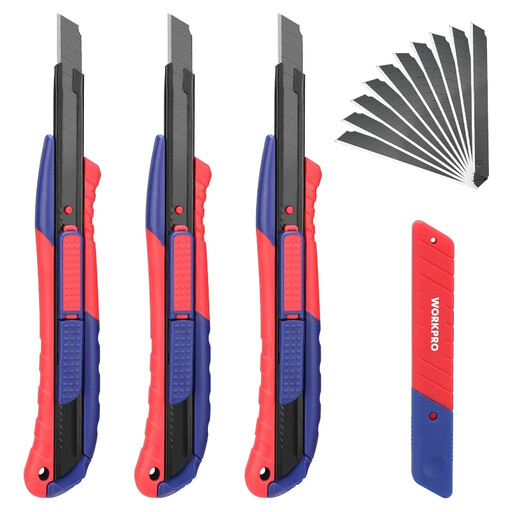
Why this product suits this profile: This set is designed for cardboard, parcel tape, paper and simple craft projects at home, in the office or in the hobby room.
The standard 9 mm size and ten included SK5 blades make replacement availability clear, rather than simply promoting a high piece count.
ABS and TPR handle, 2-in-1 design, 170 g weight and standard blade format.
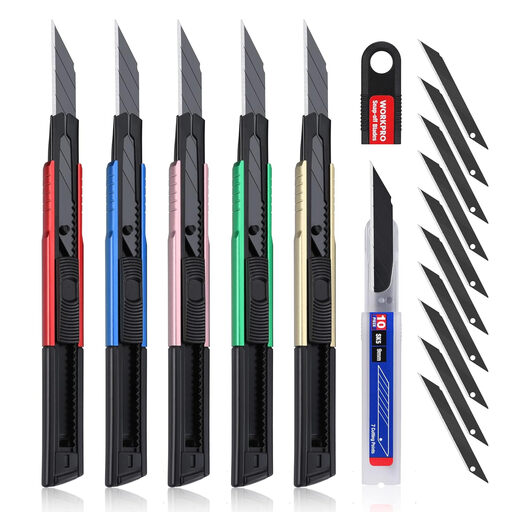
Why this product suits this profile: Five knives, ten replacement blades, an aluminium handle and a storage box make this set suitable for workplaces with several users or recurring precision cuts.
The details for 9 mm, a 30° angle, SK5 material and 64 HRC provide specific points of comparison. A multi-position locking mechanism limits uncontrolled blade movement.
Aluminium alloy, non-slip handle, belt clip and tool-free blade replacement.
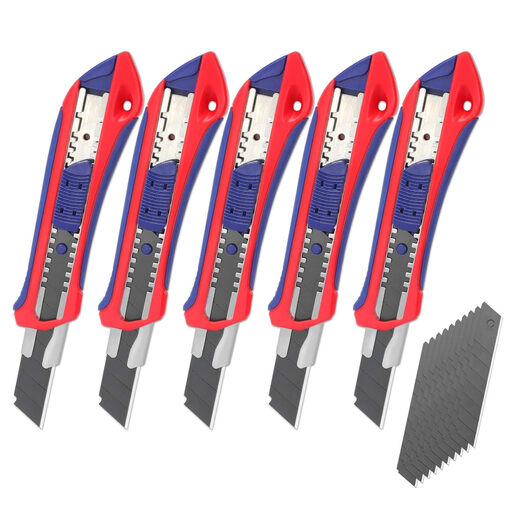
Why this product suits this profile: The wider blade is designed for cardboard, packaging materials, foam boards and cutting fabric to size, with segments that can be replaced individually when needed.
Instead of continuing to put pressure on a knife with a blunt blade, you can snap off the used segment. The 20 replacement blades are listed as included.
18 mm SK5 blades, five knives, ABS-TPR handle and snap-off blade system.
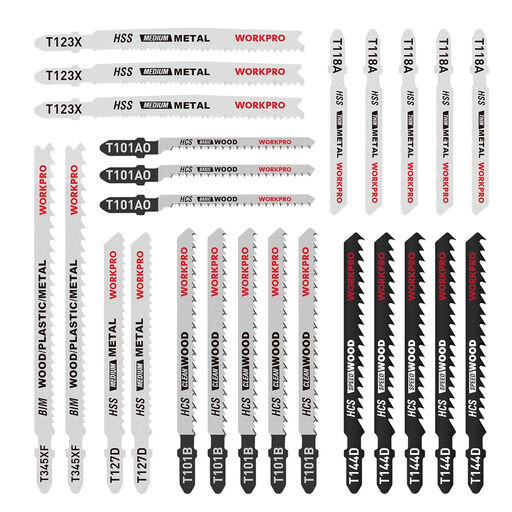
Why this product suits this profile: This set is aimed at users who work with wood, plastic and metal using a compatible jigsaw and need different tooth patterns.
The material classification using HCS, HSS and BIM, together with tooth patterns from 5 to 21 TPI, makes it easier to choose the right blade for different cuts.
25 pieces, T-shank, three blade materials and a plastic box for organised storage.
For woodworking, you can choose a folding saw, a 50 cm hand saw or a compact bi-metal hacksaw. For angled cuts in PVC, seals or softwood, mitre shears are more practical than a standard cutter. For paper and lightweight fabrics, craft scissors with a protective cap are often sufficient.
If you regularly cut felt, carpet, leather, plastic or cardboard to size, you may want to consider a cordless powered cutter. Before buying, check the charging time, runtime, replacement blades and safety lock. For occasional jobs, a manual utility knife is usually easier to store and does not depend on a battery or charger.
We have put together a complete, regularly updated list of products that fully meet these strict selection criteria and the safety regulations applicable in the EU.
A 9 mm cutter is sufficient for thin to medium-thickness cardboard. For thicker cardboard, foam boards or several layers of packaging, an 18 mm utility knife offers a wider blade. A secure locking mechanism, non-slip handle and suitable replacement blades are important.
This depends on the material, cut length and pressure applied. If more force is needed, the cut edges become untidy or the blade gets stuck in the material, it should be replaced. With snap-off blades, you can replace the used segment instead. Blunt blades increase the risk of slipping.
Cutters should be fully retracted, folding knives closed and scissors with protective caps stored safely. Saw blades should be kept in a cover or box. Store all tools in a dry place and out of children’s reach. Before working with saws or powered cutting tools, make sure the workpiece, your hands and the work area are positioned safely.