A bicycle helmet with integrated lighting serves to increase visibility in traffic, especially at dusk and during the night. The combination of head protection and a light source in a single unit offers functional advantages for commuters and recreational cyclists. This article analyses the technical features to consider when making a selection and presents a range of models with different specifications.
Buyer's Guide: Technical Selection Criteria
The decision to purchase a bike helmet with a light should be based on an analysis of objective parameters. The following aspects are relevant for function and safety.
1. Safety Certifications and Materials
A bicycle helmet sold in the EU must meet the CE EN 1078 standard. This standard defines requirements for shock absorption, construction, and the properties of the retention system. The common design consists of a hard polycarbonate (PC) outer shell and a shock-absorbing expanded polystyrene (EPS) inner shell. This in-mould construction process directly bonds both layers, resulting in a lightweight bike helmet with high stability.
2. Type and Function of Lighting
Lighting systems can be distinguished by their position and function:
- Bike helmet with a rear light: A red light on the back of the head increases visibility for traffic behind you. Common modes include steady light, slow flashing, or fast flashing.
- Front lighting: White LEDs on the front can illuminate the path ahead of the rider and improve visibility from the front.
- Power Supply: Most modern helmets use integrated batteries that are rechargeable via USB (often Micro-USB or USB-C). Battery life varies depending on the light mode and manufacturer.
Note: In many regions, including Germany, helmet lighting is a supplement and does not replace the legally required, fixed bicycle-mounted lighting stipulated by local road traffic regulations (e.g., StVZO in Germany).
3. Fit and Adjustment System
A correctly fitting helmet is crucial for its protective effect. An adjustable bike helmet provides the necessary customisation options. Look for the following systems:
- Dial-fit system: An adjustment dial at the back of the head allows for one-handed fine-tuning of the head ring.
- Straps: Adjustable chin and side straps ensure a secure fit without slipping.
- Inner padding: Interchangeable pads of different thicknesses can further optimise the fit.
4. Additional Protection Technologies: MIPS
Some helmets are equipped with the MIPS (Multi-directional Impact Protection System). This is a low-friction layer inside the helmet. According to the manufacturer MIPS AB, this system is designed to reduce rotational forces that can act on the head during an angled impact. A MIPS helmet represents an evolution of conventional helmet design.
5. Comfort and Special Features
- Ventilation: The number and arrangement of vents influence airflow and wearing comfort, especially for athletic use as a mountain bike helmet or on warm days.
- Visor: A bike helmet with a visor protects the eyes from wind, insects, rain, or UV radiation. Magnetically attached visors offer flexibility, as they can be quickly attached or detached as needed.
Our 2026 Selection: Three Models in Detail
Based on the technical criteria mentioned, we present three bicycle helmets for adults that cover different requirement profiles.
1. OutdoorMaster MIPS Gem I Adults Recreational Cycling Helmet
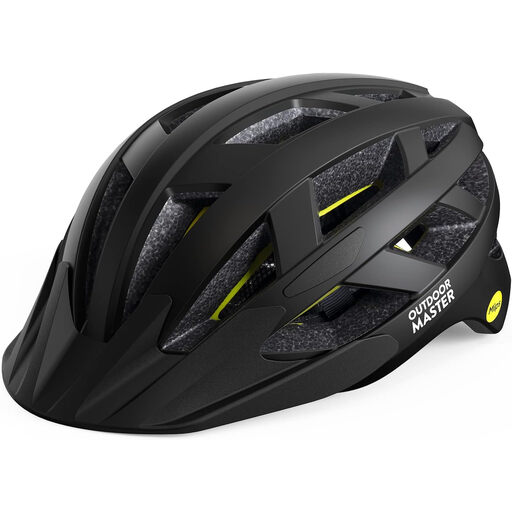
- Why we recommend this product: This model integrates the MIPS safety system and is suitable for various cycling disciplines due to its construction and detachable visor. The focus here is on the advanced protection mechanism combined with a high degree of adjustability.
- Advantages:
- MIPS technology to reduce rotational forces.
- Dual adjustment system with a dial and two removable liners of different thicknesses.
- 25 vents for excellent airflow.
- Detachable visor for flexibility in different lighting conditions.
- Who it's for: Cyclists looking for a versatile helmet for various activities such as mountain biking, touring, or skating, who prioritise the added safety feature of the MIPS system.
2. DKONI HS-158 Bicycle Helmet Adult USB Rechargeable
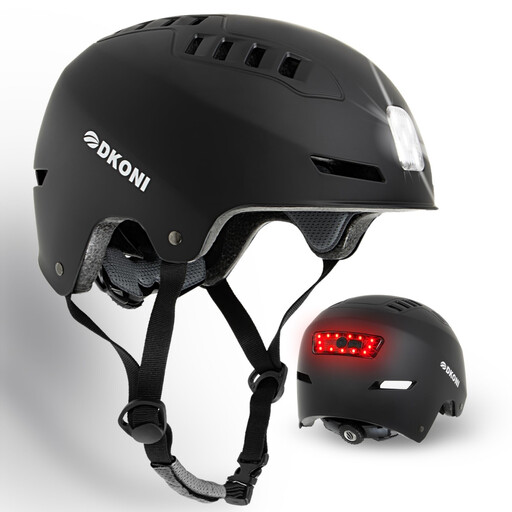
- Why we recommend this product: The DKONI HS-158 is engineered for maximum visibility. With an integrated front and rear light system, it directly addresses the core requirement of a bike helmet with a light for the urban environment.
- Advantages:
- Comprehensive lighting system: 5 white LEDs at the front and 13 red LEDs at the rear.
- Four different light modes for the rear light to adapt to traffic conditions.
- USB rechargeable battery.
- Certified to CPSC, CE, and ASTM safety standards.
- Who it's for: Daily commuters and city riders (women's city helmet and men's bike helmet) who often travel at dusk or at night and are looking for a 360-degree visibility solution. Also a functional choice for e-bike users.
3. OutdoorMaster Cycling Helmet RhinoUrban With Goggles&Light
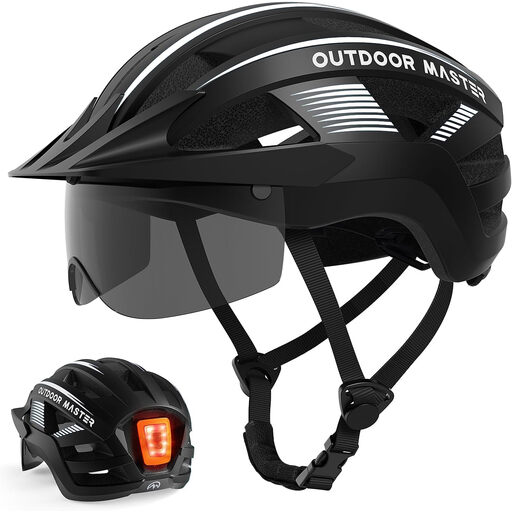
- Why we recommend this product: This model combines three functions in one product: head protection, a bike helmet with a rear light, and a magnetic visor. It represents an integrated solution for comfort and safety.
- Advantages:
- USB-C rechargeable rear light with multiple modes.
- Magnetically detachable goggles that protect against wind, dust, and UV radiation.
- Additional removable sun brim.
- Certified to CPSC and ASTM safety standards.
- Who it's for: Cyclists, especially glasses wearers or commuters, who are looking for an all-in-one solution. The helmet is well-suited for city and e-bike riders who value eye protection and visibility.
Discover More Alternatives
If the models presented here do not exactly meet your requirements, or if you are looking for other colour variations and designs, you will find a wider selection in our main category. There, you can filter specifically for the features that are relevant to you.
️ Discover more models in the black bike helmet category.
Frequently Asked Questions (FAQ)
1. Is a bike helmet with a light mandatory? No, wearing a bicycle helmet is generally not legally required in most places, but it is highly recommended to increase safety. Helmet lighting is considered a passive, additional safety feature. It does not replace the legally required, approved lighting system (headlight and tail light) that must be permanently installed on the bicycle according to local traffic laws.
2. What does MIPS mean on a bike helmet? MIPS stands for Multi-directional Impact Protection System. It is a technology consisting of a low-friction layer inside the helmet. This layer is designed to move slightly relative to the head during an angled impact. The goal of this design is to reduce the rotational energy that is transferred to the brain.
3. How do I determine the correct size for a bike helmet? Measure your head circumference at its widest point, about one centimetre above your eyebrows and ears, using a flexible measuring tape. Compare the result in centimetres with the respective manufacturer's size charts. A correctly fitting helmet should sit level on your head, not shift with movement, and feel snug but comfortable. The adjustment system is used for fine-tuning.

