
Lieferung heute & morgen

Qualitätsgarantie

Willkommens-Angebote freischalten: KOSTENLOSE Lieferung | Bis zu 80 % RABATT | Kostenlose 30-Tage-JoyPlus-Testphase
App herunterladen
For dedicated cyclists, a high-quality pair of cycling glasses is more than just a fashion accessory. They protect your eyes from UV radiation, wind, insects, and kicked-up debris. At the same time, they enhance visibility in changing light conditions, contributing significantly to both safety and performance. Whether you're on a road bike or a mountain bike, the right glasses ensure clear vision, allowing you to focus completely on the road or trail ahead.
This guide explains the key features of functional sports sunglasses and presents a selection of models tailored to the needs of cyclists.
When choosing road cycling glasses or MTB glasses, functional aspects should be the priority. The following criteria will help you make an informed decision.
The lenses are the heart of any pair of cycling glasses. Complete UV400 protection is essential to shield the eyes from harmful UVA and UVB radiation. This standard filters all light rays with a wavelength of up to 400 nanometres.
For cycling, lenses made from polycarbonate (PC) or Trivex (TAC) are an excellent choice. These materials are highly impact-resistant and shatterproof, offering extra protection in the event of a crash or from flying stones. Polarised cycling glasses also effectively reduce glare caused by reflections on wet roads or other smooth surfaces. This results in higher-contrast vision with reduced eye strain.
Lightweight cycling glasses significantly enhance comfort on long rides. Modern frames made from materials like TR90 are not only light but also flexible and durable. They adapt to various face shapes without creating pressure points.
Look for non-slip elements on the nose pads and temple tips. Rubberised or silicone-coated contact points ensure the glasses stay securely in place, even during intense sweating or on rough terrain. For road cyclists, an aerodynamic design also plays a role by minimising air resistance at high speeds. Most modern designs are suitable for both men and women.
A wide, unobstructed field of view is crucial for safety on the road or trail. Large, single-piece lenses (shield-style glasses) offer excellent peripheral vision and protect a larger area of the face from wind and foreign objects. A well-designed frame with integrated ventilation ports also prevents the lenses from fogging up during exertion or temperature changes.
Based on the criteria above, we have compiled a selection of cycling glasses that stand out for their functional features.

What sets them apart: The Revoray X3-black is designed for aerodynamics and a maximum field of view. Its streamlined design reduces air resistance, while the large, single-piece PC lens provides an unobstructed view and high impact protection. Weighing only around 30 grams, they are exceptionally lightweight cycling glasses.
Advantages:
Best suited for: This model is ideal for road cyclists and triathletes who prioritise aerodynamics, low weight, and a wide, unobstructed field of view.
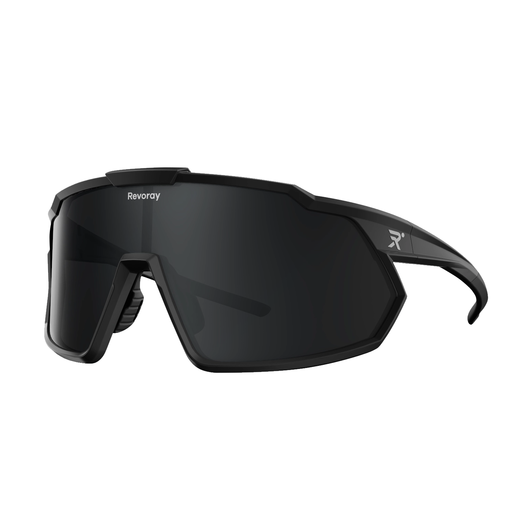
What sets them apart: The Revoray Y1-black combines polarised lenses with a robust construction. The HD TAC polarised lenses effectively filter out glare, improving visual clarity on sunny or wet routes. According to the manufacturer, the glasses meet the ANSI Z87.1 performance standard for impact resistance.
Advantages:
Best suited for: An excellent choice for cyclists who frequently ride in bright sunshine and changing conditions. The combination of polarisation and impact resistance makes them suitable for both road use and as MTB glasses.
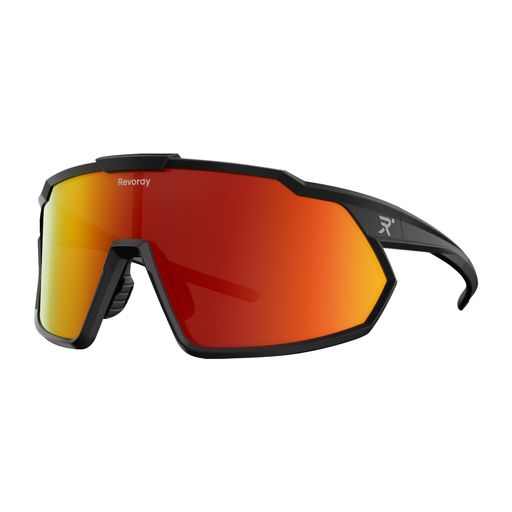
What sets them apart: The Revoray Y1-orange offers the same technical specifications as the black Y1 model but adds a visual accent with its coloured frame. Here too, the focus is on the polarised HD TAC lenses and the ANSI Z87.1-certified impact resistance.
Advantages:
Best suited for: This model is aimed at cyclists who have the same high-performance requirements as for the Y1-black model but prefer a more striking design to match their gear.
The glasses presented here are a curated selection tailored to the needs of dedicated cyclists. However, the market offers a wide variety of other models with different designs, lens tints, and special features.
Explore our full range of Protective Wear to find more cycling glasses and matching accessories to complete your kit.
What does UV400 mean on cycling glasses? The UV400 designation means that the lenses block ultraviolet rays up to a wavelength of 400 nanometres. This includes 100% of harmful UVA and UVB rays and is the recommended standard for complete eye protection during outdoor activities.
Are polarised lenses always the better choice for cyclists?Polarised cycling glasses are very effective at reducing glare from flat, reflective surfaces like wet roads or bodies of water. This can significantly improve vision and reduce eye strain. In rare cases, however, polarised lenses can interfere with the readability of LCD screens (e.g., on bike computers or smartphones) or make it harder to perceive slick, icy patches on the road. The decision depends on personal preference and typical riding conditions.
How important is the weight of cycling glasses?Lightweight cycling glasses, ideally under 35 grams, contribute significantly to wearing comfort, especially on long rides. Lower weight reduces pressure on the nose and ears, ensuring the glasses are barely noticeable even after several hours. This helps to prevent pressure points and headaches.