
Lieferung heute & morgen

Qualitätsgarantie

Willkommens-Angebote freischalten: KOSTENLOSE Lieferung | Bis zu 80 % RABATT | Kostenlose 30-Tage-JoyPlus-Testphase
App herunterladen
Cycling glasses need to stay securely in place in changeable weather, strong headwinds and over rough terrain. Even so, it can be difficult to compare many models based on marketing claims alone. Terms such as “HD”, “sport design” or “UV400” don’t tell you whether a pair is right for a long road ride, a mountain bike descent or your daily e-bike commute.
The most common buying pitfalls come down to three things:
When comparing cycling glasses, consider the technical specifications, fit and intended use together.
For cycling glasses with UV400 protection, the manufacturer should clearly state the level of protection the lenses offer. UV400 refers to filtering ultraviolet radiation with wavelengths of up to 400 nanometres. This information should be clearly listed in the product details, rather than appearing only as a general marketing claim.
Visible light transmission is also important. A lower figure indicates a darker tint. For example, the Revoray Y1 models list visible light transmission of around 15.2%. This may work well in bright conditions, but isn’t necessarily right for every route.
Polarised cycling glasses can reduce distracting reflections from wet roads, water or metal surfaces. However, this doesn’t replace the need to check the UV protection and other safety features.
TAC lenses are often used in polarised cycling glasses and can filter reflections, depending on the design. Polycarbonate lenses are also common in sports glasses, and some models combine them with impact resistance.
The Revoray X3 series is listed as having a one-piece PC lens and meeting the ANSI-Z87.1 performance standard. According to the product details, this model has been tested for impact resistance to this standard. This is useful, specific information, but you should still follow the safety guidance: even shatterproof or impact-resistant lenses aren’t unbreakable, and they’re not designed for industrial tasks such as grinding.
Lightweight cycling sunglasses can be more comfortable on longer rides. But weight alone doesn’t determine comfort. You should also look for:
Some of the models listed in the product details weigh between around 25.5 and 33 g. These figures are useful for comparison, but should always be considered alongside frame width, arm length and face shape.
The selection below groups specific models by typical needs. It can’t replace trying them on, but it can help you narrow down your options based on clearly stated features.
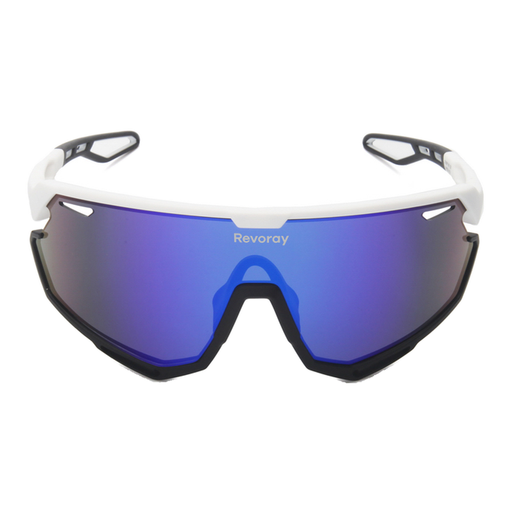
Why this product suits this riding style: According to the product details, these sports cycling glasses have a one-piece PC lens, UV400 protection and weigh around 30 g. That’s a clearly specified set of core features for occasional rides and outdoor activities.
Details of the PC lens, weight, UV400 protection and anti-slip features are more useful than simply labelling them “sports glasses”.
TR90 frame, one-piece PC lens, UV400 rating and non-slip nose pads and arms.
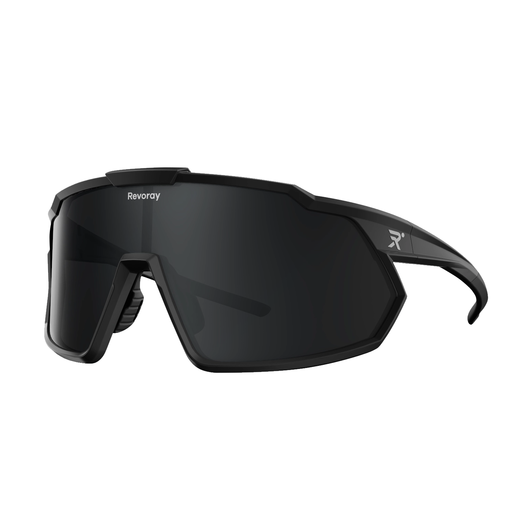
Why this product suits this riding style: The TAC lenses are polarised, and the product details list visible light transmission of around 15.2%. With a TR90 frame, adjustable silicone nose pads and a weight of around 33 g, this model is aimed at riders who prioritise fit and clearly specified lens characteristics.
The stated light transmission makes it easier to assess the tint. According to the product description, water- and oil-repellent coatings make the lenses easier to clean.
Polarised TAC lenses, UV400 rating, ANSI-Z87.1 performance standard according to the product details, and adjustable nose pads.
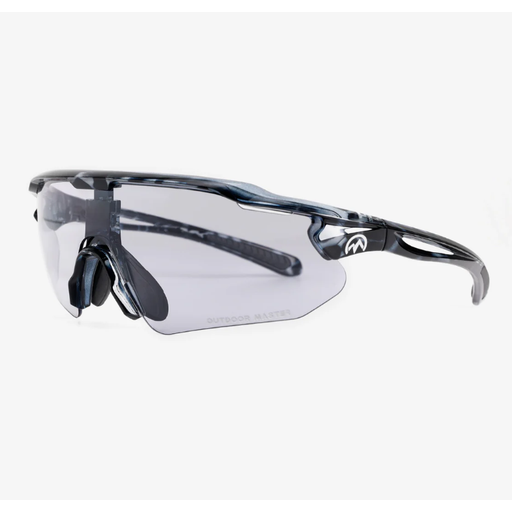
Why this product suits this riding style: According to the product details, these photochromic cycling glasses are designed for changing light conditions. They combine photochromic, polarised PC lenses with a TR90 frame, adjustable nose pads and a weight of around 26 to 29 g.
The adaptive tint is designed to handle the change between sun and shade. Bear in mind that adjustment may be limited behind a car windscreen because it filters UV light.
Photochromic, polarised PC lenses, UV400 rating, adjustable nose pads, plus a case and cleaning accessories included.
Even cycling glasses with shatterproof lenses need proper care. First, rinse off dust with clean water, then use a soft microfibre cloth. Alcohol or harsh cleaning products can damage the coatings. Store your glasses in a case rather than loose in your cycle bag.
If the lenses are scratched in your field of vision or damaged, it’s sensible to replace them. For models with interchangeable lenses, check that the changing mechanism works without requiring too much force and that replacement lenses are actually available. Cycling glasses with interchangeable lenses may suit riders who regularly switch between bright sunshine and overcast conditions.
We’ve put together a complete, regularly updated list of products that meet these strict selection criteria and fully comply with the safety regulations in force in the EU.
For road and mountain biking, a secure fit, good coverage, UV400 protection and an unobstructed field of vision are important. On rough terrain, non-slip nose pads and arms are particularly useful. Photochromic lenses are worth considering if you ride in changing light conditions.
Their lifespan depends on how often you use them, how you care for them, the coatings and how you store them. Frequently placing them lens-down, exposing them to high temperatures and using harsh cleaning products can damage the surface more quickly. Don’t continue using glasses with damaged or heavily scratched lenses for sports riding.
Polarised lenses can reduce reflections from roads or water. However, if your route takes you frequently between sun and shade, photochromic cycling glasses may be more practical. Light conditions, tint and your own vision while riding remain key factors.