
Lieferung heute & morgen

Qualitätsgarantie

Willkommens-Angebote freischalten: KOSTENLOSE Lieferung | Bis zu 80 % RABATT | Kostenlose 30-Tage-JoyPlus-Testphase
App herunterladen
Cycling glasses need to do several things when you’re road cycling, mountain biking or enjoying other outdoor activities: protect you from UV rays, reduce glare, stay securely in place and give you as wide a field of vision as possible. Models also vary considerably in lens type, weight, frame material and intended use.
If you focus only on a striking mirrored finish or a particularly low price, you could miss some important details. Three common buying mistakes are:
According to the product description, UV400 cycling sunglasses should filter out UVA and UVB rays up to 400 nanometres. This is an important basic level of protection on longer rides outdoors. However, the UV400 label doesn’t tell you anything about impact resistance or optical quality.
Polarised cycling glasses reduce reflected light, for example from wet roads. This can make them more comfortable on sunny road rides. For changing light conditions, photochromic cycling glasses are often a better choice. Their tint adjusts according to UV exposure. Check the stated tint range and how the lenses perform under overcast skies or inside a vehicle.
Visible light transmission also matters. The manufacturer states that the Revoray Y1 has a value of around 15.2 per cent. This suggests it’s suited to bright conditions, while very dark routes may call for a lighter lens option.
When you’re cycling, stones, branches, insects or kicked-up grit can hit your lenses. Cycling glasses with shatter-resistant lenses should therefore come with specific details about the material and a testing standard.
Polycarbonate lenses are known for being lightweight and impact-resistant. TAC lenses are often used in polarised models. According to their respective product descriptions, several of the models featured here have impact-resistant polycarbonate or TAC lenses. The Revoray Y1 is also stated to have been tested to ANSI Z87.1. Treat this as a manufacturer’s claim, and remember that it doesn’t replace checking whether the glasses are intended for a particular high-risk activity.
Important: even sports glasses described as impact-resistant aren’t unbreakable. Replace any lenses that are damaged or heavily scratched.
Lightweight cycling glasses weighing around 25 to 33 grams can reduce pressure on your nose and ears on longer rides. But weight alone doesn’t determine comfort. Look for:
A TR90 frame is often used for its flexibility and low weight. To keep cycling glasses from slipping, the shape of the arms and the finish of the contact points matter too. For mountain biking, the glasses should stay secure over bumps; for road cycling, wind protection and a wide field of vision are especially important.
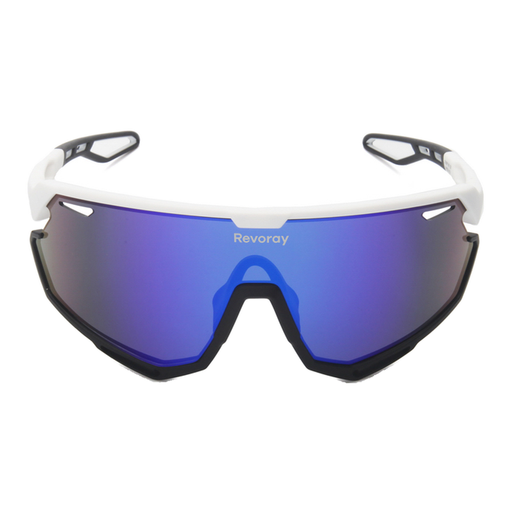
Why it suits this profile: According to the product details, this model combines a lightweight TR90 frame weighing around 30 g with a one-piece PC lens, making it a good option for your first road or mountain bike rides.
The product details specify UV400 protection, non-slip nose and arm grips, and an impact-resistant PC lens, rather than focusing solely on looks.
One-piece lens, weight of around 30 g, UV400 protection and an aerodynamically shaped frame.
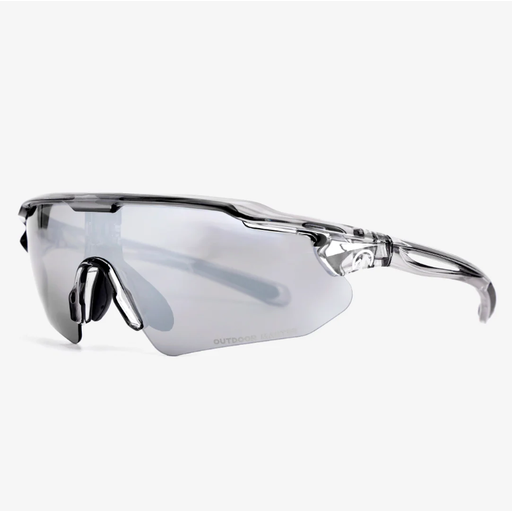
Why it suits this profile: This model combines photochromic, polarised polycarbonate lenses with adjustable nose pads and a TR90 frame.
The product details specify the lenses’ functions, UV400 protection and impact resistance. This makes it easier to choose than a model with a purely decorative mirrored finish.
Depending on the variant, weighs around 26 to 29 g; UV400 protection, adjustable tint and an inner frame for prescription lenses included.
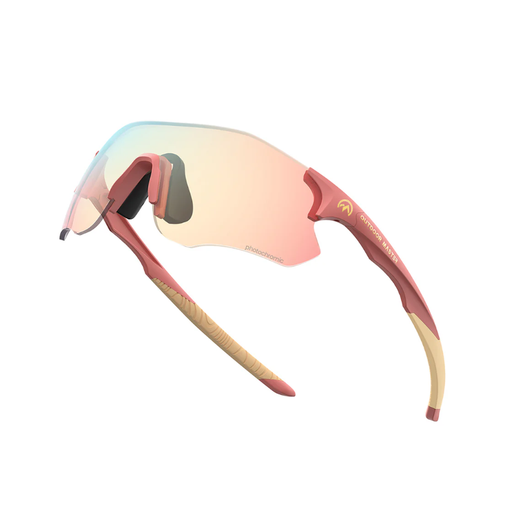
Why it suits this profile: For frequently changing light conditions, the product details state that this model has photochromic lenses ranging from Cat.0 to Cat.3, plus a non-slip TR90 frame.
The stated tint range makes it easier to understand how the adjustment feature works. Even so, try the glasses on the routes you ride and in your usual light conditions before buying.
Photochromic HD lenses from Cat.0 to Cat.3, UV400 protection, impact-resistant design and an interchangeable nose pad.
We’ve put together a complete, regularly updated list of products that meet these strict selection criteria and fully comply with the safety regulations in force in the EU.
How long your glasses last depends largely on how you use, clean and store them. First rinse off any dust with clean water, then clean the lenses with a soft cloth. Harsh cleaning products, alcohol and rough fabrics can damage lens coatings.
Keep your glasses in a case and avoid exposing them to high temperatures or heavy pressure. Keep them away from keys and other sharp objects too. If the lenses are deeply scratched or cracked, or the arms are misshapen, stop using the glasses. A warranty, such as the one-year limited warranty listed for certain Revoray models, is subject to the manufacturer’s terms and conditions.
Yes. In sunny conditions, they can reduce reflections from trails or wet surfaces. For densely wooded routes, shady sections and riding at dusk, check the light transmission. A very dark tint can make it harder to see where you’re going.
Interchangeable lenses let you adapt to different conditions, but they need to be secure and easy to swap. Photochromic lenses change tint according to UV exposure. This adjustment may be limited behind vehicle glass, as windscreens block some UV rays.
Price alone won’t tell you whether a model is right for you. Start by comparing the UV400 rating, lens material, impact resistance, weight, fit and accessories. A cheaper model may be enough for occasional rides; if you ride often, you may benefit from adjustable nose pads, coatings, a case or lenses with multiple features.