
Lieferung heute & morgen

Qualitätsgarantie

Willkommens-Angebote freischalten: KOSTENLOSE Lieferung | Bis zu 80 % RABATT | Kostenlose 30-Tage-JoyPlus-Testphase
App herunterladen
Cycling glasses need to stay securely in place on fast descents, in changeable weather and on long rides. Eye-catching marketing claims alone don’t guarantee the right choice, though. What matters is clear information about UV protection, lens material, weight, fit and intended use.
According to the product information, UV400 cycling glasses are designed to block UVA, UVB and UVC radiation up to 400 nanometres. This doesn’t tell you how well the glasses fit against your face, however. Gaps at the sides can be irritating in the wind, in dusty conditions or in low sun. So also look for a sufficiently wide field of vision and a curved lens shape.
Polarised cycling glasses can reduce glare from wet roads, bodies of water and bright vehicle surfaces. They’re not automatically the most practical choice for patches of changing shade in the woods, though. If you often move between sun and shade, consider photochromic cycling glasses. These adjust their tint according to UV exposure. The lenses may behave differently inside vehicles, as windows can filter out some UV radiation.
Polycarbonate lenses are considered impact-resistant and lightweight. Even so, shatterproof cycling glasses aren’t designed for work involving high levels of flying fragments or particles, such as grinding or drilling. Scratches can affect your vision and damage lens coatings. Keep your cycling glasses in a case, and replace them if the lenses are noticeably damaged.
Check whether the retailer clearly specifies UV400 protection. Polycarbonate lenses are common in sports glasses because they combine low weight with impact resistance. A one-piece lens can give you a wider field of vision, while ventilation openings can help reduce fogging. Lens tint affects how you see the world, but it doesn’t replace information about UV protection.
A lightweight frame is a good choice for longer rides. TR90 is a thermoplastic material associated with flexibility and low weight in the models featured here. The product information lists weights of around 25.5 to 30 grams. The actual feel also depends on the nose pads, pressure from the arms and the shape of your face.
Look for:
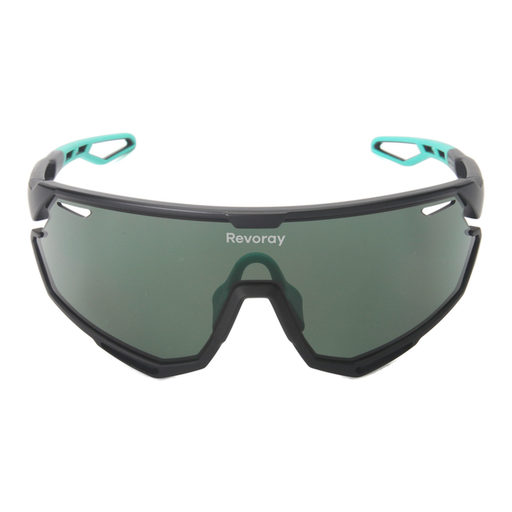
Why this product suits this riding profile: According to the product information, these cycling glasses combine a one-piece PC lens, a TR90 frame and a weight of around 30 g. They’re a straightforward option for cyclists looking for sports glasses for road riding, MTB and everyday use.
The product details specify UV400 protection, PC lenses, non-slip arms and a rubber nose pad. This makes it easier to check key features before you buy.
TR90 frame, one-piece PC lens, UV400 protection and an aerodynamic shape, according to the product description.
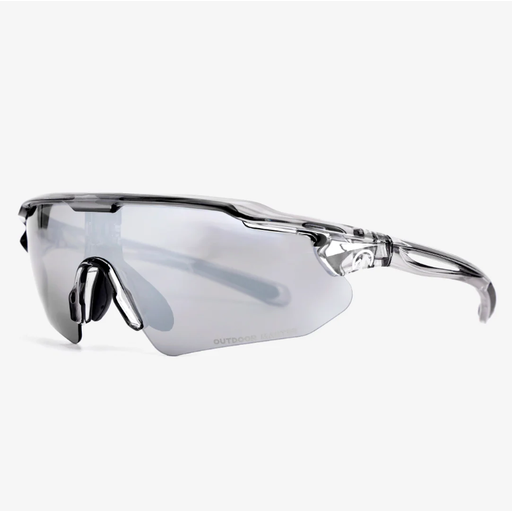
Why this product suits this riding profile: These cycling sunglasses combine photochromic and polarised PC lenses with a TR90 frame. According to the product information, they weigh 26 or 29 g, depending on the lens option.
The product description clearly specifies the lens functions, material and weight options. Adjustable nose pads let you adapt the fit to different face shapes.
Photochromic and polarised PC lenses, UV400 protection, a TR90 frame and adjustable nose pads, according to the product details.
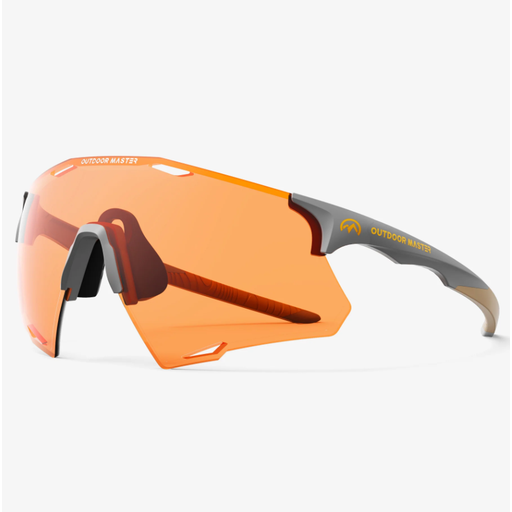
Why this product suits this riding profile: According to the product information, these MTB glasses are aimed at riders who value a wide field of vision and a ventilated lens shape during sports. The stated weight is 25.5 g.
The ventilation helps tackle a common fogging problem. Adjustable nose pads and a curved lens shape are designed to help keep the glasses securely in place, according to the description.
Polarised PC lenses, UV400 protection, ventilation, adjustable nose pads and a weight of 25.5 g, according to the product information.
We’ve put together a complete, regularly updated list of products that meet these strict selection criteria and fully comply with the safety regulations in force in the EU.
First, rinse off dust with clean water before wiping the lenses with a soft microfibre cloth. Dry particles can scratch the lenses when rubbed. Avoid harsh cleaning products, high temperatures and leaving your glasses loose in a cycling bag. A case protects the lenses from pressure and contact with tools.
If you have cycling glasses with interchangeable lenses, fit them only as instructed by the manufacturer. Check the nose pads, arm tips and lens surface regularly. There’s no one-size-fits-all answer to how long they’ll last, as this depends on how often you use them, how you clean them and whether they’re exposed to impacts from falls.
Photochromic cycling glasses are one option for frequently changing light conditions. If you’re dealing with strong reflected light, a polarised pair may be more suitable. If you’d like both features, you can find models that combine the two lens technologies. Check the stated tint range and what’s included.
According to the product information, UV400 refers to protection up to a wavelength of 400 nanometres. This relates to UV protection and says nothing on its own about impact resistance, optical quality or fit. Check these features separately.
A good fit that allows some air circulation, ventilated lenses and a clean lens surface can help reduce fogging. It can still happen in cold weather or during strenuous exercise. Don’t wipe the lenses with rough clothing, as this can damage the coatings and surface.