Riders stopping for a quick snack
If you’re taking a break without access to a kitchen, you’ll need ready-to-eat popcorn in a bag that’s easy to carry and comes in a suitable size. An individually wrapped microwave popcorn bag isn’t ready to eat.


For a break on your ride, ready-to-eat popcorn could be a handy option, with a pack size that suits how much you want to take and eat. Microwave popcorn and popcorn kernels need to be prepared first. Compare the ingredients and nutritional information per 100 g with the amount you’ll actually eat. For activities lasting more than 1.5 hours, the German Nutrition Society recommends drinks containing carbohydrates and sodium. Choosing popcorn as a snack doesn’t replace planning your drinks.
If you’re taking a break without access to a kitchen, you’ll need ready-to-eat popcorn in a bag that’s easy to carry and comes in a suitable size. An individually wrapped microwave popcorn bag isn’t ready to eat.
Check the carbohydrate content against the amount you actually want to eat, and plan your drinks separately from your snack. The German Nutrition Society identifies carbohydrates as important for supplying energy during sport; that doesn’t mean there’s one suitable portion of popcorn for every ride.
For them, the ingredients list, nutritional information and, where relevant, allergen information on the specific pack matter more than whether it’s labelled ‘sweet’ or ‘salty’. The recipe and pack size are also worth comparing.
If you’re considering popcorn as a cycling snack, first check whether it’s ready to eat and how much you want to take. Then you can assess the nutritional information for the specific variety against the amount you’re planning to eat.
| What to consider | What to check before buying | Who it matters most to |
|---|---|---|
| Ready to eat and easy to carry | Look for ‘ready to eat’; check the bag’s weight and whether it’ll fit in your bag. Microwave popcorn needs to be prepared first. | If I’m only stopping briefly on a bike ride, I want to be able to eat the popcorn straight away and stow the bag easily. Around 36% of consumers would put being ready to eat first. |
| Carbohydrates and portion size | Compare carbohydrates per 100 g with the amount you want to eat; for sweet varieties, check the sugar content too. | On a longer ride, I want to know how many carbohydrates my popcorn actually contains, rather than relying on one snack to provide all my provisions for the trip. Around 29% of consumers would prioritise carbohydrate content. |
| Ingredients | Check the ingredients, sugar, salt and, where relevant, allergen information on the specific pack. | When choosing sweet or salty popcorn, I want to know what’s in it before deciding on a variety. For around 21% of consumers, the ingredients would be the most important factor when buying. |
| Preparation rather than taking it along | Check whether you’ll need a microwave or another suitable way to prepare it, and how the individual bags are packaged. | If I’m planning to prepare popcorn at my accommodation, having the right equipment matters more to me than carrying a ready-to-eat bag on my bike. Around 14% of consumers would prioritise preparation. |
Individually wrapped doesn’t mean ready to eat: according to EDEKA, GUT&GÜNSTIG salty microwave popcorn needs to be prepared in the microwave before eating.
If you want a snack that needs no preparation while you’re out, choose popcorn explicitly labelled as ready to eat. Only plan to take microwave popcorn if you’ll have access to a microwave.
EDEKA states that GUT&GÜNSTIG sweet popcorn contains 75 g of carbohydrates and 30 g of sugar per 100 g; the pack contains 200 g. So the per-100-g figures don’t describe the whole pack.
Read the pack weight alongside the nutritional information, and work out the figures for the amount you plan to eat.
For activities lasting more than 1.5 hours, the German Nutrition Society recommends drinks containing carbohydrates and sodium. A solid snack doesn’t cover your drinks needs.
Decide separately which snack and drinks you’ll take on your ride.
‘Sweet’ and ‘salty’ don’t tell you the exact nutritional values. The information for the specific recipe and pack size is what matters when choosing.
Check the ingredients, nutritional information, allergen details and weight on the specific pack.
REWE stocks ready-to-eat popcorn, microwave popcorn and popcorn kernels. For a bike ride, the product format matters more than the fact that they’re all in the same category.
EDEKA describes both sweet, ready-to-eat popcorn in a 200-g bag and salty microwave popcorn in three 100-g bags.
The REWE range includes ready-to-eat Heimatgut varieties in 60 g and 90 g bags, as well as microwave versions.
REWE stocks Chio popcorn as ready-to-eat varieties in 120-g bags, as well as versions that need to be prepared in the microwave.
The REWE range includes Seeberger popcorn kernels and microwave popcorn.
This sweet, ready-to-eat popcorn could be a snack for a break on your ride. Plan how much to take and what drinks you’ll need separately.
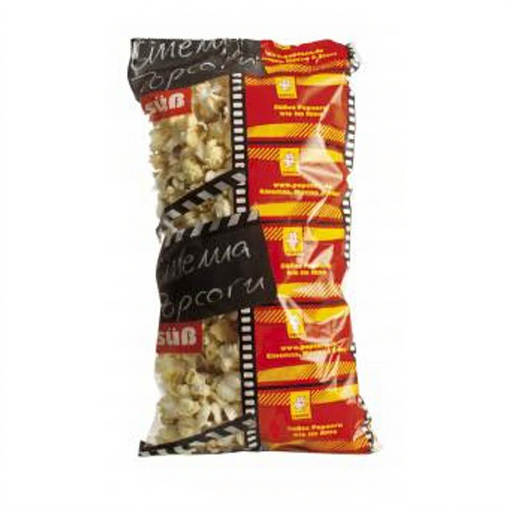 No product image available
For a break on your ride when you want sweet popcorn without having to prepare it.
The pack contains 150 g. Check that it’ll fit in your storage space and consider how much you want to eat.
Yes, ready-to-eat popcorn can make a handy snack for a break on your ride if the pack size and the amount you take suit you. Microwave popcorn and popcorn kernels need to be prepared first. And it’s best not to rely on one bag of popcorn as your only food for the whole ride.
No, salty popcorn doesn’t replace planning your drinks. For activities lasting more than 1.5 hours, the German Nutrition Society recommends drinks containing carbohydrates and sodium, so choose your snack and drinks separately.
First, check that the popcorn is ready to eat. Then compare the weight of the individual bag with the amount you want to eat and carry: even an individually wrapped 100-g microwave popcorn bag needs to be prepared first.
Compare the ingredients and nutritional information for the specific varieties, especially carbohydrates, sugar and salt per 100 g, as well as the pack weight. Check the allergen information too, if relevant; you can’t work this out from the flavour description alone.