Homes with awkward corners
If you want to remove dry cobwebs along skirting boards or behind furniture, check the shape and flexibility of the crevice tool supplied.


For dry cobwebs in low, accessible corners, a cylinder vacuum cleaner with a suitable crevice tool is essential; wattage alone does not prove that a vacuum will clean better. Choose between a bag and a dust container based on whether you’d rather replace bags or look after the container and filters. For the adjoining floor, check that the floor nozzle is suitable for its surface. Standard dry vacuum cleaners are not designed for spilled drinks or broken glass.
If you want to remove dry cobwebs along skirting boards or behind furniture, check the shape and flexibility of the crevice tool supplied.
If you’re also cleaning the floor next to the corner, you’ll need a floor nozzle that’s suitable for the surface.
If you want to handle collected dust in a way that suits you, weigh up replacing a bag against emptying a dust container.
First, check that the crevice tool can reach the corner. Then consider the floor nozzle and how you’ll dispose of the collected dust.
| What matters | What to look for when buying | Who should pay particular attention? |
|---|---|---|
| Reaching low corners | Check the crevice tool supplied with the exact variant, and make sure there’s enough room to manoeuvre the hose and tube. | If I want to remove cobwebs from a low corner, the nozzle needs to reach it and be easy to position. Around 40% of consumers put access to corners first. |
| Adjoining floor | Check the floor surface against the hard-floor or parquet nozzle actually supplied. | If I have a delicate hard floor, I want to carry on vacuuming beyond the corner with a suitable attachment. Around 20% of consumers prioritise protecting the adjoining floor. |
| Dust disposal | Check the bag type or how to empty the dust container, along with the filter-care instructions for the exact model. | If handling collected dust is especially important to me, I’ll decide whether I’d rather replace a bag or empty a dust container. Around 20% of consumers put this concern first. |
| Ease of use and ongoing costs | Check the operating range, where the tube and nozzle can be stored, and whether you’ll need compatible replacement bags. | For straightforward cleaning, I want the appliance and accessories to be easy to reach, and to know what care or consumables they’ll need. Around 20% of consumers prioritise ease of use and ongoing costs. |
A higher electrical power rating doesn’t automatically mean better cleaning performance, and it won’t tell you whether the nozzle can reach the corner.
Check the crevice tool and how easy it is to use first. The German Consumer Advice Centre points out that a high wattage alone doesn’t prove a particularly strong suction performance.
Models in the same range aren’t necessarily supplied with the same accessories or specifications.
Compare the full model number and the contents of the package for the specific variant on offer.
With a bagged model, you’ll need to factor in compatible replacement bags. With a bagless model, you’ll need to empty the dust container and look after the filter.
Check the bag type or the care instructions for the exact model.
The ongoing effort differs: you’ll either replace disposable bags or regularly clean the container and filter.
Liquids and glass fragments can damage a standard dry vacuum cleaner.
Keep dry cobwebs separate from liquids and broken glass, and follow your appliance’s instructions. Bosch warns that vacuum cleaners not designed for these materials can be damaged.
For the Guard M1 Flex, Miele lists a flexible crevice tool for hard-to-reach areas and an 11 m operating radius.
For the Compact Power Parkett RO3953EA, Rowenta lists a 2-in-1 crevice tool and a parquet nozzle.
The bagless PowerPro Compact FC9332/09 comes with a crevice tool and a washable motor filter.
For the CLEAN 6000 AB61C1OKO, AEG lists a crevice tool, an upholstery nozzle and a 12 m operating radius.
Bosch describes crevice tools as attachments for corners and offers both bagged and bagless cylinder vacuum cleaners.
The cylinder vacuum cleaners below are options to consider for accessible corners. Depending on the model, accessories for adjoining hard floors are also listed.
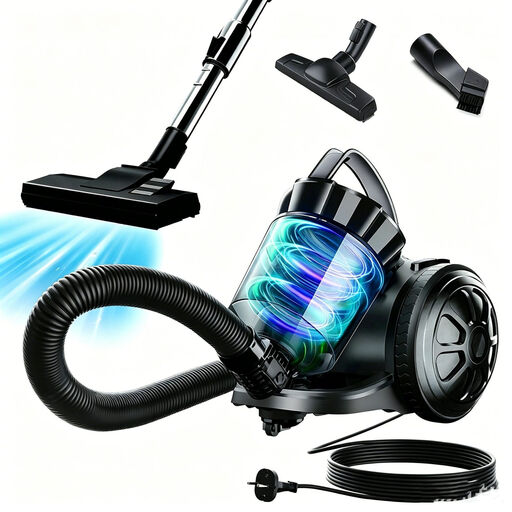 Image unavailable
The 2-in-1 crevice tool described is designed for tight corners and is stored in the handle.
Listed in the product name: HEPA filter, floor brush, upholstery brush, telescopic tube, dust container and tile floor nozzle.
The dust container needs emptying. Do not use for spilled drinks or broken glass.
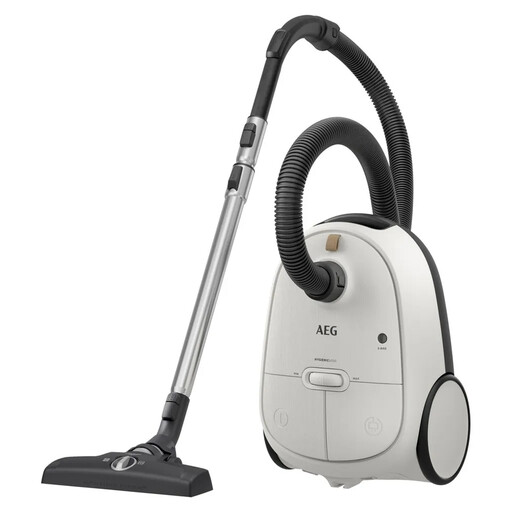 Image unavailable
A flexible XL crevice tool is listed for accessible corners. A Parketto Pro hard-floor nozzle is also included among the accessories.
Listed in the product name: 12 m cable and 850 W.
Compatible vacuum cleaner bags are required. Do not use for liquids or broken glass.
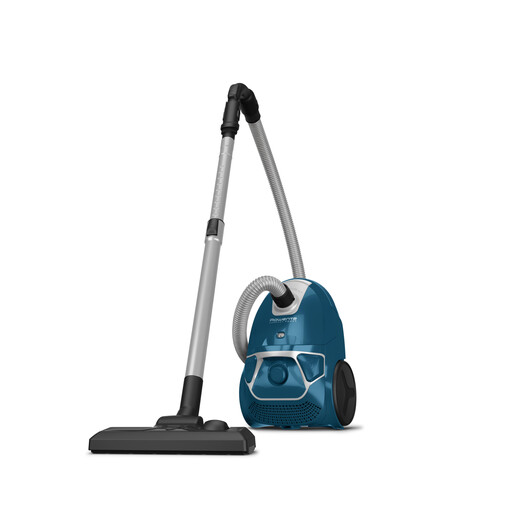 Image unavailable
The listed crevice tool is suitable for tight spaces, while the parquet nozzle is designed for adjoining parquet floors.
Listed in the product name: 900 W and hygienic bag replacement.
Compatible replacement bags are needed. Do not use for liquids or broken glass.
Use a suitable crevice tool and check whether it’s supplied with the exact model variant. The nozzle should also be suitable for the adjoining floor surface.
No. A standard dry vacuum cleaner isn’t designed for this. Bosch warns that liquids and glass fragments can damage appliances not designed to handle them. Always follow the instructions for your vacuum cleaner.
With a bagged model, you’ll need to factor in compatible replacement bags. A bagless model doesn’t need these, but you’ll have to look after the dust container and filter. The right option for you depends on whether you’d rather replace a bag or empty and clean the container.
The European Commission explains that the former EU energy label for vacuum cleaners has been withdrawn. Separate ecodesign requirements remain in place.
Don’t put it in your general household waste. Germany’s Federal Environment Agency recommends separate collection of waste electrical equipment. Check where you can take yours to a suitable collection or take-back point in your area.