Crafters working in tight spaces around a table
If you want to pick up dry dust between table legs and along skirting boards after crafting, look for an included crevice tool and consider how easy it is to manoeuvre the hose and vacuum cleaner.


For ordinary dry craft dust around table legs, first check whether a crevice tool is included and whether you can manoeuvre the hose, tube and vacuum cleaner easily around your room. A bagged cylinder vacuum avoids having to empty an open dust container, but you’ll need to buy compatible replacement bags. A bagless model needs no bags, but its container and filters will need regular care. Wattage alone doesn’t tell you how well a vacuum cleans along edges.
If you want to pick up dry dust between table legs and along skirting boards after crafting, look for an included crevice tool and consider how easy it is to manoeuvre the hose and vacuum cleaner.
If you want to minimise contact with fine dust while vacuuming and emptying the cleaner, dust containment and disposal are important considerations. Filter specifications and care instructions vary by model.
If you bring out the vacuum cleaner for quick cleans and put it away afterwards, consider the body, hose, accessories and how easily you can manoeuvre it around furniture. Manufacturer specifications for dimensions, weight and operating radius vary by model.
First, check that the nozzle and the way the vacuum handles suit the tight spaces in your home. Then decide whether you’d rather buy compatible replacement bags or regularly clean the container and filters.
| Buying consideration | What to look for | Who is this most important to? |
|---|---|---|
| Reaching dust around table legs | Check that a crevice tool is actually included and that the hose and tube fit between the table legs. | If I want to clean tight gaps and edges, I need a suitable nozzle and must be able to manoeuvre the vacuum there easily. Around 33 % of consumers prioritise access to tight spaces. |
| Managing dust when emptying the vacuum | Compare changing the bag with emptying the container; check the filter specification and which consumables are compatible with the exact model. | If I want to disturb as little fine dust as possible, it matters how easy the vacuum is to empty and maintain. Around 27 % of consumers prioritise how dust is handled during disposal and maintenance. |
| Getting the vacuum out and putting it away quickly | Consider the operating radius, vacuum body and storage space together; a large operating radius alone doesn’t tell you how easy it is to manoeuvre around furniture. | If I only want to clean a small area after a short crafting session, the vacuum should be easy to get out, manoeuvre and put away. Around 20 % of consumers focus mainly on ease of use. |
| Weighing up ongoing costs and effort | Check which bags or filters fit the model and how much care the container and filters need; wattage alone doesn’t prove that a vacuum cleans edges better. | If I vacuum regularly, I want to weigh up the cost and effort of bags and filters against maintaining a bagless container. Around 20 % of consumers focus on ongoing costs and maintenance. |
Power consumption alone doesn’t prove that a nozzle will pick up dust effectively beside table legs. According to the German Environment Agency, cleaning performance depends, among other things, on how the vacuum, tube, nozzle and airflow work together.
Check what’s included and whether you can manoeuvre the nozzle, tube and hose easily in the areas you need to clean. Don’t use wattage as your sole measure of performance.
Even a bagless vacuum needs its dust container and filters to be maintained. Emptying an open container may not suit people who want to avoid contact with dust as much as possible.
Before buying, check how the container is emptied, the care instructions and which consumables are needed for the exact model.
Filter specifications can refer to different names and versions. If your decision depends on a particular filter class, it’s important to check the exact version.
Confirm the filter type and compatible replacement filter with the manufacturer using the complete product number.
The details below relate to specific models and versions; they are not general assessments of the brands as a whole.
The Clean 6000 Öko AB61C1OKO is a bagged model that comes with a crevice tool.
The Serie 8 ProSilence BGS7MS64 is a bagless model with a larger container.
The PowerPro Compact FC9331/09 is a bagless model that comes with a crevice tool and integrated brush.
The Guard M1 Sunset Yellow is a bagged model with integrated accessories, including a crevice tool, according to the manufacturer.
The Compact Power RO3923EA is a bagged model with a 2-in-1 crevice tool.
This selection includes corded cylinder vacuum cleaners, both bagged and bagless, which may be suitable for cleaning around furniture and in tight spaces.
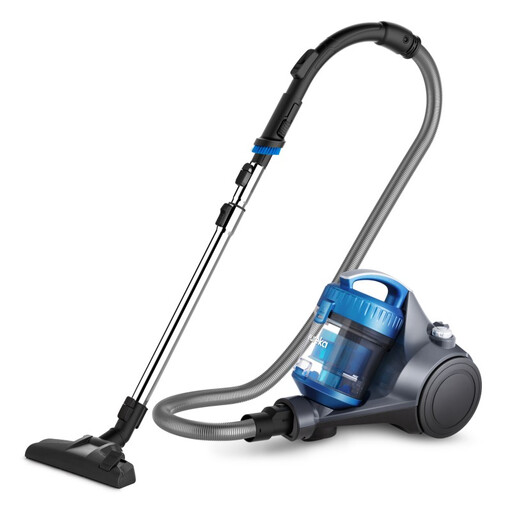 No image available
The integrated 2-in-1 crevice tool makes this model worth considering for tight spaces beside table legs.
Described as bagless; the product name specifies 700 W and 1.5 l. The container needs emptying and the washable filters rinsing when required.
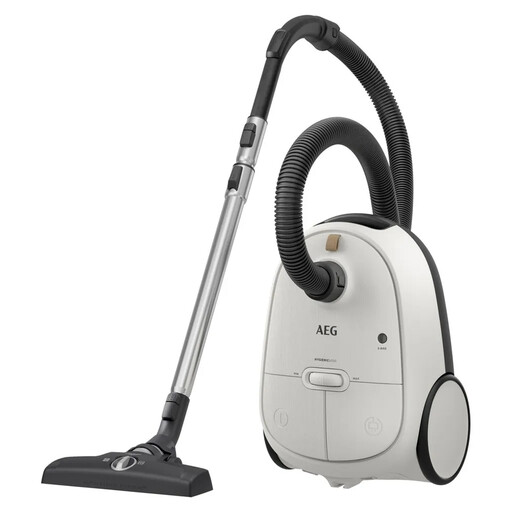 No image available
The listed flexible XL crevice tool is useful for cleaning tight spaces; check that it fits the gaps between your table legs.
The product name specifies 850 W and a 12 m cable reach. The product description lists an s-bag Anti-Allergy bag with a fill-level indicator; compatible replacement bags are required.
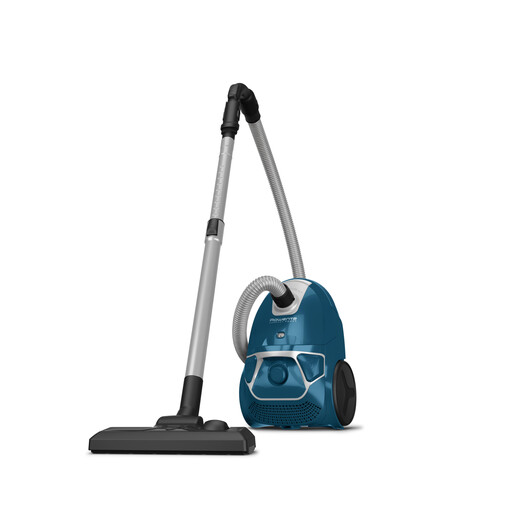 No image available
The product description lists a crevice tool, which may be useful for picking up dust beside table legs.
The product name describes a compact bagged cylinder vacuum cleaner and specifies 900 W. Compatible replacement bags are needed for use.
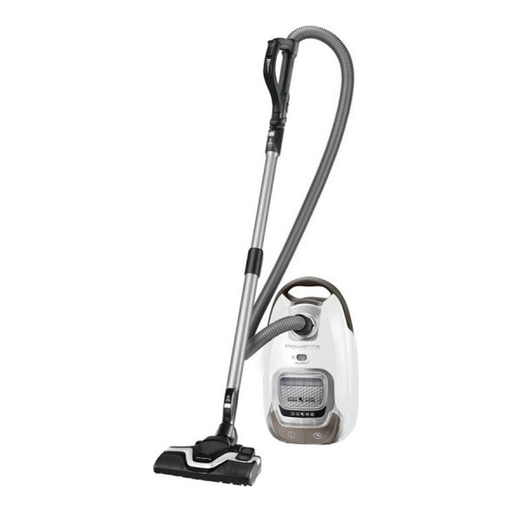 No image available
As a bagged model, it’s an option if you want to avoid an open dust container. For tight spaces, check whether a suitable crevice tool is included.
The product name specifies 400 W and 58 dB. The product description says that the bag and filters need to be replaced regularly.
No, wattage alone doesn’t tell you that. According to the German Environment Agency, cleaning performance depends on how the vacuum, airflow, tube and nozzle work together. First check whether a suitable crevice tool is included.
Replace a full bag promptly and use bags and filters designed for the exact model. The German Environment Agency notes that suction can deteriorate as a bag fills up.
Not in every case. For extraction from woodworking machinery, the German Social Accident Insurance requires at least a dust class M vacuum cleaner. This work-related requirement is not a general limit for dry household craft dust; assess the specific task separately.
According to the Verbraucherzentrale as at 29 July 2026, vacuum cleaners do not have an EU energy label. The German Environment Agency says the former label has not been valid since 19 January 2019; an earlier forecast about a new regulation does not confirm that a new rule is in force.
Statutory consumer rights claims are generally made against the seller; a voluntary manufacturer’s guarantee is separate. You can take old appliances to a local collection point. Whether the seller must take back a similar old appliance free of charge when you buy a new one depends on the legal obligations of that particular retailer.