First, choose a cylinder vacuum cleaner whose exact model comes with a suitable crevice tool. Then check that the appliance, hose, tube and accessories will all fit in your storage space. Bagged models need compatible replacement bags; with bagless models, the container and filters need looking after. A high wattage alone doesn’t tell you how well a vacuum cleaner will clean crevices.
Who is this selection for?
Cleaning crevices and making the most of limited space
If you want to vacuum dust from accessible nooks and then store the appliance, tube and accessories in a small space, check both what nozzles are included and the dimensions of the complete set. Clatronic, Philips and Rowenta list crevice accessories for the models described.
Considering dust when emptying
If you’re concerned about handling dust, check how the specific model is emptied as well as its filter details. Verbraucherzentrale and Philips list selection and equipment features, but a filter specification alone doesn’t guarantee dust-free emptying.
Weighing up ongoing maintenance
If you’re weighing up ongoing costs and maintenance, compare replacement bags for bagged models with the container and filter care needed for bagless models. Verbraucherzentrale and the German Environment Agency also point out that wattage is not the same as cleaning performance.
What should you consider when buying?
Bagged cylinder vacuum cleaner
A good fit if: you’d rather change a full bag than empty a dust container regularly.
The trade-off: You’ll still need compatible replacement bags; a parking feature doesn’t tell you whether the complete appliance will fit in your cupboard.
Bagless cylinder vacuum cleaner
A good fit if: you don’t want to buy replacement dust bags and are happy to factor in cleaning the dust container and filter.
The trade-off: The container and filter need looking after; how the appliance is emptied matters if you want to minimise contact with dust.
| What matters |
What to check before buying |
Who is it important to? |
| Reaching crevices |
Check that the exact model includes a crevice tool, and check its shape and connection; measure the specific nook if needed. |
If I want to clean accessible, narrow crevices, having a suitable tool included matters to me. Around 36% of consumers put reaching crevices first. |
| Storing the appliance |
Compare the space available with the tube, hose, floorhead and accessories in their stored positions. |
If storage space is limited, I want to fit the complete appliance and its accessories, not just measure the body. Around 29% of consumers prioritise storage space when considering this. |
| Handling dust |
Check how the exact model is emptied and how its container and filter should be maintained. |
If I want to avoid contact with dust when emptying the appliance, I need to know how the container is handled as well as what filter it has. Around 21% of consumers put dust handling first. |
| Weighing up ongoing maintenance |
Compare the need for replacement bags with container and filter care; don’t treat wattage as proof of effective crevice cleaning. |
If I’m considering consumables, maintenance and electricity, I want to know what ongoing work the type of appliance I choose will involve. Around 14% of consumers prioritise these ongoing requirements. |
Common misconceptions
-
Comparing only the appliance body with the cupboard space
The body dimensions and parking position don’t necessarily show how much space the complete appliance needs with its hose, tube and accessories.
Check the space against the complete set in its intended storage position, including any loose attachments.
The hose, tube, floorhead and loose attachments may need extra storage space.
-
Assuming a high wattage means better crevice cleaning
Wattage alone doesn’t determine cleaning performance. According to Verbraucherzentrale and the German Environment Agency, the appliance, airflow and nozzle design also affect cleaning.
First, check whether the right crevice tool is included. If available, independent test results for the specific model can also help you decide.
-
Assuming ‘bagless’ means ‘no ongoing maintenance’
Bagged models need compatible replacement bags; with bagless models, the dust container and filters need looking after.
Before buying, compare the emptying routine and care instructions for the exact model with your own needs.
Brands to help you choose
Clatronic
The BS 1300 N is a bagged cylinder vacuum cleaner with a combined brush and crevice tool, plus a parking feature.
- Clatronic also lists a cable rewind and a bag-change indicator.
- The parking feature doesn’t confirm the storage dimensions of the complete appliance; compatible replacement bags are still needed.
Philips
According to Philips, the bagless PowerPro Compact FC9332/09 combines a crevice tool, accessory holder and two parking positions.
- Philips lists body dimensions of 410 × 275 × 250 mm and a 1.5-l container.
- The manufacturer’s filtration claim doesn’t prove that emptying is dust-free or that it performs better than other brands.
Rowenta
The bagless Compact Power Cyclonic RO3721EA is listed with a 2-in-1 crevice tool and a 1.5-l container.
- Rowenta also lists an upholstery tool.
- Check the dimensions of the complete set when stored, not just the appliance body.
Bosch
The BGD38BU2 bagged vacuum cleaner is listed with an accessory clip and a usable bag capacity of 4.0 l.
- Bosch lists appliance dimensions of 265 × 295 × 410 mm (H × W × D).
- If you need to clean crevices, check that the exact model includes the crevice tool you want.
Miele
The Compact C2 Flex Petrol is an example of a bagged model with a crevice tool and a Compact system for storage.
- For this model, Miele lists a crevice tool and parking options on both sides.
- Miele marks this specific model as no longer available, so it isn’t a confirmed current purchase option.
Suitable cylinder vacuum cleaners at Joybuy
Corded cylinder vacuum cleaners with crevice accessories for accessible crevices and limited storage space.
 No image available
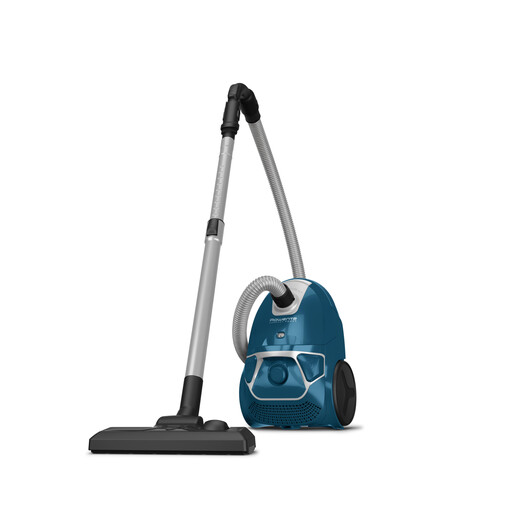
Rowenta Compact Power bagged cylinder vacuum cleaner RO3950EA, 900 W
This bagged model may suit you if you’d rather change a bag than empty a dust container regularly; compatible replacement bags are required.
The product name lists a 900 W motor and a parquet floorhead. Check what’s included with the exact model and how much space the complete appliance will need.
View at Joybuy
 No image available
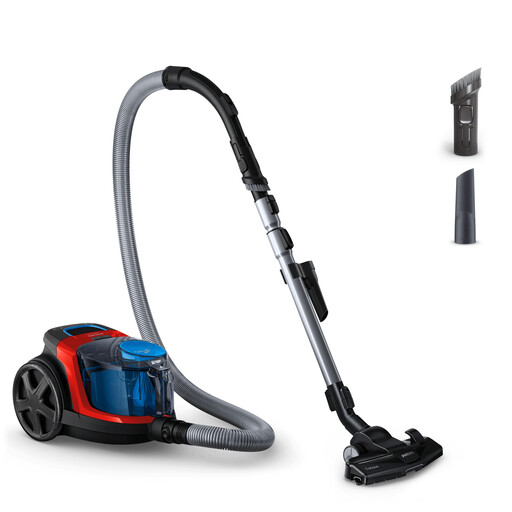
Philips 3000 Series FC9330/09, 900 W, 1.5 L
This bagless model may suit you if you don’t want to buy replacement bags; the dust container and filters need looking after.
The product name lists a 1.5-l container and 900 W. Check the dimensions of the exact model against your available storage space.
View at Joybuy
Frequently asked questions
Do I need a particularly high wattage to clean an accessible crevice?
No. Wattage alone doesn’t prove that a vacuum cleaner will clean better. Verbraucherzentrale and the German Environment Agency also point to how the appliance, airflow and nozzle work together. Check that the crevice tool is suitable for the area you want to clean.
What should I check before buying and when putting the appliance away?
Check what’s included with the exact model and measure the space with the tube, hose and accessories in their stored positions. A parking feature or compact body dimensions alone don’t show how much space the complete appliance needs.
How do maintenance and ongoing requirements differ?
With a bagged model, you’ll need compatible replacement bags; with a bagless model, you’ll need to care for the container and filters according to the instructions for that specific model. The right routine for you depends on the kind of maintenance you prefer in day-to-day use.
Can I put an old vacuum cleaner in household rubbish in Germany?
No. The German Environment Agency advises that old electrical appliances must be collected separately from unsorted household waste. Check which return options are available to you.


