For dry dirt on door thresholds, a model with a suitable crevice tool is a sensible choice. Then measure the space available for the vacuum, hose, tube and tools in the storage position you plan to use. Bagged models need compatible replacement bags, while bagless models require you to maintain the dust container and filters. The German consumer advice centre points out that wattage alone does not prove better cleaning performance.
Who is this vacuum cleaner for?
Homes with dirt around door thresholds
If you want to remove dry crumbs and dust from edges, check whether the specific model comes with a slim crevice tool. The German consumer advice centre recommends checking the accessories supplied with each vacuum cleaner.
Homes with limited storage space
Allow space for the vacuum body, hose, tube and tools. The appliance dimensions and the intended storage position can help you compare models, but you’ll still need to measure the full storage space.
Homes with particular dust disposal needs
Consider whether you’d rather use compatible replacement bags or empty a dust container and maintain the filters. If you’re sensitive to dust, it’s also important to consider how easy the specific model is to handle.
What should you look for when buying?
First decide which tool is suitable for the threshold gap, then compare storage requirements, dust disposal and reach with your everyday needs.
| Buying priority |
What to look for |
Who is it most relevant to? |
| Thresholds and crevices |
Check whether a crevice tool or suitable combination tool is included and whether it will fit the specific gap. |
If I want to remove dry crumbs from a narrow threshold gap, I need a suitable tool. Around 29% of consumers put access to thresholds and crevices first. |
| Limited storage space |
Compare the available space with the vacuum, hose, stored tube and loose accessories—not just the body. |
If I have limited cupboard space, I need room for the whole vacuum cleaner and its accessories. Around 29% of consumers make limited storage space their main buying priority. |
| Dust disposal and maintenance |
Check the bag type or container maintenance requirements, as well as the filter name and availability of replacement parts. |
If dust disposal is particularly important to me, I compare changing bags with emptying the container and maintaining the filters. Around 24% of consumers give this priority. |
| Reach and carrying |
Compare the operating radius and weight of the vacuum body with the position of your sockets and the route you’ll carry it along. |
If I need to reach several thresholds or carry the vacuum between rooms, the right operating radius and a manageable weight matter to me. Around 18% of consumers prioritise reach and carrying. |
Avoid common misconceptions
-
Wattage alone tells you how well a vacuum cleaner handles door thresholds
Power consumption and dirt pick-up are not the same thing. The tool and airflow also affect how the vacuum performs.
Check what’s included and, if available, look for independent tests of the exact model you’re considering.
-
The body dimensions show how much space the whole vacuum needs
The hose, tube and tools need space too; a parking aid won’t automatically make the complete set-up as compact as the body.
Measure the space where you plan to store the vacuum and include its accessories.
-
Bagless means maintenance-free
Bagless models still need their dust containers and filters maintained in line with the instructions for the specific appliance.
Before buying, check the manual and the details of compatible replacement filters for the model you’re considering.
Relevant brands at a glance
The details below relate to the model ranges mentioned and are intended to help you compare specific features, not to rate entire brands.
Bosch
The Series 2 range includes a bagged model and a bagless option here.
- Bosch lists dimensions of 237 × 290 × 367 mm, a combination tool and a parking and storage aid for the BGBS2RD1.
- The accessories are not integrated into the BGBS2RD1. Details for the BGS05AAA1 do not apply to the bagged model.
Philips
The PowerPro Compact FC9332/09 is a bagless option that comes with a crevice tool, according to the product details.
- Philips lists dimensions of 410 × 275 × 250 mm, a 1,5 l dust container and vertical and horizontal storage positions.
- The dust pick-up figure given by the manufacturer under a particular test standard is not independent proof of how well it cleans every door threshold.
Rowenta
According to the manufacturer, the Compact Power Cyclonic RO3721EA is a bagless option with a 2-in-1 crevice tool.
- Rowenta lists a 1,5 l dust container and an operating radius of 8,8 m.
- The manufacturer’s claims about cleaning performance and repairability are not an independent test of this model on door thresholds.
Miele
The Guard S1 Performance is a bagged option whose filter and operating radius can be compared with other models.
- Miele lists a HEPA AirClean filter and an operating radius of 10 m for this model.
- For the specific model, check which tool is included and how much space the vacuum and accessories need when stored.
Clatronic
Clatronic lists the BS 1300 N as a bagged model with a combined brush and crevice tool.
- The manufacturer also lists a parking aid.
- Before buying replacement bags, check which dust filter bag fits the specific model.
Suitable cylinder vacuum cleaners at Joybuy
This selection includes compact bagged and bagless cylinder vacuum cleaners. The crevice tools described may be useful for cleaning narrow edges.
 No image available
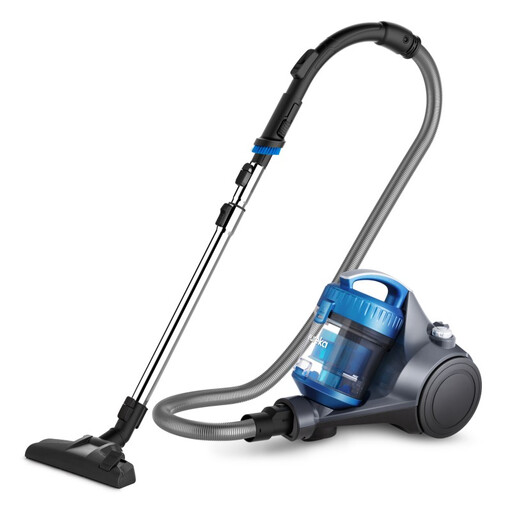
EUREKA Whirlwind, 700W, 1.5L
The integrated 2-in-1 crevice tool on the hose handle is useful for cleaning narrow edges.
Bagless model with a 1.5L dust container and washable filters; the container and filters need to be maintained.
View at Joybuy
 No image available
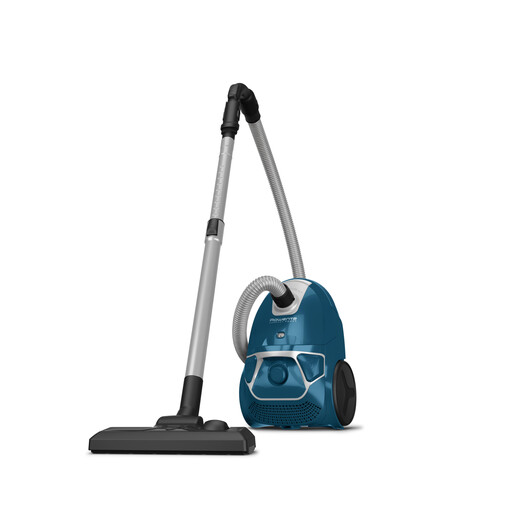
Rowenta Compact Power RO3950EA, 900W
The listed crevice tool may be useful for removing dry crumbs from narrow edges; check that the accessories suit your needs.
Bagged model with a 3-litre bag capacity and stated dimensions of 42 × 29 × 24 cm. Remember to factor in compatible replacement bags.
View at Joybuy
Frequently asked questions
Does higher wattage automatically mean better pick-up for crumbs on a door threshold?
No. Wattage alone doesn’t prove better cleaning performance; the tool design and airflow also matter. So first check whether a suitable tool is included and, if available, look at independent tests of the specific model. The German consumer advice centre also points out that higher wattage doesn’t automatically mean greater suction power.
What should I measure before putting the vacuum away?
Measure the usable height, width and depth of the storage space, allowing for the hose, stored tube and loose tools. Bosch lists body dimensions of 237 × 290 × 367 mm for the BGBS2RD1; Philips gives vertical and horizontal storage positions for the FC9332/09. Neither removes the need to measure the complete vacuum and its accessories.
How do maintenance and ongoing costs differ?
With a bagged model, you’ll need compatible replacement bags; with a bagless model, you’ll need to maintain the container and filters according to the instructions. Ongoing costs depend on how often you use the vacuum and the price of replacement parts for the specific model.
Is there still an EU energy label for vacuum cleaners in Germany?
In July 2026, the German consumer advice centre explained that vacuum cleaners do not have an EU energy efficiency label. The German Environment Agency dates the end of the former label’s use to 19 January 2019. An expectation at the time that a replacement label would follow later is not proof that one was introduced.
Who is responsible if the vacuum is faulty, and where should I take the old one?
The seller is responsible for putting faults right; this is separate from any voluntary manufacturer’s guarantee. The German consumer advice centre explains this responsibility in its guidance from August 2026. A vacuum cleaner that has reached the end of its life should not go in household waste: the German Environment Agency recommends returning electrical waste through the proper channels. Check where your local collection point is.


