Who these vacuums may suit

People with narrow door tracks

If you want to remove dry dirt from a narrow or awkwardly shaped track, the width of the nozzle and how easily you can guide it are key. Miele, Philips and Siemens Home Appliances list crevice tools for some models; this doesn’t mean they’ll fit every track.

Households that empty dust frequently

If you’ll be vacuuming other rooms after the track, consider whether you’d rather change a bag or empty and maintain a dust container. These differences apply to both bagged and bagless models, including those from Siemens Home Appliances and Philips.

People dealing with coarser dirt after moving

If you also regularly have larger amounts of ordinary coarse dirt to deal with, a larger wet and dry vacuum could be an option alongside a cylinder vacuum. Mineral construction dust or hazardous dust is a separate issue; the BAuA outlines the potential risks from dust generated during building work.

What to look for when buying

Bagged cylinder vacuum

A good fit if: you want to vacuum dry dirt from the track and then clean other rooms, and prefer changing a bag.

Things to consider: Check that the crevice tool fits and that replacement bags are available for the exact model variant.

Bagless cylinder vacuum

A good fit if: you’d rather not buy replacement bags and are happy to empty the container and maintain the filter as part of your cleaning routine.

Things to consider: You’ll need to empty the dust container and maintain the filter in line with the instructions for that particular appliance.

Wet and dry vacuum for coarser dirt

A good fit if: you regularly deal with larger amounts of ordinary coarse, dry dirt beyond the door tracks, and have space for a larger appliance.

Things to consider: Its size and storage needs may be impractical for a single small door track. Possible construction dust needs to be assessed separately.

Criterion What to look for Who it matters most to
Access to the track Measure the track opening and check that the crevice tool, connection and room to manoeuvre are suitable. Miele, Philips and Siemens Home Appliances list crevice tools for specific models, not for every track. If I need to clean a narrow or awkwardly shaped track, I want to be able to guide the nozzle into it with confidence. Around 36 % of consumers put access to the track first.
Dust disposal Consider whether changing a bag or emptying a dust container suits you better. With bagless models, remember to factor in filter care too. Philips specifies this maintenance for the FC9332/09. If I want to be mindful about handling the dust collected, disposal after vacuuming matters to me. Around 29 % of consumers prioritise how dust is handled.
Reach and storage Compare the manufacturer’s stated operating radius with your room layout and socket locations. Consider where you’ll store the appliance, hose and accessories. If I’m vacuuming several rooms after moving, I don’t want to keep repositioning the appliance. Around 21 % of consumers primarily look for enough reach to clean other areas.
Ongoing upkeep Check which replacement bags and filters fit the exact model, and allow time for container and filter care on bagless models. If I plan to use an appliance regularly, the work involved after the first use matters too. Around 14 % of consumers put ongoing consumables and maintenance first.

Common buying mistakes

  • Choosing by wattage alone

    A high electrical power rating doesn’t prove that the nozzle will fit into a door track or clean it effectively. The Verbraucherzentrale points out that a high wattage doesn’t automatically mean strong cleaning performance.

    First check the nozzle shape and access on the exact model, and don’t judge cleaning performance by the wattage alone.

  • Assuming a crevice tool is guaranteed to fit

    A crevice tool listed by the manufacturer isn’t proof that it will fit the dimensions of your door track.

    Measure the track, then check what’s included and whether any alternative attachment you may need is compatible.

    If the supplied nozzle doesn’t fit, you may need an attachment that’s confirmed as compatible.

  • Assuming bagless means maintenance-free

    Changing a bag and emptying a dust container while maintaining its filter are different routines. For the FC9332/09, Philips specifies a washable motor filter. With a bagged model, the replacement bag needs to match the exact model number.

    Choose based on how you prefer to handle dust, and check the consumables and care instructions for the specific model.

    Depending on the type of appliance, you’ll need to buy compatible replacement bags or allow time to empty the container and maintain the filter.

  • Treating mineral construction dust like ordinary dirt from moving

    The BAuA explains that dust generated during building work can contain respirable crystalline silica. Suitability for ordinary dry dirt doesn’t address this safety issue.

    If you suspect there’s drilling, concrete or plaster dust, check what the material is and how to remove it safely while minimising dust. Don’t stir it up or blow it around while dry.

Brands to consider

The notes below relate to the models and specifications mentioned, rather than making a blanket judgement about an entire brand.

Miele

The Guard M1 Flex is a bagged cylinder vacuum that may be worth considering for awkward areas.

  • Miele lists a flexible crevice tool and an operating radius of 11 m for this model.
  • This doesn’t confirm that the nozzle will fit a particular door track, and bags are a consumable.

Philips

The bagless PowerPro Compact FC9332/09 may suit you if you’d rather not buy replacement vacuum bags.

  • Philips lists a crevice tool, a 1,5-l dust container and a washable motor filter.
  • You’ll still need to empty the container and maintain the filter. A manufacturer’s claim about dust pick-up on hard floors with gaps doesn’t prove that the vacuum is suitable for a particular door track.

Siemens

The bagged cylinder vacuum Q5.0 VSQ5X1230 could serve as a comparison model for cleaning other rooms afterwards.

  • Siemens Home Appliances lists a crevice tool and an operating radius of 13 m for this model.
  • You’ll still need to check whether the nozzle fits your particular track, and buy compatible bags.

Bosch

The bagless Serie 2 BGS05AAA1 is a comparison model for households that clean hard floors as well as door tracks.

  • Bosch lists an operating radius of 9 m, a 1,5-l container and a hard-floor nozzle for this model.
  • The crevice and upholstery accessories are described as a combination nozzle. Check whether its shape suits your track.

Kärcher

The WD 3 V-17/4/20 is a larger wet and dry vacuum alternative if you also regularly deal with coarser, ordinary dirt from moving.

  • Kärcher lists a crevice tool, a 17-l container and use for both wet and dry dirt.
  • Consider its size and storage needs if you’re cleaning a single small track. The manufacturer’s description doesn’t confirm that it’s suitable for potentially hazardous mineral construction dust.

Cylinder vacuums at Joybuy

This selection features bagged cylinder vacuums for dry dirt in door tracks and for cleaning living areas afterwards.
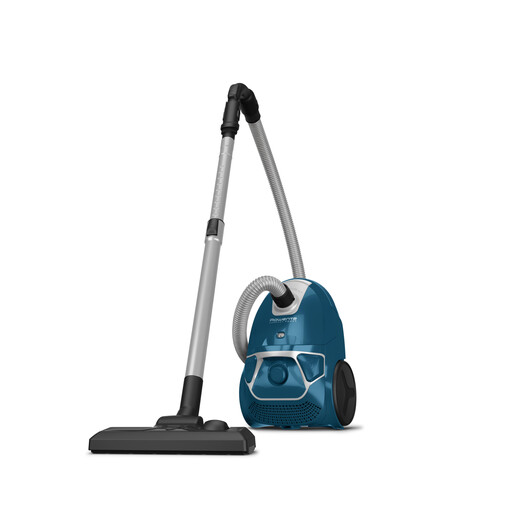
Rowenta Compact Power RO3950EA bagged cylinder vacuum

Rowenta Compact Power RO3950EA bagged cylinder vacuum

This bagged cylinder vacuum may be suitable for dry dirt and for cleaning living areas afterwards.

The product details list a crevice tool, while the product name also mentions a parquet nozzle. Before buying, check that the crevice tool fits the opening of your door track.

View at Joybuy

Frequently asked questions

How should I tackle a narrow door track?

Measure the accessible opening and check that the crevice tool on the exact model fits and can be guided along the track with the hose or tube. The manufacturer’s description “crevice tool” alone doesn’t confirm that it will fit your track.

Can I use the same household vacuum for possible drilling, plaster or concrete dust?

Don’t treat ordinary dry dirt from moving like mineral construction dust. The BAuA explains that dust generated during building work may contain respirable crystalline silica, and recommends M-class dust extractors for professional construction work. This doesn’t mean there’s a blanket legal requirement for private users to use a particular dust class. If you suspect this type of dust, check what the material is and how to clean it safely rather than assuming a household appliance or the Kärcher WD 3 is suitable.

What will I need to maintain or replace after vacuuming?

With a bagged model, check which replacement bag fits the exact model number; AEG Support advises using the product number, among other details. The bagless Philips FC9332/09 needs its container emptied and its washable motor filter maintained. Always follow the instructions for the specific appliance.

Does a newly marketed vacuum cleaner in Germany need an EU energy label?

No. The European Commission explains that the former EU energy-labelling rules for vacuum cleaners no longer apply. An old energy-rating label is therefore not a current mandatory proof of compliance, nor does it replace checking whether the appliance suits your cleaning task.

What are my rights if a vacuum I buy online doesn’t fit or is faulty?

For a typical online consumer purchase in Germany, you generally have a 14-day right to cancel, which must be explained to you. If the item is faulty, your statutory rights are generally against the seller; these are separate from any voluntary guarantee.