Homes with narrow gaps around the shoe rack
If you want to clear dry sand from around the rack’s feet, skirting boards and shoes, check that a suitable crevice tool is included and can be manoeuvred where you need it.


For dry sand beside the shoe rack, the right floorhead and a crevice tool that can reach into tight spaces are what matter. Wattage alone is no proof of better cleaning, as the German Environment Agency also explains. If you want to minimise dust when disposing of dirt, a bagged model may be a better fit; with a bagless cleaner, you’ll need to maintain the bin and filters. Remove wet mud another way or let it dry before vacuuming it with a standard dry vacuum cleaner.
If you want to clear dry sand from around the rack’s feet, skirting boards and shoes, check that a suitable crevice tool is included and can be manoeuvred where you need it.
Choose a floorhead that suits your flooring, and use the recommended setting for hard floors or carpets.
If handling the dust you’ve collected matters to you, compare changing a bag with emptying the bin and maintaining the filters on a bagless cleaner.
A good fit if: You’re happy to buy replacement bags and would rather do less handling of dust when disposing of it.
The trade-off: Bags add ongoing costs. Fine sand can clog the pores, meaning you may need to replace the bag sooner.
A good fit if: You don’t want to buy replacement bags and can regularly maintain the bin and filter.
The trade-off: Emptying the bin can stir up dust. Any washed parts must be completely dry before you put them back.
| Priority | What to check before buying | Who is this important to? |
|---|---|---|
| Reaching tight spaces | Whether a crevice tool is included and the hose and tube can be manoeuvred around the shoe rack. | If I need to clear sand from around the rack’s feet and skirting boards, the reach of the crevice tool is crucial. Around 34% of consumers put reaching narrow gaps first. |
| Picking up dirt from the floor | Whether the floorhead suits your flooring; don’t compare wattage alone. | If picking up dry dirt from my own hallway floor matters to me, I look for the right floorhead. Around 27% of consumers prioritise this. |
| Disposing of dust and maintaining the filter | Compare changing a bag with emptying the dust container, and check how easy the filter is to access. | If I’m picking up fine sand, I want to know how much maintenance is needed after vacuuming and how easy it is to dispose of the dust. Around 20% of consumers prioritise disposal and filter maintenance. |
| Handling and storing the cleaner | Check the dimensions, weight and accessory storage against the space you actually have. | If space is limited in the entrance, I need a cleaner that’s easy to handle and store there. Around 19% of consumers prioritise space and ease of handling. |
Standard dry vacuum cleaners are designed for dry dirt. Moisture or liquids can damage the appliance.
Remove wet dirt another way first, or let it dry. Only use a cleaner specifically designed for liquids to pick them up.
Fine dirt can clog the pores in vacuum bags; bagless cleaners need the dust container emptied and the filter maintained.
Check which bag or filter type is suitable, and follow the care instructions for the specific model.
Cleaning performance also depends on the floorhead, the appliance and the airflow. Wattage alone therefore tells you little about how well a model picks up dry dirt by the shoe rack.
First check what’s included and whether the cleaner can reach into the gaps. For performance comparisons, tests carried out under suitable conditions are more useful than a single figure.
The bagged VX83-2EBR and the bagless AL61C2SW illustrate the different designs available from one brand.
The Serie 4 ProHygienic BGD41HYG is a bagged model, with integrated tools that may come in handy for tight spaces.
The bagless Silence Force Cyclonic Parkett RO7935EA is designed for hard floors and straightforward dust-container care.
The 1000 Series XD1101/10 is a bagged vacuum cleaner for households considering a compact design.
This selection includes bagged and bagless Rowenta cylinder vacuum cleaners for dry dirt on hard floors and in narrow gaps.
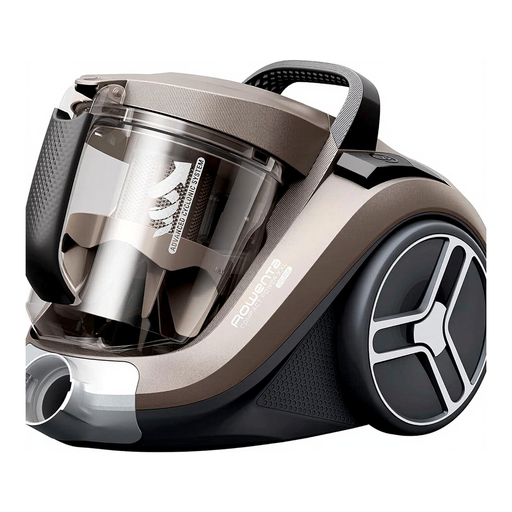 No image available
For dry dirt on hard floors and in tight spaces; the product specifications list a parquet brush and a 2-in-1 crevice tool.
Stated cleaning radius: 8,8 m. Dust capacity: 2,5 l.
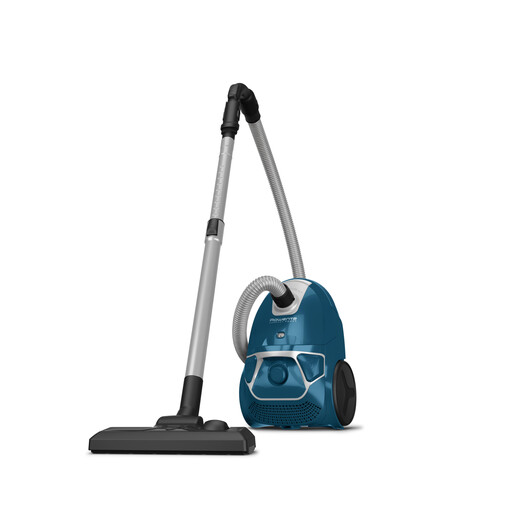 No image available
For dry dirt on hard floors and in tight spaces; the product specifications list a parquet floorhead and a crevice tool.
Dust bag capacity: 3 l. Stated operating radius: 8,8 m.
Not with a standard dry vacuum cleaner: remove wet dirt another way first, or let it dry. Bosch warns that vacuuming up moisture can cause damage; the instructions for the Miele range mentioned here prohibit vacuuming liquids and wet dirt.
With a bagged cleaner, check whether the bag is clogged. With a bagless cleaner, check and clean the container and filter according to the model’s instructions; washed parts must be completely dry before you put them back.
No. Wattage alone doesn’t prove that a cleaner will pick up dry dirt more effectively. According to the German Environment Agency, the appliance, suction tube, nozzle design and airflow also affect cleaning performance.
No. In July 2026, the Verbraucherzentrale (German consumer advice centre) stated that vacuum cleaners don’t have an EU energy efficiency label. Older vacuum cleaner energy-rating classes are therefore not a current mandatory label for this purchase.