Cleaners tackling tight rows of chairs
If you need to remove dry lint from behind or between chairs, look for a supplied crevice tool and a flexible hose.


For dry lint behind chairs, the first thing to check is whether the supplied crevice tool, hose and tube can reach the spot. A high wattage rating alone is no proof of better cleaning. Choose between a bag and a dust container to suit your disposal routine, and check the reach, floorhead and—if guests may be present—the noise rating for the specific model against your accommodation.
If you need to remove dry lint from behind or between chairs, look for a supplied crevice tool and a flexible hose.
For regular cleaning, consider how you will dispose of dust, whether to use suitable bags or maintain the dust container, and where the sockets are.
If guests may be nearby, check the noise rating for the specific model as well as its suitability for your floors.
First check whether you can reach behind the chairs, then choose based on dust disposal, the layout, floor types and cleaning times.
| What you need | What to check when buying | Who should pay particular attention? |
|---|---|---|
| Reaching lint behind chairs | Check that the crevice tool is included with the exact model variant, and that the hose and tube are long enough to reach the spot. Only vacuum up dry lint. | If the gap behind the chairs is narrow, I want to know whether the tool, hose and tube will actually reach it; around 31% of consumers prioritise access behind chairs. |
| Disposing of dust after guest changeovers | Check which bags are compatible, or plan for emptying the dust container and maintaining the filter. | With frequent guest changeovers, I want to organise bag changes or emptying the dust container efficiently; around 25% of consumers whose main concern is easy dust disposal share this priority. |
| Reaching multiple areas | Compare your sockets and routes around the property with the reach specified for the model. Cable length and operating radius are different measurements. | If I need to account for several rooms or awkwardly placed sockets, reach matters; around 19% of consumers prioritise this. |
| Cleaning other floor types | Check that the supplied floorhead suits the floors in your accommodation. | If I need to clean different types of flooring, I want a suitable floorhead; around 13% of consumers make this a priority. |
| Taking noise into account | Check the model’s dB rating and your usual cleaning times. Manufacturer figures are not the same as an independent noise measurement. | If guests may be present while I’m cleaning, I want to plan for the noise; around 12% of consumers prioritise keeping cleaning as quiet as possible. |
Power consumption alone is no proof of cleaning performance in hard-to-reach spots.
First check that the right crevice tool is included and that you can reach the area. Suitable test results for the specific model are a more useful way to compare performance.
A dust container still needs emptying, and the filter needs looking after. Neglected filters or an overfull container can affect cleaning performance.
Set up a practical routine for emptying the container and maintaining the filter between guest stays, and follow the appliance instructions.
The cable length figure is not a substitute for the operating radius specified for the model. Both measurements can help you plan around sockets and furniture in different ways.
Check the exact wording of the manufacturer’s specification against the layout of your accommodation, and take the actual routes you’ll need to clean into account.
For the Guard M1 Flex, Miele lists a flexible crevice tool for hard-to-reach spots.
According to the manufacturer, the AEG AB61C1WP comes with a separate crevice tool and upholstery tool, and has an operating radius of 12 m.
Bosch says the crevice tool and upholstery tool are integrated into the appliance on the Bosch BGD41MPOW.
The Philips FC9332/09 is a bagless cylinder vacuum cleaner; Philips lists a crevice tool for this model.
The Numatic Henry Compact HVR160-11 is a drum vacuum alternative for regular cleaning over larger areas.
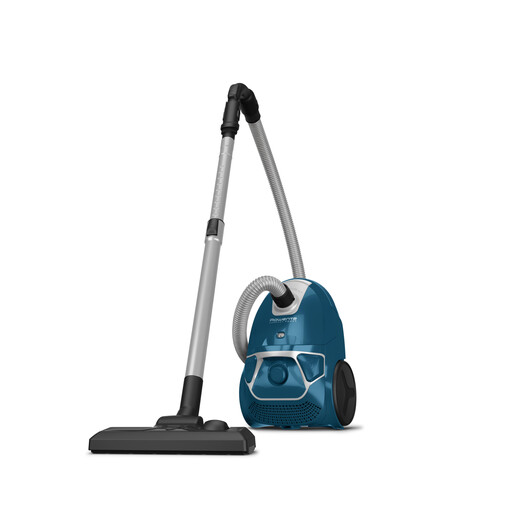
This product selection includes a bagged cylinder vacuum cleaner with a listed crevice tool for tight spaces.
 No image available
The product details list a crevice tool, hose and telescopic tube; check whether they can reach the spot behind your chairs.
The product name mentions a parquet floorhead. As a bagged vacuum, this model needs compatible replacement bags; the product details list four bags included.
No. Wattage alone does not prove strong cleaning performance. The Verbraucherzentrale advises against equating power consumption with cleaning power. First check that the right crevice tool is included and can reach the spot.
Before using it for the first time, check what’s included and use the crevice tool on dry, tight spaces in line with the appliance instructions. Replace full bags or empty the dust container, and maintain the filter according to the instructions for your specific model.
Don’t use a dry vacuum cleaner for this unless the appliance instructions expressly say it’s safe to do so. Miele explicitly advises against vacuuming up liquids or damp dirt with its cylinder vacuum cleaners.
For a bagged vacuum, check which replacement bags fit by using the full model number. With a bagless model, remember to maintain the filter and, if necessary, factor in replacement filters. Check the warranty terms for the specific model rather than assuming an advertised motor guarantee is the same as a general appliance warranty.
There is currently no valid EU energy label for vacuum cleaners, as the European Commission and Verbraucherzentrale point out. The Umweltbundesamt states that waste electrical appliances must be collected separately from household rubbish; local collection points are one way to return them.