Pet owners with a narrow gap beside the sofa
If you want to reach hair behind or beside the sofa, check that the crevice tool fits through the gap and can be guided into place using the hose and tube.


For pet hair behind the sofa, a suitable crevice tool is essential. For hair on upholstery or carpets, you’ll also need a suitable turbo or upholstery tool. Check that the vacuum, hose and accessories will fit in your home, and decide whether you’d rather empty a dust container or buy replacement bags. The consumer advice centre notes that a high wattage alone is no proof of better cleaning performance.
If you want to reach hair behind or beside the sofa, check that the crevice tool fits through the gap and can be guided into place using the hose and tube.
If you need to remove hair from fabric surfaces, check whether a suitable upholstery or turbo tool is included with the exact model.
Measure your storage area and allow space not only for the main unit, but also for the hose, tube and attachments.
First, measure the gap beside your sofa and the storage space available. Then decide which attachments you need and whether a bag or a dust container better suits the way you prefer to dispose of dust.
| What you need | What to look for when buying | Who should prioritise it |
|---|---|---|
| Reach narrow gaps beside the sofa | Check the width of the crevice tool and how easily the hose and tube can be manoeuvred. | If the hair is behind or beside the sofa, reaching the gap is the first priority. Around 36% of consumers put this need first. |
| Remove hair from upholstery and carpets | Check whether an upholstery or mini turbo tool is included with the exact version you’re buying. | If you also need to clean fabric surfaces, compare the attachment with the crevice tool you need. Around 29% of consumers prioritise hair on upholstery and carpets. |
| Store the vacuum and its accessories | Measure your storage area and compare it with the vacuum’s dimensions; remember to allow room for the hose and attachments. | If every bit of cupboard space counts, you’ll need room for the accessories and hose too. Around 21% of consumers make storage space their main consideration. |
| Weigh up disposal and maintenance | With bagged models, allow for suitable replacement bags; with bagless models, consider emptying the container and maintaining the filters. | If you’re choosing between a bag and a dust container, think about what each involves in day-to-day use. Around 14% of consumers prioritise disposal and ongoing costs. |
A tool for carpets or upholstery won’t necessarily be narrow enough to fit through the gap. The consumer advice centre recommends checking that a vacuum is suitable for the job you need it to do.
Measure the gap and check the width of the crevice tool, as well as what’s included with the exact model.
If a suitable crevice tool isn’t included, you may need to buy an extra attachment.
According to the consumer advice centre, a high wattage doesn’t prove that a vacuum cleans better. Don’t use an old energy rating as your only guide when making a purchase today.
Instead, compare the tools included and how easy the vacuum is to use for the areas you need to clean.
A bagless dust container needs emptying and care; with a bagged model, you’ll need to be able to buy suitable replacement bags. The consumer advice centre also highlights dust containers as a possible consideration for allergy sufferers.
Check how to empty the exact model and follow its care instructions for the filters and brushes.
For the Compact Power XXL Animal RO4B50EA, Rowenta lists a crevice tool and a mini turbo brush. This could make the included accessories relevant for both gaps and fabric surfaces.
For the Guard L1 Cat & Dog, Miele lists a turbo brush and a 2-in-1 upholstery and crevice tool. The Boost CX1 Cat & Dog is a bagless alternative that Miele describes as suitable for smaller homes.
The Bosch Serie 8 BGL8XPER is worth comparing if you’re considering a bagged model with an upholstery tool and a large operating radius.
Dyson describes the Cinetic Big Ball Multi Floor 2 as a bagless cylinder vacuum and says its floorhead automatically adjusts to different floor types.
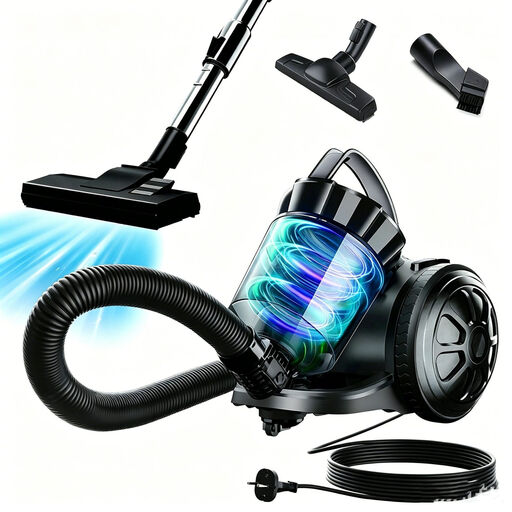
This section features a bagless cylinder vacuum whose product details list a 2-in-1 crevice tool and an upholstery brush.
 No image available
The product details list an integrated 2-in-1 crevice tool and an upholstery brush for cleaning gaps and upholstery.
The dust container has a capacity of 2.2 l. The description says the vacuum comes with a telescopic tube and a washable filtration system; the manufacturer also lists a weight of under 6 kg.
Not necessarily. For a narrow gap, a suitable crevice tool is the first thing you need. A turbo or mini turbo tool is also useful if hair is caught in upholstery or carpet fibres. Measure the gap and check whether you can guide the tool into place using the hose and tube.
With a bagged model, allow for suitable replacement bags; with a bagless model, emptying the container and maintaining the filters are part of using it. For the exact model, also check whether the crevice tool and pet hair tool you need are included.
The cylinder vacuums described here don’t need permanent installation. Depending on the design, you’ll need to change the bag or empty the container; follow the care instructions for the filters and brushes for your particular model.
An old vacuum cleaner is waste electrical equipment and shouldn’t go in household rubbish. Germany’s Federal Ministry for the Environment lists authorised collection points, including local authority collection sites, as places to take it.