Homes with narrow threshold gaps
If you want to remove dry crumbs or dirt brought in from outside from edges and gaps, check that the crevice tool will actually fit. AEG describes its crevice tools as suitable for narrow and hard-to-reach areas.


For dry household dirt around door thresholds, first check that the crevice tool designed for your specific model can reach the gap. You’ll also want the right floorhead for the floor next to it. A bagged vacuum means less contact with an open dust container, but you’ll need replacement bags. A bagless model saves you buying bags, but you’ll need to empty the container and look after the filters. This guidance applies to ordinary dry household dirt, not unknown renovation dust.
If you want to remove dry crumbs or dirt brought in from outside from edges and gaps, check that the crevice tool will actually fit. AEG describes its crevice tools as suitable for narrow and hard-to-reach areas.
If you vacuum parquet or other delicate flooring next to the threshold, you’ll need a suitable floorhead; you may also need a separate tool for the gap. Miele and Philips list different floorheads for their respective models.
If you want to handle as little loose dust as possible when disposing of it, consider a bagged model. Be sure to check the bag type and filter for the specific vacuum, too. Depending on the model, bagless vacuums require you to empty the container and maintain the filters.
| What matters | What to check when buying | Who is this important to? |
|---|---|---|
| Reaching the threshold gap | The shape and dimensions of the crevice tool, and whether it’s included with or compatible with the model. | If I want to remove dirt from a narrow gap, the tool needs to fit and reach the spot. Around 33% of consumers put reach into gaps first. |
| Protecting the floor next to the threshold | A floorhead suited to the flooring; a separate crevice tool, if needed. | For parquet or other delicate flooring next to a threshold, a suitable floorhead matters, but don’t overlook the gap itself. Around 27% of consumers place the greatest importance on the right floorhead. |
| Minimising dust when emptying | The bag or container system, filter type and care instructions for the specific model. | If I want to handle as little loose dust as possible when disposing of it, I compare changing a bag with emptying an open container. Around 20% of consumers put how they handle collected dust first. |
| Maintenance and ongoing costs | Whether the right bags are available, or how much effort is involved in looking after the container, filter and replacement filters. | If you’re weighing up ongoing costs and maintenance, consider both sides: bags need to be replaced, while bagless models need emptying and filter care. Around 20% of consumers prioritise maintenance and ongoing costs. |
Wattage alone doesn’t tell you how well a vacuum cleaner can reach into a gap. According to the German Environment Agency, factors including the nozzle and airflow affect cleaning performance.
Check whether the crevice tool suits the shape of your threshold, and look for performance tests carried out under relevant conditions when comparing models.
With bagless vacuums, you need to empty the container and care for the filters as instructed by the manufacturer. With a bagged model, you’ll need to replace the bags and buy the right ones.
When choosing, allow time for the recommended container and filter care, or for changing the bag regularly.
Compare the care instructions for the specific model with the bag type it uses and how easy those bags are to find.
The German Federal Institute for Occupational Safety and Health warns of potential health risks from construction and renovation dust. According to the German Environment Agency, older building materials may contain asbestos, which is not always immediately apparent.
If construction or hazardous dust may be present, first identify the material and find out how to deal with it safely. An ordinary household vacuum cleaner is not a designated protective measure against unknown dust.
The bagged VX83-2EBR and the bagless AL61C2SW illustrate two different emptying systems. According to AEG, both come with a separate 3-in-1 tool.
The Guard M1 Flex is a bagged model. According to Miele, it comes with a flexible crevice tool.
The Silence Force Cyclonic Effitech Home&Car RO7954EA is a bagless model. According to Rowenta, it comes with a flexible XXL crevice tool.
The PowerPro Compact FC9331/09 is a bagless model. Philips lists a crevice tool and an additional hard-floor nozzle for it.
The Serie 8 BGL8XPER is a bagged cylinder vacuum cleaner and an example of a model with a large operating radius stated by the manufacturer.
This selection features bagged cylinder vacuum cleaners for dry household dirt around door thresholds and on nearby floors.
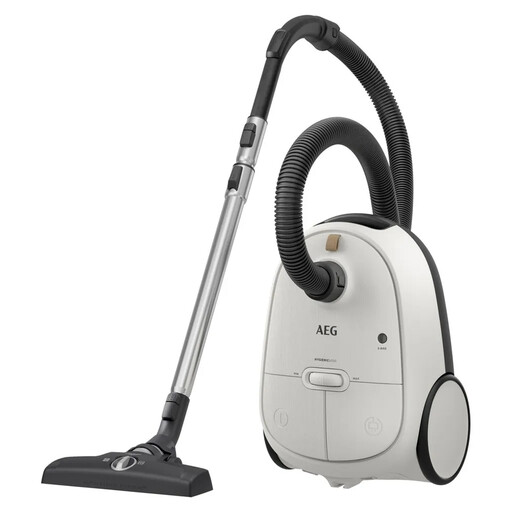 No image available
The flexible XL crevice tool and Parketto Pro hard-floor nozzle described for this model are designed for different tasks around the threshold and on nearby hard floors. Check that the tools suit your gap and flooring.
Specifications include a 3.5-l bag, an s-bag Anti-Allergy system, 850 W and a 12 m cable.
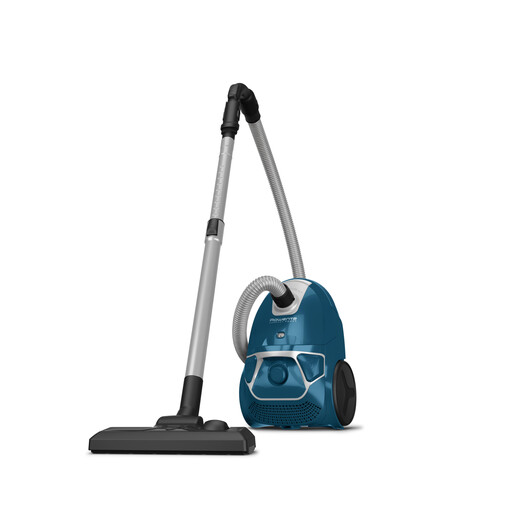 No image available
The listed crevice tool and parquet or floor nozzle cover different areas around the threshold. Check that the crevice tool fits and that the floorhead is suitable for your flooring.
The product description lists a 3-l dust bag, a Hygiene filter and 900 W.
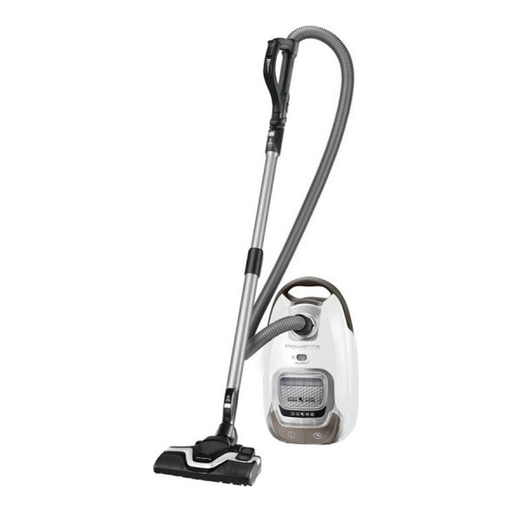 No image available
This corded cylinder vacuum cleaner is an option if you’re looking for a bagged model. For the threshold gap, check whether a suitable crevice tool is included with the specific product.
The product name lists a telescopic nozzle, 400 W and 58 dB.
No. Wattage alone doesn’t show that a vacuum cleaner will clean a gap well. The German Environment Agency points out that the nozzle and airflow also play a part. First, check that the crevice tool fits the gap.
Replace a full bag according to the manufacturer’s instructions. For a bagless model, emptying the container and caring for the filter depend on the instructions for that specific appliance. If the filter is washable, clean it only as directed.
No. Being suitable for ordinary dry household dirt doesn’t mean a vacuum is suitable for unknown renovation dust. The German Federal Institute for Occupational Safety and Health outlines potential risks from construction and renovation dust. The German Environment Agency also warns that asbestos in older building materials is not always immediately apparent. If you suspect it may be present, identify the material and find out how to deal with it safely, rather than treating an ordinary household vacuum cleaner as a protective measure.
No. On 29 July 2026, the German consumer advice service explained that vacuum cleaners do not have an EU energy label. An earlier forecast by the German Environment Agency about a possible new regulation is not evidence that a label is currently in force.
No. A manufacturer’s guarantee is not the same as your statutory rights against the seller. In the EU, online purchases from business sellers generally come with a 14-day right to cancel, subject to statutory exceptions. Faulty goods are generally covered by a legal guarantee of at least two years. The precise rules depend on the applicable terms and exceptions.